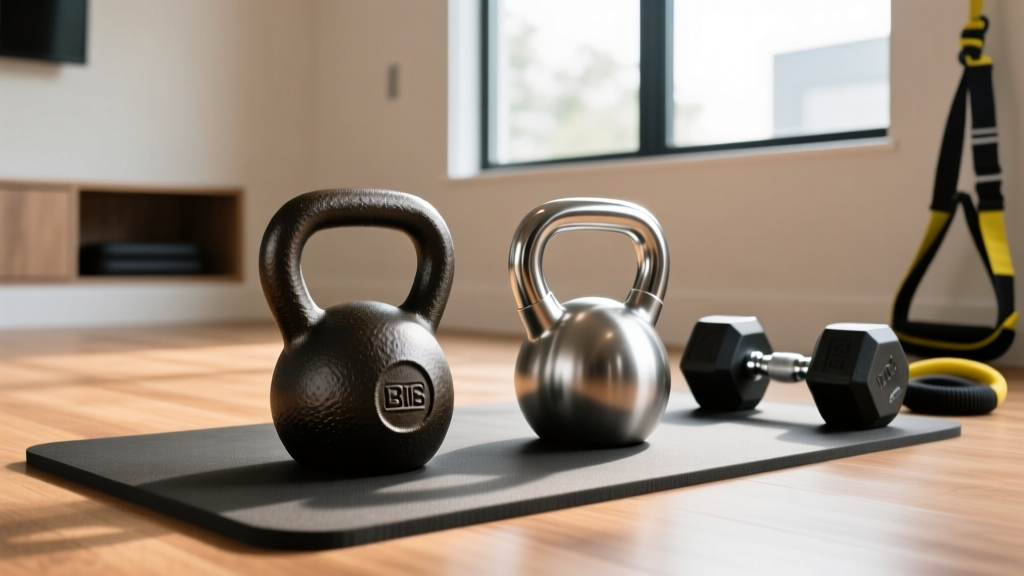
Cast Iron vs Competition Kettlebell Care for a 6 Day Dumbbell Workout
Compare cast iron vs competition kettlebell maintenance. Learn care tips to maximize longevity and supplement your high-volume 6 day dumbbell workout.

Integrating Kettlebells Into a 6 Day Dumbbell Workout
Running a high-frequency 6 day dumbbell workout—such as a Push/Pull/Legs split executed twice a week—places immense demands on your grip, central nervous system, and stabilizing muscles. While adjustable and hex dumbbells excel at hypertrophy, unilateral pressing, and bilateral isolation, they lack the offset center of mass required for true ballistic hinge training. This is where kettlebells become indispensable accessories for your routine.
Whether you are using kettlebells for heavy swings on leg day, Turkish get-ups on active recovery days, or goblet squats as a core primer, the high sweat volume and chalk usage inherent in a 6-day training split will rapidly degrade poorly maintained iron and steel. Understanding the metallurgical differences between cast iron and competition kettlebells is the first step in a proper buying guide, but knowing how to maintain them ensures your investment survives years of high-volume training.
Cast Iron vs. Competition: Material Science and Buying Basics
Before purchasing, you must decide which bell type suits your training environment and maintenance bandwidth. Cast iron bells are poured into molds, resulting in varying dimensions depending on the weight. Competition kettlebells are machined from steel, featuring identical outer dimensions regardless of weight, which is critical for consistent technique during complex flows.
| Feature | Cast Iron Kettlebells | Competition Steel Kettlebells |
|---|---|---|
| Material | Cast Iron (prone to oxidation) | Hollow Steel Shell (prone to denting/paint chips) |
| Handle Diameter | Varies (typically 30mm - 35mm) | Standardized 33mm (IUKL) or 35mm (IKSF) |
| Finish Types | E-Coat, Powder Coat, Bare Iron, Enamel | Bare Steel Handle, Painted Color-Coded Body |
| Avg. Cost (2026) | $1.50 - $2.50 per lb | $3.00 - $5.50 per lb |
| Maintenance Focus | Rust prevention, chalk removal, handle smoothing | Paint touch-ups, steel wool polishing, dent prevention |
According to equipment specifications from Rogue Fitness, modern e-coat (electrocoating) finishes on cast iron provide a significantly tighter, more corrosion-resistant barrier than traditional powder coating. If your 6 day dumbbell workout generates heavy sweat and you train in a humid garage gym, e-coat or competition steel should be your primary targets.
Cast Iron Maintenance: Fighting Oxidation
Cast iron is highly susceptible to rust, especially when exposed to the chloride in human sweat. If you are gripping these bells daily to supplement your dumbbell splits, a proactive maintenance protocol is non-negotiable.
Handle Care: Bare Iron vs. Coated
If you purchase bare cast iron or if your powder coat has worn away on the handle, you must manage oxidation weekly. Do not use wire brushes or coarse sandpaper. Gouging the handle will create micro-burrs that will tear your calluses during high-rep kettlebell snatches or cleans.
- Light Surface Rust: Use #0000 Super Fine Steel Wool combined with a few drops of 3-in-One oil or Boeshield T-9. Rub in circular motions until the rust lifts, then wipe completely dry with a microfiber cloth.
- Severe Pitting: Submerge the handle in a white vinegar bath for exactly 15 to 20 minutes. The acetic acid dissolves iron oxide. Crucial Step: You must immediately neutralize the acid by submerging the handle in a baking soda and water solution, followed by thorough drying and oiling, or the iron will flash-rust within hours.
- Coated Handles: For e-coat or powder coat, simply scrub with a stiff nylon brush and warm soapy water to remove embedded gym chalk. Chalk retains ambient moisture and accelerates coating degradation.
Competition Steel Care: Preserving the Shell
Competition kettlebells, like those standardized by StrongFirst and other major federations, feature a bare steel handle and a painted body. The steel handle is prized for its smooth glide during ballistic movements, but it requires specific upkeep.
The Automotive Paint Hack for Color-Coded Bells
The bodies of competition bells are color-coded by weight (e.g., 16kg is yellow, 24kg is green, 32kg is red). When you drop a steel bell onto a rubber mat, the impact can cause micro-fractures in the paint, exposing the steel shell underneath to humidity.
Expert Tip: Do not use standard hardware store spray paint for touch-ups. It chips easily upon impact. Instead, purchase Dupli-Color Automotive Touch-Up Paint in matching colors. Automotive enamel is formulated to flex and adhere to metal under stress. Clean the chip with isopropyl alcohol, apply a thin layer with a fine brush, and let it cure for 24 hours before your next workout.Polishing the 33mm Steel Handle
Unlike cast iron, the steel handle of a competition bell should never be oiled heavily, as it becomes dangerously slippery during overhead presses and windmills. Instead, maintain the handle's 'grip-glide' ratio by polishing it weekly with #0000 steel wool and a light dusting of magnesium carbonate (gym chalk). If you notice black oxidation stains on your hands after a swing session, it is time to polish the steel.
Environmental Controls and Storage Solutions
How you store your kettlebells between your 6 day dumbbell workout sessions dictates their lifespan. Dropping them on bare concrete or storing them on uncoated metal wire racks will destroy both e-coat finishes and competition paint jobs.
Upgrading Your Storage Rack
Most commercial weight racks feature steel shelving that scrapes the bottom of the bell every time it is loaded or unloaded. To prevent this:
- Purchase 1/16-inch thick UHMW (Ultra-High Molecular Weight) polyethylene tape or rubber stall mats.
- Cut the material to the exact dimensions of your rack shelves.
- Adhere the UHMW tape to the metal shelves. UHMW is incredibly impact-resistant and provides a frictionless surface that protects both cast iron and steel bells from cosmetic and structural damage.
Humidity Management
If your home gym is in a garage or basement, ambient humidity is your biggest enemy. When humidity exceeds 60%, bare steel and cast iron will begin to oxidize. Invest in a commercial-grade dehumidifier to keep the environment between 40-50% relative humidity. For smaller weight closets, placing large silica gel desiccant buckets on the floor near your kettlebell storage can absorb excess moisture passively.
Weekly Maintenance Schedule for High-Volume Lifters
When you are committed to a 6 day dumbbell workout, adding equipment maintenance can feel like a chore. By mapping your kettlebell care to your existing split, you ensure longevity without burning out. Below is a practical maintenance matrix designed for a Push/Pull/Legs (PPL) 6-day split.
| Training Day | Kettlebell Usage | Post-Workout Maintenance Action (5 Mins) |
|---|---|---|
| Day 1: Push | Bottoms-up presses, core stabilizers | Wipe handles with dry microfiber to remove sweat/salts. |
| Day 2: Pull | Renegade rows, heavy swings | Scrub handles with nylon brush to remove chalk buildup. |
| Day 3: Legs | Goblet squats, lunges, snatches | Inspect competition bell paint for chips; mark for weekend repair. |
| Day 4: Push | Active recovery / Light flows | Wipe down bell bodies with damp cloth to remove dust. |
| Day 5: Pull | Heavy hinges, cleans | Apply 2 drops of Boeshield T-9 to bare steel handles; buff dry. |
| Day 6: Legs | High-rep ballistic finishers | Deep clean: Wash coated bells with mild soap, dry completely. |
| Day 7: Rest | None | Weekly Deep Care: Steel wool polish, paint touch-ups, rack inspection. |
Frequently Asked Questions
Can I use WD-40 to prevent rust on my cast iron kettlebells?
Standard WD-40 is a solvent and water displacer, not a long-term lubricant or rust inhibitor. It will evaporate quickly and leave your handles dry and prone to flash-rusting. Always use a dedicated rust-preventative like Boeshield T-9, 3-in-One oil, or mineral oil for bare iron handles.
Why do competition kettlebells have windowed handles?
The 'windows' (the space between the handle and the bell) on competition kettlebells are standardized to allow for two-handed grips during specific sport lifts like the double jerk. When maintaining these bells, ensure you clean the inner corners of the window where sweat and chalk accumulate unseen, as this is a primary spot for hidden rust on steel handles.
Will dropping competition kettlebells damage them?
While competition bells are made of steel, they are often hollow with a thick outer shell to maintain uniform sizing across different weights. Dropping a 32kg steel bell from overhead onto concrete can dent the shell or crack the weld at the handle base. Always drop them onto thick, high-density rubber drop pads, and never directly onto concrete or wood platforms.
More gear to consider
All reviews
Cast Iron Kettlebell vs Competition: The Iron Dumbbell Alternative

EZ Curl vs Straight Bar Maintenance & Dumbbell Crunches Grip Care
Loadable Dumbbell Trends 2026: Mastering Proper Dumbbell Shrug Form

Beyond the Arm Circuit with Dumbbells: Barbell Collar & Clamp Types Comparison

Perfect Dumbbell Shrug Form Using Loadable Dumbbells in Small Gyms
