Master the Kettle Swing with a Dumbbell: Neoprene Home Guide
Learn how to safely execute a kettle swing with a dumbbell at home. Discover why neoprene coated weights are the best choice for beginners.

Building a functional home gym doesn't require a massive budget or specialized equipment. If you want to develop explosive posterior chain power, the hip hinge is king. While kettlebells are the traditional tool for ballistic movements, you can easily master the kettle swing with, or dumbbell. This forces your wrists into an awkward, compromised angle and limits the range of motion.
- The Grip: Stand with feet shoulder-width apart. Place the dumbbell vertically on the floor between your feet. Hinge at the hips and grip the top bell (the upper hex weight) with both hands, not the handle. Your thumbs should point toward each other, mimicking the grip on a competition kettlebell's horns.
- The Hike: Pull your shoulders down and back (pack the lats). Hinge your hips backward and hike the dumbbell between your legs. Your forearms should lightly brush your inner thighs. Keep your spine neutral; do not round your lower back.
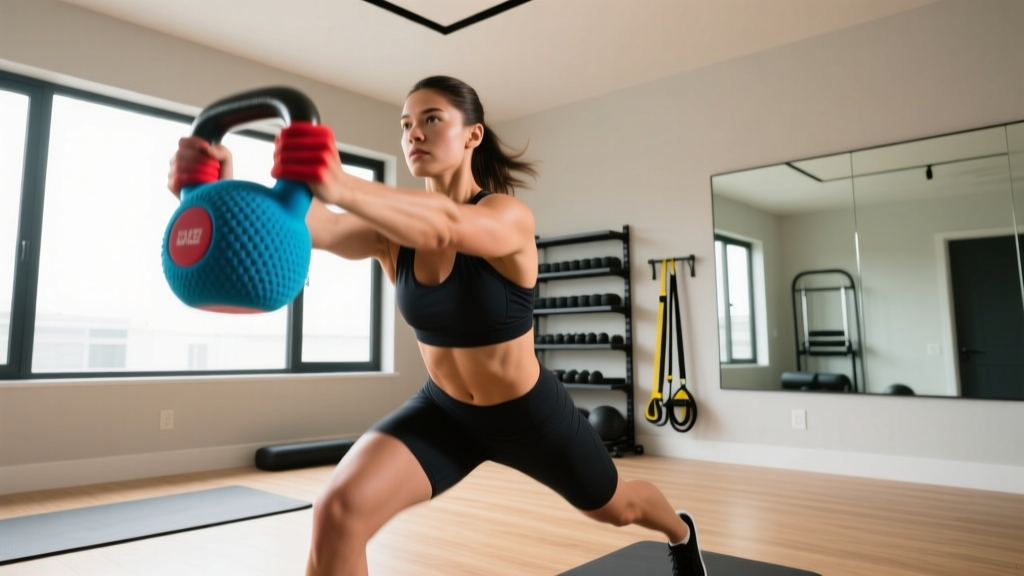
- The Snap: Explosively drive your hips forward and squeeze your glutes. This hip extension—not your arms—propels the dumbbell upward. Think of it as a standing broad jump without leaving the floor.
- The Float: At the top of the movement, your body should form a straight line from head to heels. The dumbbell will "float" at chest height for a split second. Your core and glutes should be fully braced.
- The Catch & Reset: As gravity pulls the dumbbell back down, do not use your shoulders to lower it. Instead, wait until the last possible second, then hinge your hips back to absorb the momentum, guiding the weight back between your legs for the next rep.
Troubleshooting Common Form Breakdowns
Because a dumbbell has a different center of mass than a kettlebell, beginners often encounter specific edge cases when attempting this movement. Here is how to fix them:
- Mistake: Squatting instead of hinging. If your knees travel far over your toes and your torso stays upright, you are performing a squat. This shifts the load to your quads and removes the stimulus from your hamstrings. Fix: Push your hips back until they touch a wall placed 1.5 feet behind you before initiating the swing.
15-Minute Beginner Swing Protocol
Once your form is dialed in, use this EMOM (Every Minute on the Minute) protocol to build work capacity with your neoprene dumbbell. This aligns with cardiovascular and power guidelines supported by Harvard Health Publishing for functional fitness routines.
The 15-Minute EMOM Swing Workout
- Minute 1: 12 Dumbbell Swings (Focus on the hip snap)
- Minute 2: 8 Goblet Squats (Active recovery and core bracing)
- Minute 3: 15 Dumbbell Swings (Push the pace)
- Minute 4: 20 Mountain Climbers (Core stabilization)
- Minute 5: 10 Dumbbell Swings + 5 Push-ups
- Repeat this 5-minute block for a total of 3 rounds (15 Minutes).
Frequently Asked Questions
Will a neoprene dumbbell get damaged if it touches the floor?
Neoprene is highly resistant to scuffing and tearing. However, during the "hike" phase of the swing, you should never let the dumbbell rest on the floor between reps. The momentum should be absorbed by your hips, keeping the weight hovering an inch or two above the ground. Dropping the dumbbell repeatedly from the top of the swing can eventually degrade the neoprene coating over time.
Can I do single-arm swings with a neoprene dumbbell?
Yes. For single-arm swings, you will grip the handle normally rather than the top bell. The neoprene coating on the handle provides excellent traction, preventing the dumbbell from slipping out of your hand when centrifugal force peaks at the bottom of the arc. Start with a weight 20% lighter than your two-handed swing weight to account for the anti-rotational core demand.
By pairing the explosive mechanics of the kettle swing with a high-quality neoprene coated dumbbell, you create a safe, effective, and floor-friendly home workout. Master the hinge, respect the momentum, and watch your posterior chain strength transform.
More gear to consider
All reviews
Olympic vs Standard Plates: Troubleshooting & Bowflex 560 Dumbbells

Loadable Dumbbells: The 2026 Trend for Lower Body Dumbbell Exercises

EZ Bar vs Straight Bar & Rear Delt with Dumbbells: Budget Breakdown

Olympic vs Standard Weight Plates for Dumbbell Hammer Curls
Beyond Exercises with Dumbbells: Bumper vs Iron Plate Maintenance