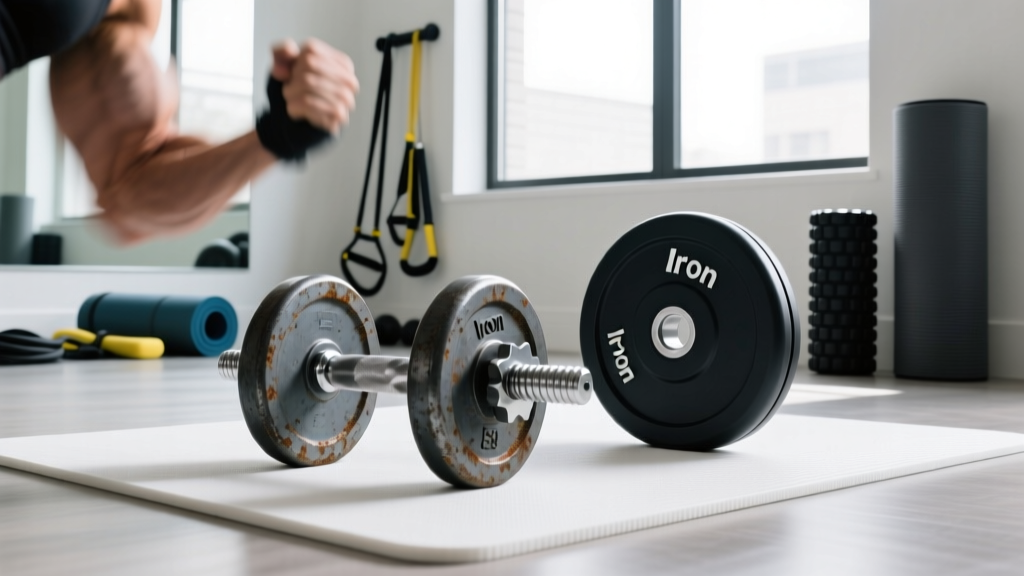
Iron vs Bumper Plate Care: Dumbbell Alt Bicep Curl & Longevity
Master bumper vs iron plate maintenance for your home gym. Learn longevity tips, rust prevention, and gear care from deadlifts to the dumbbell alt bicep curl.

The Core Debate: Bumper Plates vs. Cast Iron Plates in 2026
As we navigate the 2026 fitness equipment market, the debate between bumper plates and cast iron plates remains a cornerstone of home gym design. While the choice often comes down to budget and training style, the long-term longevity of your investment is dictated entirely by your maintenance protocols. Free weights are subjected to extreme kinetic forces, environmental fluctuations, and biological corrosives. Understanding the material science behind your weight plates is the first step toward ensuring they survive decades of use.
Whether you are dropping a loaded barbell from overhead or carefully loading fractional plates for a strict isolation movement, the wear vectors on your equipment vary wildly. According to Garage Gym Reviews' comprehensive guide to bumper plates, the lifespan of rubber versus iron is not just about the material—it is about how the user interacts with the environment and the hardware.
💡 Pro Tip: Never assume 'maintenance-free' means 'zero maintenance.' Even premium urethane and virgin rubber bumpers require quarterly inspections of their steel hubs, while cast iron demands strict humidity control.Material & Maintenance Comparison Matrix
| Feature | Cast Iron Plates | Virgin Rubber Bumpers | Crumb Rubber Bumpers |
|---|---|---|---|
| Shore A Durometer | N/A (Solid Metal) | 85-90A (Firm) | 70-75A (Soft/Bouncy) |
| Drop Rating | Low (Chips concrete, bends bars) | High (15,000+ drops) | Medium (8,000 drops) |
| 2026 Avg Price/Lb | $1.50 - $2.50 | $4.50 - $6.50 | $2.50 - $3.80 |
| Primary Enemy | Moisture (Oxidation/Rust) | UV Light & Ozone | Steel Hub Loosening |
| Storage Requirement | Horizontal or Vertical (Rack) | Vertical (Weight Tree) ONLY | Vertical (Weight Tree) ONLY |
Cast Iron Plate Maintenance: Fighting Oxidation
Cast iron plates, particularly the machined varieties like the Rogue Machined Olympic Plates, are prized for their slim profile and accurate weight calibration. However, bare or enameled cast iron is highly susceptible to oxidation. In a garage gym environment where humidity fluctuates, rust can begin forming within 48 hours of a protective coating being compromised.
The 4-Step Iron Remediation Protocol
If you acquire vintage iron plates or notice rust blooming on your current set, follow this exact restoration process to halt degradation:
- Mechanical Stripping: Use a wire wheel attachment on an angle grinder to remove heavy flaking rust and old enamel. Wear a P100 respirator to avoid inhaling toxic dust and lead-based paint chips found on older plates.
- Chemical Bath: Submerge the plates in a vat of Evapo-Rust or a 50/50 white vinegar and water solution for 12 to 24 hours. The chelation process will safely pull remaining oxidation from the pores of the iron without damaging the base metal.
- Neutralization: Rinse thoroughly with water, then immediately submerge in a baking soda and water bath to neutralize any residual acids. Dry completely with compressed air or a heat gun to prevent flash-rusting.
- Sealing: Apply a micro-thin coat of 3-IN-ONE oil, mineral oil, or a dedicated rust-inhibiting clear coat. Avoid WD-40, as it is a solvent and water-displacer, not a long-term lubricant or protectant.
Bumper Plate Longevity: Preventing 'Taco' Warping and Hub Ejection
Bumper plates are engineered to absorb kinetic energy, but their rubber matrix and steel center hubs are vulnerable to improper handling. The most common failure mode for bumpers is 'tacoing'—a permanent warp that occurs when a loaded barbell is left resting on the floor, placing sustained, uneven pressure on the bottom plates.
"A warped bumper plate will never sit flush against the next plate on the barbell. This introduces a micro-wobble during Olympic lifts, which can transfer catastrophic lateral forces to your barbell's sleeve bearings and your own wrists."
Hub Maintenance and Temperature Swings
In 2026, many budget-friendly crumb rubber bumpers utilize a simple steel ring insert rather than a fully encapsulated brass hub. When exposed to the extreme temperature swings of an uninsulated garage (e.g., 20°F in winter to 100°F in summer), the steel hub and the surrounding rubber expand and contract at vastly different rates. Over time, this breaks the chemical bond between the rubber and the metal.
- Inspection: Every 3 months, drop the plate flat on a level surface. Listen for a 'clicking' or rattling sound, which indicates the hub is separating from the rubber matrix.
- Prevention: Never leave bumpers outside. UV radiation breaks down the sulfur bonds in vulcanized rubber, causing it to dry out, crack, and shed black dust.
- Storage: Always store bumpers vertically on a weight tree. Storing them horizontally stacked on the floor will deform the bottom plates under the crushing weight of the stack.
Sweat, Friction, and the Dumbbell Alt Bicep Curl
While high-impact drops destroy poorly maintained bumpers, isolation movements introduce entirely different wear vectors—namely, sweat corrosion and hardware friction. This is especially critical when utilizing adjustable dumbbells or loading fractional plates.
Consider the biomechanics of the dumbbell alt bicep curl. When you load fractional iron plates (e.g., 1.25 lb or 2.5 lb micro-plates) onto an adjustable dumbbell handle to progressively overload your dumbbell alt bicep curl, those small iron plates are positioned directly adjacent to your gripping hand. During a high-volume hypertrophy set, sweat and skin oils drip directly onto the iron adder plates, the dumbbell handle, and the locking collars.
⚠️ Warning: Sweat Corrosion on Micro-HardwareThe salt and lactic acid in human sweat have a pH that accelerates oxidation on cast iron and cheap zinc-plated collars. If you fail to wipe down your dumbbell collars and fractional plates after a heavy set of dumbbell alt bicep curls, the locking mechanism will seize up within weeks, rendering the adjustable dumbbell useless.
Actionable Care for Isolation Days: Keep a microfiber towel treated with a mild, non-ammonia disinfectant nearby. Immediately after completing your dumbbell alt bicep curl working sets, wipe down the knurling, the micro-plates, and the threading of the spin-lock collars. Once a month, apply a drop of lithium grease to the dumbbell collar threads to prevent them from cross-threading or seizing due to sweat-induced rust.
Environmental Controls: The Invisible Equipment Killers
The longevity of both iron and rubber plates is ultimately capped by your gym's environment. To maximize the lifespan of your free weights, implement the following environmental controls:
- Impact Subflooring: Never drop iron plates, and avoid dropping bumpers directly onto bare concrete. Concrete is harder than the rubber in your bumpers and will cause the rubber to shear. Invest in 3/4-inch vulcanized horse stall mats to absorb the kinetic shock and protect the steel hubs from bending.
- Humidity Regulation: If your gym is in a basement or coastal garage, run a commercial dehumidifier to keep ambient humidity below 50%. This single step will eliminate 90% of flash-rusting on cast iron plates and bare barbell sleeves.
- Chemical Isolation: Keep your weight plates away from pool chlorine, harsh floor cleaners, and ozone generators. Ozone is highly reactive and will cause virgin rubber bumpers to develop surface micro-cracks, significantly reducing their drop-rating lifespan.
Frequently Asked Questions (FAQ)
Can I use bumper plates for exercises other than Olympic lifts?
Yes, but with caveats. Bumper plates are excellent for deadlifts and floor presses because they elevate the bar to the correct starting height. However, for exercises requiring precise weight increments or tight spacing, cast iron is superior due to its slim profile.
How do I fix a loose steel hub in a crumb rubber bumper plate?
Minor looseness can sometimes be mitigated by injecting a high-strength, flexible polyurethane adhesive into the gap between the hub and the rubber. However, if the hub is visibly shifting or clicking loudly upon impact, the plate is structurally compromised and should be retired to prevent it from sliding off the barbell sleeve during a lift.
Are urethane plates worth the premium over rubber?
In 2026, urethane remains the gold standard for commercial and high-end home gyms. It is virtually odorless, highly resistant to UV and sweat degradation, and does not require the same environmental babysitting as rubber. While it costs upwards of $7.00 per pound, its multi-decade lifespan often makes it more cost-effective over time.
More gear to consider
All reviews
EZ vs Straight Bar: Compact Biceps and Triceps Workout with Dumbbells
Dumbbell Man Stud Care: Rubber Hex vs Urethane Longevity

Olympic Barbell Knurling vs Pool Dumbbell Exercises: 2026 Comparison

Escaping the Dumbbell Nebula: Bumper Plate vs Iron Plate Space Guide

Olympic Barbell Knurling vs Standing Biceps Curl Dumbbell Grips
