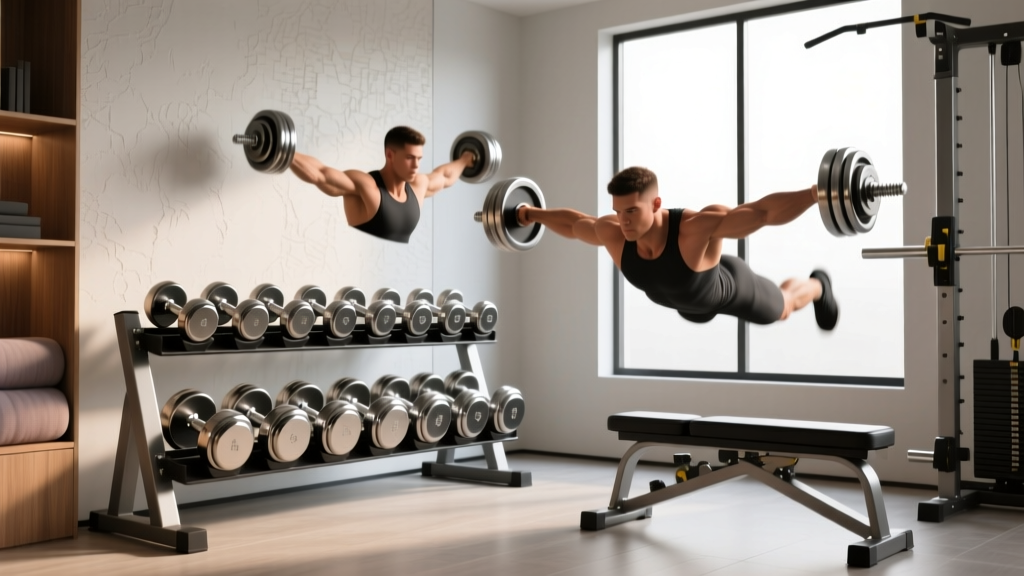
Incline Dumbbell Angle & Olympic vs Standard Plates
Master the ideal incline dumbbell angle for chest growth and learn the critical differences between Olympic vs standard weight plates for your home gym.

Free Weight Foundations: Bench Angles and Plate Systems
When building a functional home gym or upgrading your commercial free-weight station, beginners often fixate on the exercises while overlooking the foundational hardware. Two of the most critical, yet frequently misunderstood, elements of free-weight training are biomechanical positioning and equipment compatibility. Specifically, dialing in the perfect incline dumbbell angle for targeted muscle hypertrophy, and understanding the permanent implications of choosing between Olympic vs standard weight plates.
This step-by-step guide bridges the gap between exercise science and equipment engineering. We will break down the exact degree settings for upper-chest activation, and then transition into a deep-dive comparison of weight plate types, ensuring your 2026 equipment investment scales with your strength gains without catastrophic failure.
Part 1: Biomechanics of the Incline Dumbbell Angle
Before loading your barbell or dumbbells, you must set your adjustable bench correctly. The incline dumbbell press targets the clavicular head (upper chest) and the anterior deltoids. However, the exact incline dumbbell angle dictates which muscle takes the brunt of the mechanical tension.
- 15-Degree Incline: Often overlooked, this slight incline provides excellent upper-chest activation with minimal front-deltoid interference. It is highly recommended for lifters with shoulder impingement issues.
- 30-Degree Incline: According to biomechanical analyses referenced by the ExRx exercise directory, a 30-degree angle is the optimal sweet spot for maximizing upper pectoral recruitment while keeping the anterior deltoid in a supportive, rather than primary, role.
- 45-Degree Incline: This is the standard commercial bench setting, but it is often too steep. At 45 degrees, the anterior deltoid becomes the primary mover, shifting tension away from the chest.
- 60-Degree and Above: This transitions into a strict shoulder press.
Part 2: The Core Choice — Olympic vs Standard Weight Plates
Once your bench is set, you need weight. The free-weight industry is divided into two distinct ecosystems: Standard and Olympic. Choosing the wrong system early on is the most expensive mistake a beginner can make.
Standard Weight Plates (1-Inch Hub)
Standard plates feature a center hole measuring exactly 1 inch (25.4mm). They are designed to slide onto solid steel or threaded 'spin-lock' bars. You will typically find these in big-box sporting goods stores, often coated in vinyl and filled with cement, or as cheap cast iron.
- Cost: $1.00 to $1.50 per pound.
- The Failure Mode: Standard barbells lack rotating sleeves. When you perform dynamic movements like power cleans or heavy bent-over rows, the torque transfers directly into your wrists and elbows. Furthermore, standard bars have a low yield strength; loading past 200–250 lbs will cause the bar to bend permanently, rendering your equipment useless.
- Best For: Light isolation work, beginner dumbbell sets (where plates screw onto a 1-inch handle), and strict budget setups under $200.
Olympic Weight Plates (2-Inch Hub)
Olympic plates feature a 2-inch (50.4mm) center hole. They are the undisputed global standard for serious strength training, powerlifting, and Olympic weightlifting, as detailed in equipment catalogs from industry leaders like Rogue Fitness.
- Cost: $1.50 to $3.00 per pound for bare cast iron; $4.00 to $8.00+ per pound for virgin urethane.
- The Engineering Advantage: Olympic bars feature thick, rotating sleeves equipped with bronze bushings or needle bearings. This allows the bar to spin independently of the plates, absorbing rotational torque and saving your wrists during heavy compound lifts.
- Load Capacity: A standard Olympic barbell can safely hold 500 to 1,000+ lbs without flexing permanently.
- Best For: Squats, deadlifts, bench presses, Olympic lifts, and any lifter who plans to progress beyond the intermediate stage.
Part 3: Step-by-Step Buying Guide for Beginners
Follow this framework to ensure your free-weight purchase aligns with your long-term goals.
- Assess Your 1-Year Trajectory: If you are currently bench pressing 135 lbs but have a structured progressive overload program from the NSCA, you will outgrow standard plates within six months. Buy Olympic plates immediately to avoid the 'double-purchase' trap.
- Select Your Material: For home gyms without dedicated drop pads, avoid bare cast iron Olympic plates. Opt for crumb rubber or urethane. Urethane is superior as it does not emit the strong off-gassing odors associated with cheap recycled rubber, and it resists tearing when dropped.
- Verify the Barbell Sleeve: Ensure your barbell sleeve diameter is exactly 50mm (1.96 inches) to allow the 50.4mm Olympic plates to slide on smoothly without excessive play or scratching.
- Invest in Collars: Olympic plates require heavy-duty clamps (like OSO Pro or Rogue HG 2.0 collars) to prevent the 45-lb plates from sliding off the sleeve during an uneven incline dumbbell or barbell press.
Part 4: Head-to-Head Comparison Matrix
| Feature | Standard Plates | Olympic Plates |
|---|---|---|
| Center Hole | 1 inch (25.4mm) | 2 inches (50.4mm) |
| Barbell Compatibility | Solid steel / Threaded spin-lock | Rotating sleeves (bushings/bearings) |
| Max Safe Load | ~200 - 250 lbs (bar bends) | 500 - 1,000+ lbs |
| Avg. Price (Iron) | $1.00 - $1.50 / lb | $1.50 - $3.00 / lb |
| Durability on Drop | Low (Cement cracks, iron chips) | High (Bumper/Urethane absorbs shock) |
Part 5: Real-World Edge Cases and Safety Protocols
Even with the right equipment, beginners encounter specific edge cases that can compromise safety and floor integrity.
The 'Standard to Olympic' Adapter Trap
Many beginners buy a cheap standard bench press rack, realize they need Olympic plates for heavier lifting, and purchase 'adapter sleeves' that slide over the 1-inch pegs to accept 2-inch plates. Avoid this. These adapters add 4 inches of length to each side, drastically altering the center of gravity and reducing the structural integrity of the rack's pegs. If you are upgrading to Olympic plates, you must upgrade your rack and barbell simultaneously.
Calibration and Plate Tolerance
When buying Olympic plates, pay attention to weight tolerance. Cheap imported cast iron plates can be off by 5-10% from their stated weight. A '45 lb' plate might actually weigh 41 lbs. For serious training, look for 'calibrated' steel plates or high-tier urethane plates that guarantee a +/- 1% accuracy rating. This ensures that when you are calculating your progressive overload metrics, the math actually matches the physical load on the bar.
Floor Protection for Heavy Drops
Whether you are failing a heavy set on your 30-degree incline dumbbell angle or dropping a loaded Olympic barbell after a deadlift, the kinetic energy must go somewhere. Standard plates will shatter your concrete garage floor. Olympic rubber bumper plates will protect the iron, but the sheer force can still crack underlying tiles. Always invest in 3/4-inch (19mm) thick vulcanized rubber horse stall mats or interlocking high-density gym tiles to dissipate the impact energy safely.
Final Verdict
Mastering the nuances of free-weight training requires respect for both the human body and the hardware. By locking in the correct 30-degree incline dumbbell angle, you protect your shoulder joints while maximizing hypertrophy. By bypassing the limitations of standard plates and investing in a 2-inch Olympic system, you future-proof your home gym, ensuring your equipment can handle the heavy, dynamic loads required for lifelong strength progression.
More gear to consider
All reviews
Beyond Basic Dumbbell Training: 2026 Kettlebell Market Trends

Why Are Dumbbells So Expensive? Top Neoprene Sets Compared

What Do Dumbbell Shoulder Presses Work? Loadable Handle Care

Cast Iron vs Competition Kettlebell Care & Lat Pull Down with Dumbbells

Power Rack vs Squat Rack vs Stand for Dumbbell to Barbell Bench