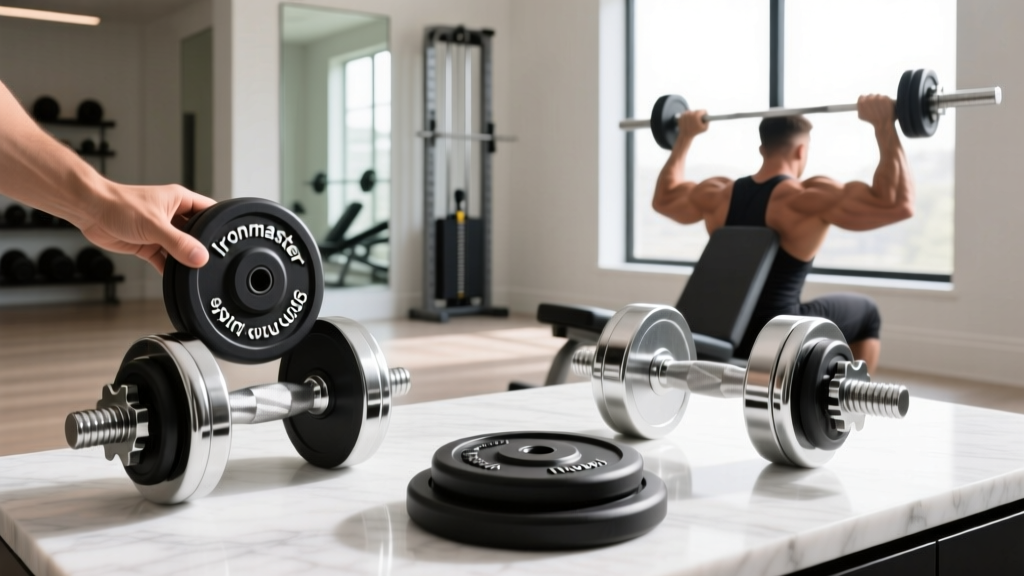
Best Loadable Dumbbells for Back Flys: 2026 Hands-On Review
Discover the best loadable dumbbells for back flys in 2026. We review Ironmaster, Nuobell, and spin-lock plates for optimal rear delt isolation.

Isolating the posterior deltoid requires precision, strict form, and an acute mind-muscle connection. However, most home gym owners overlook a critical variable in their rear deltoid training: the physical profile of their adjustable weights. When executing back flys with dumbbells, the width, handle length, and center of mass of your equipment can either facilitate a perfect contraction or introduce rotational torque that shifts the load onto your rhomboids and trapezius.
As a senior equipment reviewer for FitGearPulse, I have spent the last decade testing every loadable dumbbell with interchangeable plates on the market. In this 2026 hands-on review, we are evaluating these systems specifically through the lens of isolation movements. We will break down the biomechanical impact of block-style, twist-lock, and traditional spin-lock dumbbells, helping you choose the exact tool needed to build boulder shoulders without joint strain.
The Biomechanics of Rear Delt Isolation and Dumbbell Profile
The rear deltoid is a relatively small muscle group. According to the Exercise Prescription on the Internet (ExRx) biomechanics database, the reverse fly relies on transverse extension at the shoulder joint. Because the lever arm is long (your entire arm) and the target muscle is small, the weight used is typically light—often between 10 and 25 pounds per hand for strict, ego-free repetitions.
This creates a unique problem for loadable dumbbells. A fixed 15-pound hex dumbbell is compact, measuring roughly 9 inches from end to end. A traditional interchangeable plate dumbbell loaded to 15 pounds, however, can span over 20 inches. This excessive width forces the user to alter their grip or bend their elbows excessively, fundamentally changing the movement from a transverse extension into a rowing motion. Let us look at how the top loadable dumbbell systems handle this challenge.
Hands-On Reviews: Top Interchangeable Plate Dumbbells
1. Nuobell 80 LB Adjustable Dumbbells (The Ergonomic Winner)
Nuobell utilizes a twist-lock mechanism that seamlessly swaps machined steel plates inside a compact housing. While technically an adjustable system, it mimics the exact profile of a fixed urethane dumbbell.
- Price (2026): ~$349 per pair (up to 80 lbs)
- Handle Length: 5.7 inches (knurled steel)
- Width at 15 lbs: ~10.5 inches
Hands-On Verdict: Nuobell is the undisputed champion for back flys. Because the weight distribution remains centralized regardless of the loaded weight, your center of mass stays directly under your wrist. During the eccentric phase of a chest-supported fly, the compact ends do not scrape the bench pad. The knurling is aggressive enough to prevent slipping when your hands get sweaty, but not so sharp that it tears calluses during high-rep isolation sets.
2. Ironmaster Quick-Lock V2 (The Heavy-Duty Contender)
Ironmaster uses a drop-in plate system secured by a threaded locking screw. It is widely considered the most durable loadable dumbbell on the market, capable of surviving drops that would shatter dial-based alternatives.
- Price (2026): ~$399 for the 75 lb set
- Handle Length: 5.5 inches
- Width at 15 lbs: ~11.5 inches (using the V2 compact plates)
Hands-On Verdict: The square, blocky design of the Ironmaster is fantastic for floor presses and goblet squats, but it presents a minor hurdle for back flys. When performing chest-supported reverse flys on a 30-degree incline bench, the flat edges of the Ironmaster blocks can occasionally catch the edge of the bench pad at the very bottom of the stretch, limiting your range of motion by roughly one inch. If you primarily do standing bent-over flys, this is a non-issue, and the durability remains unmatched.
3. Traditional Spin-Lock Dumbbells (The Budget Trap)
Brands like Yes4All and CAP Barbell offer cast-iron spin-lock handles with interchangeable star-nut collars. They are inexpensive and virtually indestructible, but their geometry is fundamentally flawed for isolation work.
- Price (2026): ~$45 - $65 for a 40 lb pair
- Handle Length: 14 inches (total bar length)
- Width at 15 lbs: 20+ inches
Hands-On Verdict: To load 15 pounds on a spin-lock, you must use the collar, a 5 lb plate, and a 2.5 lb plate on each side. This spreads the mass far away from your hands. When you initiate a back fly, the wide wingspan creates rotational inertia. Your wrists will naturally want to pronate or supinate to stabilize the wide load, immediately taking the rear deltoid out of the optimal line of pull. I strongly advise against spin-lock dumbbells for strict isolation movements.
Comparison Matrix: Loadable Dumbbells for Isolation
| Model / System | Profile Compactness | Weight Increments | Bench Clearance | Back Fly Rating |
|---|---|---|---|---|
| Nuobell 80 LB | Excellent (Mimics Fixed) | 5 lbs (2.5 lb add-on available) | Perfect | 9.5 / 10 |
| Ironmaster V2 | Good (Blocky) | 2.5 lbs (with add-on kit) | Good (Minor scraping) | 8.0 / 10 |
| Spin-Lock (Generic) | Poor (Overly Wide) | 1.25 lbs (Plate dependent) | Poor (Wide bar hits pad) | 4.0 / 10 |
Expert Execution: Perfecting the Chest-Supported Back Fly
Having the right loadable dumbbell is only half the battle. To maximize hypertrophy in the posterior deltoid while minimizing the risk of injury, follow this step-by-step protocol using your compact adjustable dumbbells:
- Bench Setup: Set an adjustable bench to a 30-degree or 45-degree incline. A flatter angle (closer to 30 degrees) aligns the movement better with the transverse fibers of the rear delt.
- Grip and Posture: Lie face down on the bench. Let the dumbbells hang straight down with a neutral grip (palms facing each other). Maintain a slight, fixed bend in your elbows—roughly 15 to 20 degrees.
- The Concentric Phase: Exhale and raise the weights out to the sides. Focus on driving the elbows up toward the ceiling rather than squeezing the hands outward. Stop when your arms are parallel to the floor.
- The Eccentric Phase: Inhale and slowly lower the weights over a full 3-second count. Feel the stretch across the back of the shoulder capsule.
A common "bro-science" tip is to pour the pitchers (internally rotate the shoulder) at the top of the fly to isolate the rear delt. According to the Cleveland Clinic, combining shoulder extension or transverse extension with internal rotation severely narrows the subacromial space. This can lead to supraspinatus tendon impingement over time. Keep a neutral or slightly external rotation to keep the shoulder joint safe and the tension on the muscle belly.
Progressive Overload with Interchangeable Plates
The rear delts respond incredibly well to metabolic stress and high-rep sets (15-25 reps). However, you still need progressive overload. This is where the micro-loading capabilities of loadable dumbbells shine.
If you are using the Ironmaster Quick-Lock with the 2.5 lb add-on kit, you can increase the weight by just 1.25 lbs per hand. Jumping from a 15 lb fixed dumbbell to a 20 lb fixed dumbbell (a 33% increase) is often too drastic for the small rear deltoid muscles, leading to form breakdown and trap dominance. The ability to micro-load your interchangeable plates ensures that you can add exactly 2.5 lbs to the bar, keeping the tension strictly on the target tissue.
Frequently Asked Questions
Can I use loadable dumbbells for seated rear delt flys?
Yes, but seated variations require more core stability and often lead to lower-back cheating (using momentum to swing the weight). Chest-supported variations on an incline bench are vastly superior for strict isolation, provided your dumbbell ends do not scrape the bench pad.
What is the best weight increment for back flys?
Because the posterior deltoid is a small muscle, 2.5 lb to 5 lb total jumps (1.25 to 2.5 lbs per hand) are ideal. Systems that allow for micro-loading, like the Ironmaster with add-on plates or the Nuobell with its 2.5 lb micro-adjust rings, are highly recommended for advanced lifters.
Are rubber-coated interchangeable plates better for home gyms?
For loadable dumbbells, cast iron or machined steel plates are superior to rubber. Rubber plates are significantly thicker than iron plates of the same weight. If you use thick rubber plates on a spin-lock handle, the dumbbell becomes impossibly wide, completely ruining the biomechanics of back flys and lateral raises. Always opt for thin, high-density iron or steel plates for isolation movements.
Final Verdict
If your training split heavily features isolation work like back flys with dumbbells, lateral raises, and tricep extensions, the physical geometry of your equipment matters just as much as the weight it holds. For 2026, the Nuobell 80 LB remains my top recommendation for lifters who want the exact feel of a commercial fixed dumbbell rack in their home gym. For those who prioritize indestructible, drop-proof gear and don't mind a slightly blockier profile, the Ironmaster Quick-Lock V2 is a lifetime investment. Avoid wide spin-lock handles for isolation work, and watch your rear delts grow with strict, biomechanically sound execution.
More gear to consider
All reviews
Standard vs Olympic Plates: Loading for the Hammer Dumbbell Curl

Barbell Collar Types & Dumbbell Exercises for Back Fat
EZ vs Straight Bar Value: Plus a Dumbbell Only Back Workout Guide

Dumbbell Curl Weight for Beginners: A Neoprene Home Guide
Dumbbell Squats for Glutes: Top Adjustable Dumbbell Reviews
