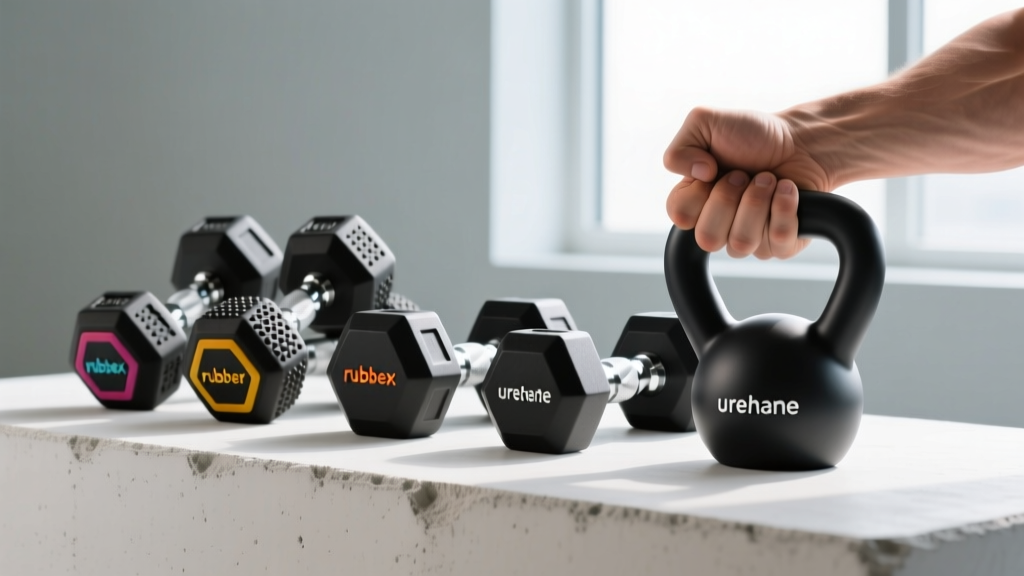
Grow Your Bicep With Dumbbells: Rubber Hex vs Urethane Value Guide
Isolate and grow your bicep with dumbbells that fit your budget. We break down the true cost, ROI, and durability of rubber hex vs. urethane.

The True Cost of Curls: Rubber Hex vs. Urethane in 2026
Building a home gym or upgrading a commercial facility requires strict capital allocation. When outfitting your free weight zone, the dumbbell rack is often the most expensive line item. For lifters focused on hypertrophy—specifically those looking to isolate and grow the bicep with dumbbells—the equipment you choose dictates not only your biomechanical efficiency but also your long-term financial ROI. In the current fitness equipment market, the debate almost always narrows down to two primary coatings: rubber hex and urethane.
At first glance, rubber hex dumbbells appear to be the undisputed champions of budget-friendly lifting. However, a true value analysis requires looking past the initial purchase price. By examining material degradation, ergonomic impact on targeted lifts, and the 10-year replacement cycle, we can determine which coating actually offers the best financial and functional return on investment.
Quick Market Snapshot (2026 Pricing)
- Budget Rubber Hex: $1.29 – $1.60 per pound
- Premium Urethane: $2.70 – $4.00 per pound
- Average 5-50lb Set (10 Pairs): ~$1,150 (Rubber) vs. ~$2,850 (Urethane)
Material Science: Why Urethane Commands a Premium
To understand the price gap, we have to look at the polymer chemistry. Standard rubber hex dumbbells (like the ubiquitous CAP Barbell or Titan Fitness models) are typically made from recycled rubber compounds or lower-grade virgin rubber. These materials are pressed into molds around a solid cast iron core. While effective at dampening sound and protecting floors, recycled rubber contains sulfur and other volatile organic compounds (VOCs). This results in the infamous 'tire smell' that can take months to off-gas, making it a poor choice for enclosed spaces like basement gyms or spare bedrooms.
Urethane, specifically high-grade polyurethane, is a completely different class of elastomer. According to material testing data reviewed by Garage Gym Reviews, premium urethane dumbbells boast a Shore A durometer rating of 90A or higher, compared to the 75A-85A rating of standard rubber. This higher density means urethane is virtually odorless, highly resistant to UV degradation, and impervious to the oils and sweat that cause standard rubber to dry rot and flake over time.
Ergonomics and the Bicep Curl: Does Coating Affect Your Lift?
When you train the bicep with dumbbells, the primary focus is on the supination of the wrist and the flexion of the elbow joint. While the coating itself doesn't touch your hands, the manufacturing tier associated with the coating drastically alters the handle design.
Budget rubber hex sets almost universally feature straight, basic chrome or cerakote handles with a uniform 32mm to 35mm diameter and aggressive, uniform knurling. During high-volume bicep curls, this can lead to premature grip fatigue or wrist discomfort. Conversely, premium urethane lines—such as the Rogue Urethane Dumbbells—often feature ergonomic, contoured handles with a 35mm diameter and carefully placed, moderate knurling.
Biomechanical Insight: A study published in the National Center for Biotechnology Information (NCBI) on the electromyographic (EMG) analysis of biceps curls highlights that grip stability and wrist alignment are crucial for maximizing muscle activation in the biceps brachii. An ergonomic handle found on premium urethane sets allows for better force transfer, reducing forearm compensatory movement during the concentric phase of the curl.
Head-to-Head Comparison Matrix
| Feature | Rubber Hex (Budget/Mid-Tier) | Urethane (Premium) |
|---|---|---|
| Cost Per Pound | $1.29 - $1.60 | $2.70 - $4.00 |
| Odor / Off-Gassing | High (Sulfur/VOCs) | None / Negligible |
| UV & Sweat Resistance | Low (Prone to dry rot) | Exceptional |
| Drop Durability | Moderate (Splits at core) | High (Absorbs impact) |
| Handle Ergonomics | Basic straight shaft | Often contoured/ergonomic |
| Expected Lifespan | 3 - 7 Years | 15+ Years |
Calculating the 10-Year ROI: Which Actually Saves You Money?
To determine true value, we must calculate the cost of replacement and maintenance over a decade. Let's model a standard 5 to 50-pound set (10 pairs, 550 total pounds) in a moderately humid, unventilated garage gym environment.
Scenario A: The Rubber Hex Route
You purchase a 550 lb set of imported rubber hex dumbbells for roughly $750. For the first two years, they perform adequately. However, by year four, the combination of humidity, sweat, and temperature fluctuations causes the rubber to undergo vulcanization breakdown. The edges begin to flake, leaving black residue on your hands and lifting bench. More critically, the rubber splits at the junction where the metal handle meets the weight head. By year six, the set is aesthetically ruined and structurally compromised, forcing a replacement. 10-Year Cost: ~$1,500 (two purchases).
Scenario B: The Urethane Investment
You invest in a 550 lb set of Rep Fitness or Rogue urethane dumbbells for roughly $1,600. The initial outlay is more than double. However, the polyurethane coating is entirely waterproof and chemically resistant to human sweat. The heads are bonded to the steel core using industrial-grade adhesives and mechanical interlocks that prevent separation, even when dropped from waist height onto rubber stall mats. At year ten, the dumbbells show minor scuffing but remain structurally flawless and odor-free. 10-Year Cost: $1,600 (one purchase).
⚠️ Warning on 'Virgin Rubber' Marketing: Many mid-tier brands market their products as 'virgin rubber' to justify a $2.00/lb price tag. While virgin rubber eliminates the harsh sulfur smell of recycled tires, it still suffers from the same UV and ozone degradation as cheaper alternatives. Do not pay urethane prices for virgin rubber; the structural lifespan remains fundamentally limited by the elastomer's chemical properties.Failure Modes and Edge Cases
Every piece of fitness equipment has a breaking point. Understanding these failure modes is critical for buyers.
- The Hex-Head Split (Rubber): The most common failure point for rubber hex dumbbells is the bond between the cast iron core and the rubber coating. Repeated drops, even from just 12 inches, create a shockwave that travels through the rigid iron core. Over time, this shears the rubber from the inside out.
- The Concrete Chip (Urethane): Urethane is incredibly resilient, but it is not indestructible. If dropped directly onto unsealed concrete or bare tile from above the waist, 90A urethane can chip or gouge. It requires basic horse-stall mats or a dedicated lifting platform to reach its maximum lifespan.
- Handle Rust (Both): While the heads get all the attention, the handles often dictate the lifespan of the tool. Budget sets use cheap chrome plating that flakes and rusts. When buying any set, prioritize handles with Cerakote, hard chrome, or stainless steel finishes to ensure your grip remains secure during heavy curls.
The Final Verdict: Where Should You Put Your Money?
If you are outfitting a high-traffic commercial gym, a CrossFit box where weights are routinely dropped, or a premium home gym where odor and aesthetics are paramount, urethane is the only logical choice. The higher upfront cost is entirely offset by the 15-year lifespan and zero maintenance requirements. Furthermore, the ergonomic handles typically paired with urethane sets provide a superior biomechanical advantage when isolating the bicep with dumbbells, reducing wrist strain and improving muscle activation.
However, if you are on a strict sub-$1,000 budget, operating an outdoor gym, or simply need a temporary stopgap while you save for premium gear, rubber hex dumbbells remain a viable, functional tool. Just be prepared to deal with the initial off-gassing period and plan to replace them within five to seven years.
Ultimately, value in fitness equipment isn't about spending the least amount of money today; it's about minimizing your cost-per-lift over the lifespan of the gear. Choose the coating that aligns with your environment, your lifting style, and your long-term financial strategy.
More gear to consider
All reviews
Power Rack vs Squat Rack vs Stand: Strongman Circus Dumbbell Setup

Incline Dumbbell Row Muscles Worked: Home Setup & Neoprene Guide

Olympic vs Standard Weight Plates: Gear for Dumbbell Plank Rows

Kettlebell Budget: Cast Iron vs Competition & Walking Dumbbell Lunge
Power Rack vs Squat Stand for the Dumbbell Clean and Jerk
