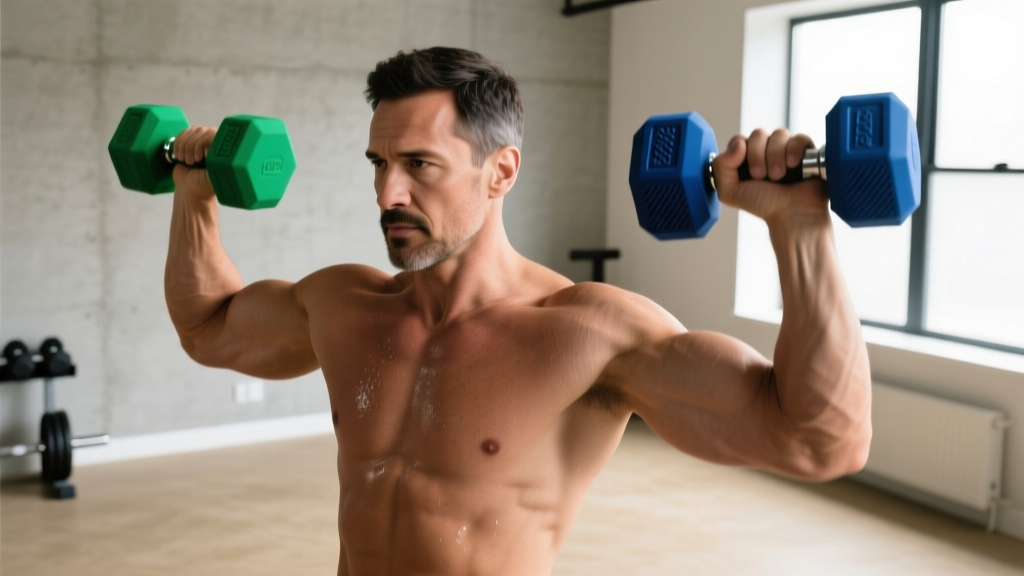
How to Work Forearms With Dumbbells: Neoprene Fixes
Master how to work forearms with dumbbells using neoprene sets. Fix common grip mistakes, overcome light-weight plateaus, and protect your gear.

The Neoprene Dilemma: Why Your Forearms Aren't Growing
When figuring out how to work forearms with dumbbells in a home gym, most lifters default to the equipment they already own. For millions of home users, this means reaching for a pair of neoprene-coated dumbbells. While these colorful, hex-shaped weights are fantastic for high-repetition metabolic conditioning and light joint rehabilitation, they present unique biomechanical and material challenges when your goal is serious forearm hypertrophy and grip strength.
Neoprene (polychloroprene) is a synthetic rubber that provides a soft, tactile grip. However, this exact material property creates a hidden trap for forearm training: it traps heat, accelerates localized hand sweating, and ultimately compromises your grip before your forearm flexors reach true mechanical failure. Furthermore, most home neoprene sets—such as the widely popular CAP Barbell or Amazon Basics lines—cap out at 20 to 35 pounds per dumbbell.
As of 2026, a standard pair of 15 lb CAP Barbell neoprene dumbbells hovers around $32, making them an accessible entry point. But if you are only using them for standard wrist curls, you are likely leaving massive gains on the table. Below is a comprehensive troubleshooting guide to maximizing light-weight neoprene dumbbells for complete forearm development.
⚠️ Troubleshooting Alert: The Sweat-Slip FactorUnlike bare knurled steel or dense urethane, neoprene becomes remarkably slick when exposed to the acidic pH of human sweat. If your dumbbell is slipping during heavy farmer's holds or wrist extensions, your limiting factor is surface friction, not muscular fatigue. Always keep a microfiber towel and liquid chalk nearby when training forearms with coated weights.
Top 4 Mistakes When Using Neoprene Dumbbells for Forearms
1. Relying Solely on Standard Wrist Curls (The Weight Ceiling)
The forearm flexor group (including the flexor carpi radialis and palmaris longus) is highly dense with slow-twitch muscle fibers, meaning they respond exceptionally well to time under tension (TUT) and metabolic stress rather than just heavy mechanical load. The mistake home users make is performing rapid, 1-second rep wrist curls with 15 lb neoprene dumbbells, reaching 30 reps without feeling a burn.
The Fix: Implement a 3-1-3-1 tempo. Take 3 seconds to lower the weight (eccentric), pause for 1 second at the bottom stretch, flex up in 3 seconds, and squeeze at the top for 1 second. This turns a lightweight 15 lb dumbbell into a highly effective hypertrophy stimulus without needing to buy heavier cast-iron sets.
2. Ignoring the Brachioradialis and Pronator Teres
Many lifters believe forearm training ends at the wrist joint. However, the brachioradialis (the thick muscle on the top of your forearm) crosses the elbow joint. Standard wrist curls do virtually nothing for this muscle. According to biomechanical data cataloged by ExRx.net, targeting the entire forearm requires manipulating the elbow angle and grip orientation.
The Fix: Incorporate Neoprene Hammer Curls and Pronation/Supination twists. Hold the neoprene dumbbell by the top head (off-center) to create an uneven lever arm, forcing the pronator teres to work overtime to stabilize the weight.
3. The 'Death Grip' Squeeze on Light Weights
Because neoprene feels soft, users tend to crush the handle, squeezing far harder than necessary to stabilize the weight. This causes premature central nervous system (CNS) fatigue and can lead to medial epicondylitis (golfer's elbow).
The Fix: Use a 'hook grip' mentality for wrist curls. Let the dumbbell roll down to the distal pads of your fingers during the eccentric phase, then curl the fingers back into the palm before flexing the wrist. This maximizes the range of motion (ROM) and stretches the flexor digitorum profundus.
4. Letting Sweat Degrade the Neoprene Coating
Forearm training generates immense friction and sweat. Human sweat contains urea, sodium chloride, and lactic acid. Over time, this acidic mixture breaks down the chemical bonds in polychloroprene, causing the coating to peel, flake, and emit a sour odor.
The Fix: Never use bleach or harsh ammonia-based cleaners on neoprene. Wipe your dumbbells down immediately after your workout with a solution of 50% distilled white vinegar and 50% water, followed by a dry microfiber cloth.
Biomechanics Breakdown: Targeting the 3 Forearm Compartments
To build a complete troubleshooting protocol, you must understand which muscles you are targeting. Research published in the National Institutes of Health (NIH) highlights that grip strength and forearm muscle density are critical biomarkers for overall longevity and functional capacity. Here is how to map your neoprene dumbbell exercises to specific anatomical targets.
| Muscle Group | Primary Function | Neoprene DB Exercise | Optimal Rep Range |
|---|---|---|---|
| Flexor Carpi Radialis | Wrist Flexion | Palms-Up Wrist Curl (Over bench edge) | 15 - 25 reps |
| Extensor Carpi Ulnaris | Wrist Extension | Palms-Down Reverse Wrist Curl | 12 - 20 reps |
| Brachioradialis | Elbow Flexion (Neutral) | Seated Hammer Curls | 8 - 15 reps |
| Pronator Teres | Forearm Pronation | Single-Arm Off-Center Lever Twists | 10 - 15 reps |
Troubleshooting the 'Light Weight' Plateau
What happens when your 20 lb neoprene dumbbells are simply too light to induce further muscle growth, but you aren't ready to invest $150+ in a set of heavy urethane hex dumbbells? You must manipulate leverage and grip diameter.
- The Towel Wrap Method: Wrap a thick cotton gym towel around the neoprene handle. This increases the grip diameter from the standard 1.25 inches to over 2.5 inches. According to ergonomic guidelines from the Mayo Clinic, modifying grip thickness alters wrist mechanics and drastically increases the activation of the flexor digitorum muscles. A 15 lb dumbbell with a thick towel grip will challenge your grip strength more than a bare 40 lb iron dumbbell.
- Eccentric Overloads with Two Hands: Use your free hand to help lift the neoprene dumbbell into the fully flexed wrist position. Let go with the assisting hand, and use only the working forearm to resist the weight on the way down for a strict 5-second negative.
- Isometric Farmer's Holds: Grab your heaviest neoprene dumbbells. Hold them at your sides with your wrists extended slightly backward (extension bias). Hold until your fingers involuntarily begin to peel open. Aim for 60 to 90 seconds of continuous tension.
Care and Maintenance for Neoprene Coatings
To ensure your home gym equipment lasts, you must treat the neoprene coating correctly. Unlike cast iron, which can be wire-brushed and re-painted, or urethane, which is virtually indestructible, neoprene is susceptible to UV degradation and chemical breakdown.
"The lifespan of a neoprene-coated dumbbell in a high-humidity home gym is directly correlated to how quickly sweat is removed from the surface. Acidic sweat left overnight will cause the rubber to separate from the internal cast-iron core within 12 to 18 months."
Routine Maintenance Checklist:
- Post-Workout: Wipe down with a damp microfiber cloth and mild dish soap.
- Monthly: Inspect the seams where the neoprene meets the metal handle. If you see lifting, apply a small dab of flexible cyanoacrylate (super glue gel) to prevent moisture from entering the core and causing internal rust.
- Storage: Keep neoprene dumbbells out of direct sunlight. UV rays cause polychloroprene to undergo photodegradation, leading to a chalky, brittle surface that will tear during heavy grip work.
Expert Verdict: When to Upgrade from Neoprene
Neoprene dumbbells are an excellent, budget-friendly tool for learning how to work forearms with dumbbells safely, especially for beginners focusing on tendon conditioning and high-rep endurance. However, if your primary goal shifts toward maximal grip strength or powerlifting carryover, the soft durometer of neoprene will absorb force and fail to condition your skin and calluses for heavy barbell work.
If you find yourself consistently exceeding 25 reps on your tempos, or if the towel-wrap methods are no longer challenging, it is time to upgrade. Transitioning to a pair of 40 lb or 50 lb Urethane Hex Dumbbells (which typically cost between $110 and $140 per pair in 2026) will provide the dense, unforgiving handle required for advanced heavy farmer's walks and strict heavy wrist extensions.
Frequently Asked Questions
Can I use chalk on neoprene dumbbells?
Magnesium carbonate (gym chalk) will dry out the neoprene and leave a permanent white film in the micro-pores of the rubber. If you need grip assistance, use a liquid chalk with a rosin base, or simply rely on the towel-wrap method to increase grip diameter without damaging the coating.
Why do my wrists hurt during palms-down extensions?
Reverse wrist curls place the joint in a vulnerable position. Ensure you are not letting the dumbbell roll onto your fingertips. Keep a tight grip on the neoprene handle and limit the downward stretch to a neutral, comfortable range of motion to avoid impingement.
More gear to consider
All reviews
EZ Curl Bar vs Straight Bar: Market Data & Front Delt Dumbbell Raise

Dumbbell Y Raises: Rubber Hex vs Urethane Maintenance Guide
Budget Breakdown: Loadable Dumbbells for Dumbbell Stationary Lunges

2026 Rack Trends: Storage and One-Arm Dumbbell Row Muscles Worked

Olympic Barbell Setup: Knurling, Weight & Rear Delt Dumbbell Fly GIF
