Bumper vs Iron Plate Comparison: Beyond Standard Dumbbell Weights
Expert hands-on comparison of bumper plates vs iron plates. Discover durometer ratings, pricing, and how to upgrade beyond standard dumbbell weights.

The Home Gym Evolution: From Standard Dumbbell Weights to Olympic Plates
Every serious home gym owner eventually reaches a critical crossroads. You likely started your fitness journey with a basic 1-inch barbell and a set of standard dumbbell weights, slowly accumulating cast-iron plates from local sporting goods stores or second-hand marketplaces. But as your strength progresses and your programming shifts toward dynamic Olympic lifts, high-volume deadlifts, or CrossFit-style WODs, the limitations of basic 1-inch equipment become glaringly obvious. You need an Olympic (2-inch) setup, and with that upgrade comes the ultimate equipment debate: bumper plates versus traditional cast iron plates.
As a senior reviewer for FitGearPulse, I have spent the last decade testing hundreds of free weight configurations. In this comprehensive 2026 hands-on review, we will dissect the material science, real-world failure modes, and exact pricing of bumper and iron plates. More importantly, we will explore how to intelligently integrate your existing standard dumbbell weights into a modern, hybrid home gym setup without wasting your initial investments.
Expert Callout: The 1-Inch vs. 2-Inch Dilemma
Before diving into plate materials, remember that standard equipment refers to the 1-inch diameter sleeve and bore, while Olympic refers to the 2-inch standard. You cannot safely drop 1-inch standard plates, and true bumper plates are exclusively manufactured with 2-inch stainless steel inserts to withstand the shear force of a dropped Olympic barbell.
Material Science: Cast Iron vs. Engineered Rubber
To make an informed purchasing decision, you must look past the marketing jargon and understand the physics of the materials resting on your barbell sleeve.
Cast Iron Plates: The Traditionalist's Choice
Cast iron plates are poured into molds, machined for weight accuracy, and finished with either paint, powder coating, zinc, or black oxide. The primary advantage of iron is its density and thin profile. A standard 45lb machined iron plate is typically around 1.5 inches thick. This thinness allows you to load a barbell with over 600 lbs before running out of sleeve space. According to testing data referenced by the National Strength and Conditioning Association (NSCA), iron plates provide zero energy absorption, meaning the shock of a dropped barbell is transferred entirely into the floor, the barbell sleeves, and the plate itself.
Bumper Plates: Engineered for Impact
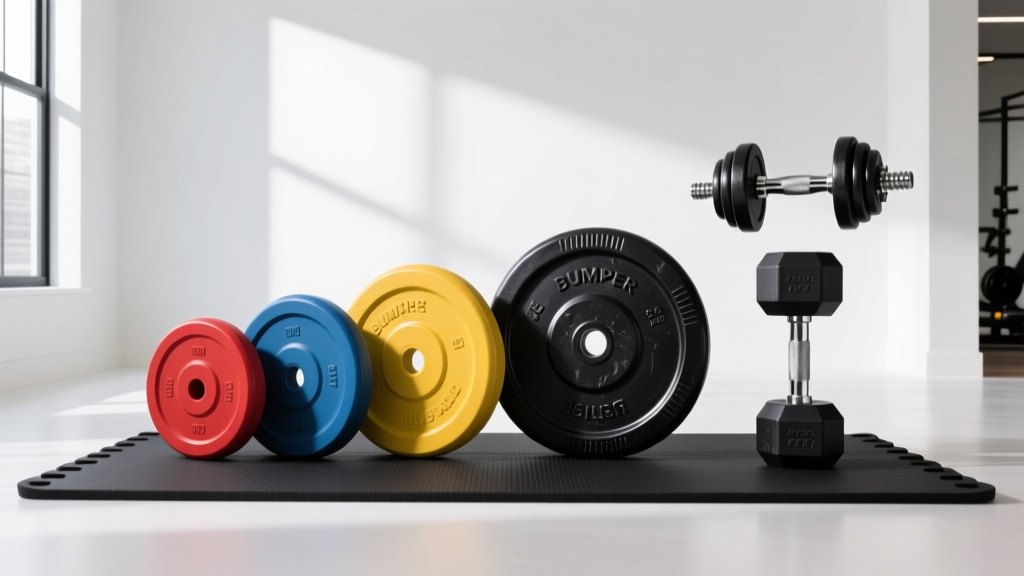
Bumper plates are constructed from virgin or recycled crumb rubber with a steel or brass center insert. The critical metric for bumpers is the Shore A Durometer rating, an industry-standard measure of rubber hardness governed by ASTM International testing protocols.
- Training Bumpers (75-80A): Softer, higher bounce, thicker profile. Ideal for beginners and garage gyms where noise is a concern.
- Competition Bumpers (85-90A+): Extremely hard, minimal 'dead bounce,' incredibly thin for their weight. Designed for Olympic weightlifting platforms where a bouncing barbell is a safety hazard.
Virgin rubber bumpers offer a clean, odor-free experience, whereas crumb rubber (recycled tires) is cheaper but often suffers from off-gassing and shedding in humid environments.
Hands-On Top Picks & 2026 Pricing Breakdown
Based on our latest drop-tests, bar-whip analysis, and durability tracking, here are the top performers in the current market.
- Best Overall Iron: Rogue Deep Dish Machined Iron Plates
These are the gold standard for powerlifting. Machined from high-quality cast iron and finished with a durable E-coat, they resist rust far better than traditional painted plates. At roughly $2.50 to $3.00 per pound, they are an investment, but their 1.5-inch thickness and raised lips make them easy to grip off the floor. - Best Value Bumper: Rogue Echo Bumper Plates V2
The Echo V2 features a patented IWF-standard stainless steel insert and a 77A durometer rating. They offer an exceptional 'dead bounce' that keeps the barbell from launching back into your shins during a missed clean. Pricing sits at a highly competitive $3.50 per pound. The 45lb plate is 3.75 inches thick, which limits max barbell loading compared to iron. - Budget Iron Alternative: CAP Barbell Cast Iron Plates
If you are outfitting a garage gym on a strict budget, CAP's standard 2-inch Olympic iron plates remain the workhorse of the industry. Finished in a semi-gloss black paint, they are prone to chipping and surface rust if exposed to humidity, but at $1.50 to $1.80 per pound, they are unbeatable for basic strength work.
Head-to-Head Comparison Matrix
| Feature | Cast Iron Plates | Rubber Bumper Plates |
|---|---|---|
| Drop Safety | Poor (Can crack floor/bar) | Excellent (Absorbs impact) |
| Noise Level | Very Loud (Clanging) | Quiet (Thud) |
| Thickness (45lb) | ~1.5 inches | 3.25 to 4.5 inches |
| Cost Per Pound | $1.50 - $3.00 | $3.00 - $6.00+ |
| Best Discipline | Powerlifting, Bodybuilding | Olympic Lifting, CrossFit |
Real-World Failure Modes: What Brands Don't Tell You
When browsing Rogue Fitness or other top-tier manufacturers, the plates look flawless. But after three years in a non-climate-controlled garage gym, the realities of material degradation set in.
Iron Plate Pitfalls
The most common failure mode for cast iron is oxidation (rust). If you opt for painted or black-oxide iron plates in a humid environment, the surface will pit and stain your hands and flooring. Furthermore, dropping iron plates—even from knee height—can cause micro-fractures in the cast iron, eventually leading to a plate snapping at the center ring under heavy barbell whip.
Bumper Plate Degradation
Bumpers suffer from a phenomenon known as 'taco-ing' or insert separation. If you frequently drop a barbell loaded with only light bumpers (e.g., just two 15lb plates), the leverage placed on the center steel insert will eventually bend the brass or steel ring, ruining the plate's ability to seat flush on the barbell sleeve. Additionally, cheaper crumb-rubber bumpers will dry-rot and crumble at the edges when exposed to UV light and extreme temperature fluctuations.
Where Do Standard Dumbbell Weights Fit In?
With all this focus on 2-inch Olympic plates, you might be wondering what to do with your old 1-inch equipment. Do not throw them away. While you cannot use them for heavy, dynamic barbell work, standard dumbbell weights remain incredibly valuable for a hybrid gym setup.
'The mark of a mature home gym is not the total elimination of entry-level gear, but the strategic deployment of it. Standard 1-inch dumbbell handles paired with your legacy iron plates are perfect for high-rep isolation work, farmer's carries, and unilateral accessory movements that do not require the stabilizing length of an Olympic dumbbell.'
Use your Olympic bumper and iron plates for your primary compound lifts (squats, deadlifts, cleans, and presses). Reserve your standard dumbbell weights for lateral raises, tricep extensions, and goblet squats. This hybrid approach saves you from spending $400+ on a set of fixed-weight rubber hex dumbbells or adjustable Olympic dumbbell handles, which are notoriously bulky and expensive.
Final Verdict: Building Your Hybrid Rack
The choice between bumper and iron plates is not mutually exclusive; the best home gyms utilize a strategic mix of both. If your training heavily features powerlifting (where dropping the bar is forbidden and sleeve space is paramount), invest in machined cast iron plates. If your programming involves Olympic weightlifting, high-intensity functional fitness, or you share a wall with neighbors who despise the sound of clanging iron, virgin rubber bumpers are non-negotiable.
By understanding the durometer ratings, thickness profiles, and failure modes outlined in this comparison, you can build a resilient, versatile free-weight ecosystem. And by keeping your trusty standard dumbbell weights in rotation for accessory work, you honor the foundational equipment that started your fitness journey while safely upgrading to the heavy iron and rubber required for elite performance.
More gear to consider
All reviews
EZ Curl Bar vs Straight Bar: Gym Layouts for Dumbbell Deadbugs
Beyond Kabata Dumbbells: Olympic Barbell Weight & Knurling Guide

Neoprene Dumbbells for Swiss Ball Dumbbell Chest Press
EZ Bar vs Straight Bar & Seated Bent Over Two Arm Dumbbell Triceps Extension

Beyond Dumbbell Indemnity: Barbell Collar & Clamp Types Compared