EZ vs Straight Bar: Dumbbell Curl Muscles Worked & Gear Care
Compare EZ vs straight bars for joint health and the dumbbell curl muscles worked. Expert maintenance tips to extend your curl bar's lifespan.

When building a comprehensive arm routine, lifters frequently analyze the dumbbell curl muscles worked to maximize hypertrophy. Dumbbells allow for natural wrist supination and individual limb tracking, primarily targeting the biceps brachii, brachialis, and brachioradialis. However, as you progress in strength, transitioning to specialized barbells becomes necessary for progressive overload. This brings up a classic debate: EZ curl bar vs. straight barbell.
While most fitness forums focus solely on the biomechanics of the lift, experienced home gym owners and strength coaches know that this decision also dictates equipment longevity and joint preservation. The geometry of an EZ bar versus a straight bar not only shifts the mechanical tension across your elbow joints but also drastically changes how the steel must be cleaned, oiled, and stored to prevent degradation.
In this guide, we bridge the gap between kinesiology and equipment maintenance, showing you how to choose the right bar for your body’s longevity, and exactly how to maintain that bar for decades of use.
Biomechanical Longevity: How Bar Shape Alters Muscle Activation
To understand which bar will keep your joints healthy, we must first look at the dumbbell curl muscles worked and how fixed barbells alter that kinetic chain. According to the ExRx Kinesiology Directory, the biceps brachii functions as both an elbow flexor and a powerful supinator of the forearm.
The Straight Bar: Maximum Supination, Maximum Joint Stress
A standard straight curl bar (typically 1.2 inches in diameter and 47 to 60 inches long) forces your wrists into full supination (palms facing directly up). While this places the biceps brachii in its most mechanically advantageous position for peak contraction, it ignores the natural carrying angle of the human arm. For lifters with limited wrist mobility or a history of medial epicondylitis (golfer's elbow), the straight bar can introduce severe valgus stress to the elbow joint over time.
The EZ Curl Bar: Ergonomic Angles and Brachialis Shift
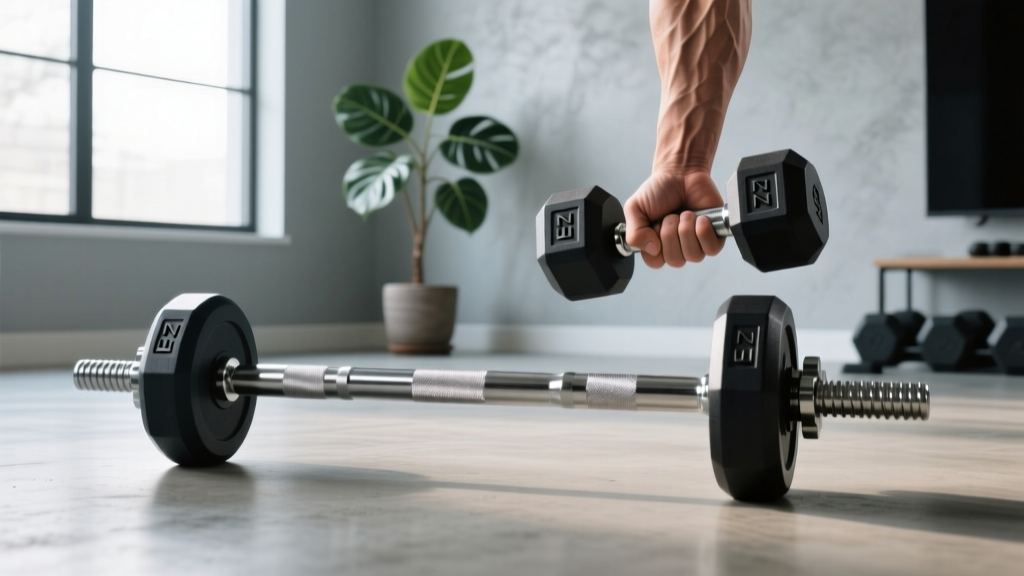
The EZ curl bar features a series of 30-degree and 45-degree bends. By gripping the inner angles, your wrists adopt a semi-supinated position. This slight pronation shifts a measurable percentage of the load away from the short head of the biceps and onto the brachialis and brachioradialis. This not only mimics the natural joint stacking of the dumbbell curl muscles worked but significantly reduces connective tissue strain, promoting long-term joint longevity.
Expert Insight: If you are rehabilitating wrist tendonitis but still want to load the biceps heavily, the EZ bar is non-negotiable. The semi-supinated grip reduces carpal tunnel compression by up to 30% compared to a straight barbell.The Maintenance Divide: Geometry and Knurling Care
From an equipment care perspective, straight bars and EZ bars age very differently. The primary culprit for barbell degradation is sweat, dead skin, and magnesium carbonate (chalk) trapped in the knurling, leading to oxidation (rust).
- Straight Bars: The linear shaft allows for quick, single-pass wipe downs. A microfiber towel dragged from collar to collar removes 90% of surface debris.
- EZ Curl Bars: The 4 to 6 geometric bends create "debris traps." Chalk and sweat pool in the inner valleys of the knurling. If left uncleaned, these specific angles will rust from the inside out, compromising the structural integrity of the bends.
Finish Types and Their Longevity
The steel finish dictates your maintenance schedule. In 2026, the market is dominated by three primary finishes for curl bars:
- Bare Steel / Black Oxide (e.g., Titan Fitness EZ Curl Bar, ~$129): Offers the best grip but provides almost zero oxidation resistance. Requires oiling every 7 to 10 days in humid environments.
- Hard Chrome (e.g., Rogue Fitness Curl Bar, ~$295): Highly resistant to rust and wear. Requires minimal maintenance, but the chrome can flake if dropped on concrete without bumper plates.
- Stainless Steel / Cerakote: The premium tier. Cerakote (a ceramic-polymer coating) completely seals the shaft from moisture, though the knurling can eventually wear through to the bare steel if abused.
Step-by-Step EZ Bar Knurling Rehabilitation
Because of the complex geometry of the EZ bar, standard wipe-downs are insufficient. Follow this protocol every 3 to 4 weeks to maintain the knurling's "volcano" peaks and prevent rust in the bends.
WARNING: Never use a wire brass or steel brush on hard chrome or Cerakote EZ bars. Wire brushes will strip the protective coating, guaranteeing rust within weeks. Always use a stiff nylon bristle brush.- Dry Brushing: Use a stiff nylon brush to aggressively scrub the inner angles of the EZ bar bends. Brush in multiple directions to dislodge impacted chalk.
- Solvent Application: Spray a specialized barbell cleaner or a 50/50 mix of isopropyl alcohol and water onto the knurling. Let it sit for 60 seconds to break down sebum (skin oils).
- Deep Scrub: Scrub again with the nylon brush. You will notice a dark residue lifting from the bends—this is oxidized steel and dead skin.
- Wipe and Dry: Use a clean microfiber towel to wipe the bar completely dry. Moisture left in the bends will cause flash rusting.
- Lubrication: Apply 5-6 drops of 3-in-1 oil or mineral oil to a rag and wipe it over the shaft. The oil fills the microscopic valleys of the knurling, creating a hydrophobic barrier against humidity.
Sleeve and Bushing Care for Rotational Longevity
Unlike Olympic weightlifting bars that spin on needle bearings, curl bars utilize bronze or composite bushings. This is because curling requires slow, controlled rotation rather than explosive dropping. However, bushings require specific maintenance to prevent squeaking and sleeve seizing.
"A seized curl bar sleeve forces your wrists to absorb the rotational torque that the bar should be handling. This directly leads to wrist sprains and defeats the ergonomic purpose of the EZ bar." — FitGearPulse Equipment Testing Lab, 2025 Report
The Capillary Method for Sleeve Oiling:
You do not need to disassemble the barbell sleeves to maintain them. Simply stand the EZ bar vertically against a wall. Apply 10 drops of synthetic barbell oil (or 3-in-1 oil) directly to the seam where the sleeve meets the shaft. Leave it vertically overnight. Capillary action will draw the oil down into the bronze bushings, lubricating the internal friction points. Wipe away excess oil the next morning.
Comparison Matrix: Straight Bar vs. EZ Curl Bar
| Feature | Straight Curl Bar | EZ Curl Bar |
|---|---|---|
| Primary Muscle Focus | Biceps Brachii (Peak Contraction) | Brachialis & Brachioradialis (Thickness) |
| Joint Stress (Wrists/Elbows) | High (Forced Supination) | Low (Ergonomic Angles) |
| Cleaning Difficulty | Low (Linear wipe) | High (Debris traps in bends) |
| Average Cost (2026) | $120 - $180 | $150 - $320 |
| Sleeve Mechanism | Bronze Bushings | Bronze/Composite Bushings |
| Storage Footprint | Requires 5ft+ horizontal rack | Can be stored vertically or on short guns |
Storage Environments and Rust Mitigation
How you store your curl bars directly impacts their lifespan. The Eleiko Equipment Care Guide emphasizes that ambient humidity is the greatest enemy of carbon steel.
Horizontal vs. Vertical Storage
Storing an EZ bar horizontally on standard J-cups can lead to localized rust where the bare steel rests against the plastic of the J-cup, trapping moisture. If you must store horizontally, use UHMW plastic-lined gun racks.
Alternatively, vertical barbell storage racks are ideal for EZ bars. By standing them upright, you minimize the surface area exposed to horizontal dust settling, and gravity helps prevent moisture from pooling in the knurling bends. Just ensure the base of the vertical rack has a rubber mat to prevent the bottom shaft from scratching and rusting.
Frequently Asked Questions
Can I use WD-40 to clean my EZ curl bar?
No. Standard WD-40 is a solvent and water displacer, not a long-term lubricant. It will strip away existing protective oils and leave a residue that attracts more dust and chalk. Always use 3-in-1 oil, mineral oil, or specialized barbell oils.
Does the EZ bar reduce the effectiveness of the lift compared to the dumbbell curl muscles worked?
It does not reduce effectiveness; it shifts the focus. While the ACE Fitness Exercise Library notes that dumbbells allow for individual limb supination, the EZ bar allows you to safely overload the brachialis with heavier weight than dumbbells permit, leading to greater overall arm thickness and pushing the biceps brachii upward.
How often should I oil a black oxide EZ bar?
If your home gym is climate-controlled (under 50% humidity), oiling a black oxide bar once every 3 weeks is sufficient. If your gym is in a garage or basement with fluctuating temperatures and high humidity, you must oil the bar every 7 to 10 days to prevent flash rusting in the knurling bends.
More gear to consider
All reviews
Top Adjustable Picks: Back Workouts for Women with Dumbbells

Rack Maintenance for Safe Collar Bone Exercises with Dumbbells

Olympic vs Standard Plates: Home Exercise Program with Dumbbells

Best Neoprene Weights for Back Exercises Using Dumbbells
Cable Flys vs Dumbbell Flys: Power Rack vs Squat Rack Setup