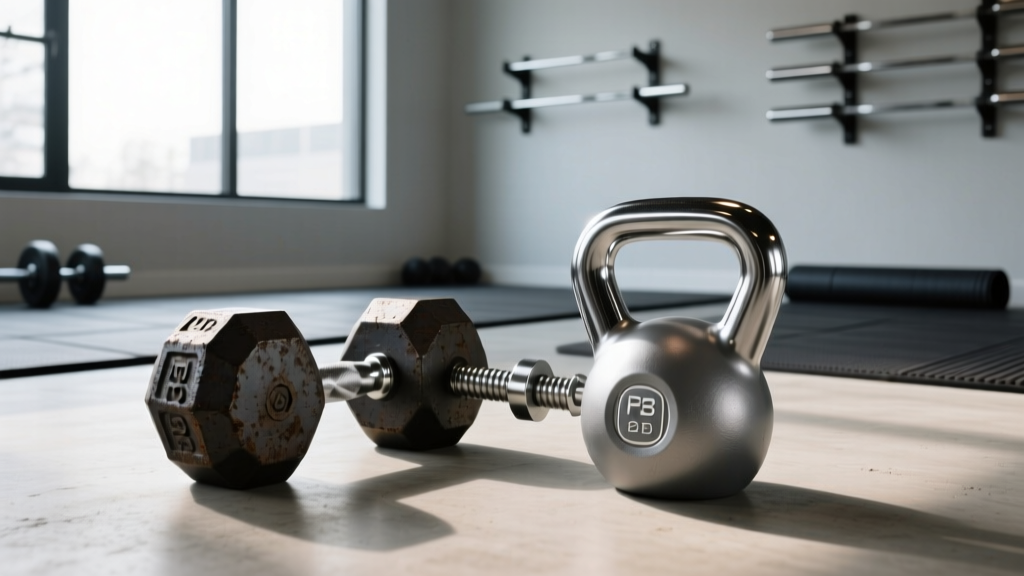
Bumper vs Iron Plates: 2026 Data & Rotating Posterior Dumbbell Press
Explore 2026 free weight market trends comparing bumper vs iron plates, alongside the surge in biomechanical moves like the rotating posterior dumbbell press.

2026 Market Intelligence Brief
The free weight equipment sector is experiencing a distinct bifurcation. On one side, functional fitness and Olympic weightlifting continue to drive innovations in virgin rubber bumper plates. On the other, a massive pivot toward joint longevity and hypertrophy optimization is shifting consumer budgets away from excessive cast iron plate stockpiles and toward premium adjustable dumbbells, specifically to facilitate biomechanically superior movements like the rotating posterior dumbbell press.
The 2026 Free Weight Bifurcation: Foundation vs. Specialization
As we navigate the 2026 fitness equipment landscape, a clear divergence has emerged in how consumers and commercial gym owners allocate their capital. The historical approach of simply buying 'more weight' has been replaced by highly targeted purchasing driven by specific training modalities. According to recent fitness equipment market analyses by Grand View Research, the demand for specialized, biomechanically optimized free weights is growing at a compound annual growth rate (CAGR) that outpaces traditional static barbell accessories.
This macro trend forces a critical evaluation of the foundational building blocks of any gym: the weight plates. The debate between bumper plates and cast iron plates is no longer just about noise reduction or drop safety; it is fundamentally tied to the training philosophy of the end-user. Furthermore, the rising dominance of joint-sparing hypertrophy techniques is actively disrupting traditional plate purchasing patterns.
Bumper Plates vs. Cast Iron: A Technical & Material Breakdown
To understand where the market is heading, we must first dissect the material science and manufacturing tolerances that separate modern bumpers from iron. The days of all bumpers being 'bouncy' and all iron being 'inaccurate' are long gone.
| Feature | Virgin Rubber Bumper | Crumb Rubber Bumper | Standard Cast Iron | Calibrated Steel |
|---|---|---|---|---|
| Material | High-durometer virgin rubber | Recycled rubber crumb | Sand-cast iron with enamel | CNC machined steel alloy |
| Weight Tolerance | +/- 1% | +/- 3% | +/- 2% to 5% | +/- 0.25% (10 grams) |
| Drop Rating | 10,000+ drops (dead bounce) | High bounce, degrades faster | Not rated for drops | Not rated for drops |
| Avg. 2026 Price/lb | $3.50 - $5.00 | $2.00 - $3.00 | $1.50 - $2.25 | $4.50 - $7.00 |
| Thickness (45lb) | 3.25 inches | 4.0+ inches | 1.5 inches | 1.15 inches |
The Sleeve Capacity Bottleneck
A critical, often overlooked factor in the bumper vs. iron debate is barbell sleeve capacity. A standard Olympic barbell features a 16.3-inch loadable sleeve. If you are utilizing thick crumb-rubber bumper plates, you will physically run out of sleeve space around the 315 lb to 360 lb mark (including the bar). Conversely, CNC-machined calibrated steel plates are so remarkably thin that you can easily load 600+ lbs onto the same sleeve. For powerlifters and strongman athletes in 2026, this geometric reality makes calibrated iron the undisputed king of heavy loading, despite the premium price tag.
Floor Degradation and Acoustic Footprints
Virgin rubber bumpers (typically rated around 88A on the Shore durometer scale for competition, and 75A for training) are engineered to absorb kinetic energy, resulting in a 'dead bounce' that protects both the barbell whip and the lifting platform. Cast iron, however, transfers 100% of the impact force directly into the subfloor. In commercial gym environments facing strict acoustic and structural vibration codes, virgin rubber bumpers remain a mandatory investment, regardless of the training style.
The Hypertrophy Pivot: The Rotating Posterior Dumbbell Press
While the bumper vs. iron debate dominates the barbell and functional fitness sectors, a massive shift is occurring in the bodybuilding and longevity communities. Lifters are increasingly abandoning the heavy, fixed-path barbell bench press in favor of biomechanically optimized dumbbell variations. At the forefront of this 2026 trend is the rotating posterior dumbbell press.
This movement begins with the dumbbells held in a neutral grip (palms facing each other) at the bottom of the range of motion, minimizing anterior deltoid strain and reducing the risk of subacromial impingement. As the lifter presses the weight upward and slightly inward (a converging arc), they simultaneously rotate their wrists into a fully pronated position (palms facing forward) at the peak contraction.
'The rotating posterior dumbbell press perfectly aligns with the natural converging fiber orientation of the pectoralis major. By allowing the shoulder joint to move freely through a spiral path rather than being locked into a rigid barbell trajectory, we see a marked decrease in rotator cuff irritation and a superior hypertrophic stimulus for the sternal head of the pec.' — Insights aligned with current National Strength and Conditioning Association (NSCA) biomechanical guidelines.
How This Shift Impacts Plate Purchasing
The surge in popularity of the rotating posterior dumbbell press has a direct, measurable impact on the free weight market. Hypertrophy-focused lifters are reallocating their budgets. Instead of purchasing an extra 100 lbs of cast iron plates to chase a 300 lb barbell bench press, they are investing $400 to $800 into premium adjustable dumbbells (such as the Nuobell 80lb sets or PowerBlock Pro EXPs) to execute this specific movement pattern safely and effectively.
This means that for the average home gym owner whose primary goal is muscle growth and joint preservation, the demand for massive iron plate stockpiles is shrinking. The budget is moving toward specialized, adjustable free weights that facilitate complex rotational mechanics.
2026 Purchasing Framework: Allocating Your Equipment Budget
Based on current market data and training trends, here is a practical decision matrix for outfitting your facility or home gym in 2026:
- The Functional Athlete & CrossFitter: Prioritize Virgin Rubber Bumper Plates. The ability to drop weights from overhead during snatches and cleans without destroying your barbell bearings or your floor is non-negotiable. Pair these with a high-whip Olympic bar.
- The Powerlifter & Strength Purist: Invest heavily in Calibrated Steel or Machined Iron Plates. The thin profile allows for maximum sleeve loading, and the exact weight tolerance ensures that your 500 lb deadlift is actually 500 lbs, not 485 lbs due to sand-cast variances.
- The Hypertrophy & Longevity Lifter: Buy a basic set of Standard Cast Iron Plates (up to 300 lbs) for foundational squats and deadlifts. Reallocate the remainder of your budget to high-end adjustable dumbbells to master the rotating posterior dumbbell press, Bulgarian split squats, and other unilateral, joint-friendly movements.
Industry Sources & Market References
The insights provided in this 2026 trend report are synthesized from ongoing market analysis and biomechanical research. For further reading on equipment durability and market shifts, refer to BarBend's comprehensive equipment analysis and the broader fitness equipment market reports published by Grand View Research. Understanding the intersection of material science and human biomechanics is the key to making intelligent, future-proof equipment investments.
More gear to consider
All reviews
Olympic Barbell Weight & Knurling Guide vs. Pro Style Dumbbells
Maximize Your Dumbbell Row Workout: Budget Rack & Storage Analysis
Beyond a Picture of Dumbbells: Cast Iron vs Competition Kettlebells

EZ vs Straight Bar Care: Longevity & Skater Squats with Dumbbells

Back and Bicep Dumbbell Workout Female: Cast Iron vs Competition Bells