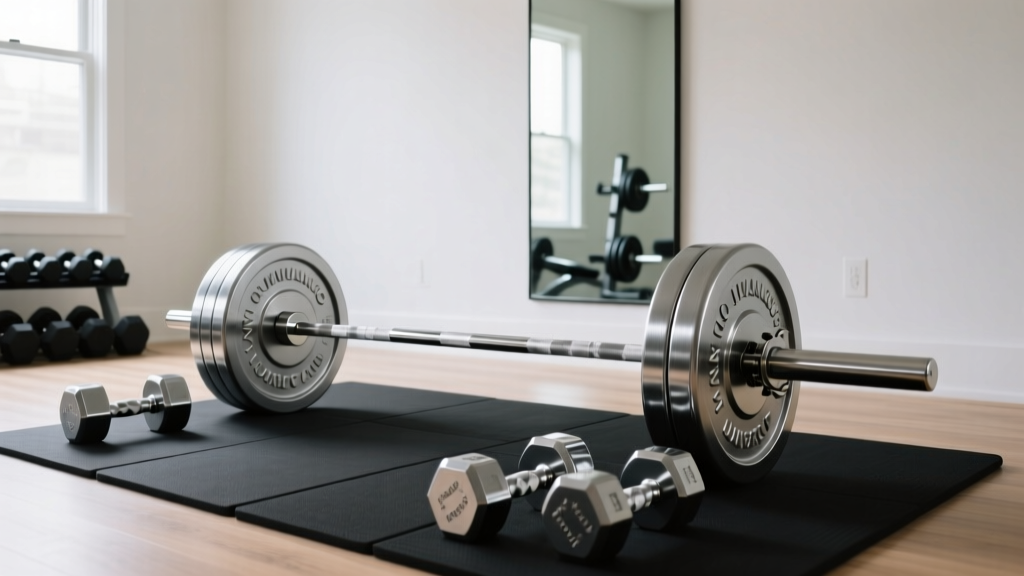
EZ vs Straight Bar Care: Elevating Your Dumbbell Weights Workout
Compare EZ vs straight bars for arm growth. Learn maintenance tips to protect your gear and enhance your dumbbell weights workout routine.

The Arm-Building Arsenal: Specialty Bars vs. Free Weights
When constructing a comprehensive arm-training regimen, most lifters immediately default to a traditional dumbbell weights workout. While dumbbells offer unmatched unilateral freedom and stabilizer engagement, specialty bars—specifically the EZ curl bar and the standard straight barbell—provide unique overload vectors that dumbbells simply cannot replicate. However, introducing these specialized tools into your home gym requires a nuanced understanding of equipment maintenance. The structural differences between an EZ bar and a straight bar dictate entirely different care protocols to ensure longevity, optimal sleeve spin, and knurling preservation.
In this guide, we break down the biomechanical wear patterns of both bars, detail exact maintenance schedules, and show you how to seamlessly integrate them into your existing dumbbell weights workout for maximum hypertrophy and equipment lifespan.
Biomechanics and Structural Stress: EZ vs. Straight
Before applying oil or a wire brush, you must understand how each bar experiences physical stress. According to ExRx's biomechanical breakdown of curl variations, the angled grips of an EZ bar place the wrists in a semi-supinated position, reducing radioulnar joint strain. But from a metallurgical standpoint, those same bends create asymmetric torque vectors on the shaft during heavy eccentrics.
| Feature | Standard Straight Bar (e.g., Rep Fitness AB-4100) | Olympic EZ Curl Bar (e.g., Rogue Curl Bar) |
|---|---|---|
| Shaft Geometry | Linear, uniform stress distribution | Angled bends, concentrated stress at curve apexes |
| Sleeve Assembly | Often needle bearings (for Olympic lifts) | Exclusively bronze/composite bushings |
| Primary Failure Mode | Bearing seizure from dust/chalk ingress | Bushing wear from asymmetric plate loading |
| Average Retail Cost | $130 - $295 | $175 - $325 |
Because EZ bars rely on bushings rather than bearings, they are more forgiving to dust but require consistent lubrication to prevent the dreaded 'sleeve squeak' during slow-tempo triceps extensions.
Sleeve Spin and Bushing Care: Keeping the Rotation Smooth
The sleeve rotation mechanism is the heart of any barbell's longevity. During a heavy dumbbell weights workout, the weights remain static in your grip. On a barbell, the sleeves must rotate independently of the shaft to accommodate wrist supination and pronation. If the bushings dry out, the friction will eventually score the steel shaft, leading to permanent damage.
⚠️ Maintenance Warning: Never use standard WD-40 or aerosol solvents on your barbell sleeves. These products contain degreasers that will strip the factory lubrication from the bronze bushings and attract abrasive gym chalk, turning your sleeve internals into a grinding paste.The Proper Lubrication Protocol
- Select the Right Lubricant: Use a high-quality synthetic gun oil like Break-Free CLP or a dedicated barbell oil (e.g., 3-IN-ONE Multi-Purpose Oil). These have the correct viscosity to penetrate the bushing gap without dripping.
- Application: Stand the bar vertically in a squat rack. Apply exactly 2-3 drops of oil directly into the seam where the sleeve meets the shaft.
- Distribution: Spin the sleeve vigorously by hand for 30 seconds. You will hear the oil working into the bronze pores.
- Wipe Down: Use a microfiber cloth to wipe away excess oil from the exterior to prevent dust adhesion.
Frequency: Perform this every 3 months for garage gyms, or every 6 months for climate-controlled indoor spaces.
Knurling Preservation: The Grip That Lasts
Whether you are executing barbell skull crushers or transitioning back to your dumbbell weights workout for hammer curls, a clogged knurl will ruin your grip and force you to use lifting straps unnecessarily. Dead skin, magnesium carbonate (chalk), and sweat oils compact into the knurling valleys, creating a smooth, slippery surface and promoting oxidation.
Follow the BarBend barbell maintenance guidelines for a weekly and monthly cleaning cadence:
- Weekly (Dry Brushing): Use a stiff nylon brush (never brass or stainless steel on coated bars) to scrub the knurling in a circular motion. This dislodges dried sweat and chalk.
- Monthly (Deep Clean): Mix a 10:1 ratio of water to Simple Green or mild dish soap. Dip your nylon brush into the solution and scrub the shaft. Immediately dry the bar with a clean towel to prevent flash rusting, especially on bare steel or black oxide finishes.
Surface Finish Longevity: Chrome, Black Oxide, and Cerakote
The finish of your bar dictates its baseline resistance to the elements, which is critical if your home gym experiences seasonal humidity fluctuations.
Hard Chrome
Standard on most mid-tier straight bars. Hard chrome is incredibly durable and resists rust well, but if the knurling is cut after the chrome is applied (common in budget bars), the exposed raw steel in the knurl valleys will rust first. Wipe down with a silicone-treated cloth monthly.
Black Oxide
Provides a great, raw-steel feel but offers almost zero oxidation resistance. If you use a black oxide straight bar for heavy curls, you must oil the shaft lightly after every single workout. It is not recommended for humid garage gyms.
Cerakote
The premium standard for modern specialty bars. Originally developed for firearms, Cerakote is a ceramic-polymer coating that withstands salt, sweat, and moisture. While it requires the least amount of anti-rust maintenance, the shaft is more prone to cosmetic scuffing if dropped onto bare concrete without mats.
Integrating Bars into Your Dumbbell Weights Workout
To maximize arm hypertrophy while minimizing repetitive strain injuries, you must intelligently program your specialty bars alongside your dumbbell weights workout. Here is a structural framework for combining these tools:
- Pre-Exhaust with the EZ Bar: Begin your session with EZ bar preacher curls. The fixed, semi-supinated grip allows you to safely push past failure without the wrist pain associated with straight bars. The bushing sleeves will smoothly rotate as you pronate slightly at the top of the movement.
- Unilateral Overload with Dumbbells: Follow up with heavy alternating dumbbell curls. This addresses any bilateral deficits and forces the brachioradialis to work as a primary stabilizer, a stimulus the EZ bar cannot provide.
- Triceps Finisher (Straight Bar): Use a standard straight barbell for close-grip bench presses or overhead extensions. The linear shaft forces strict elbow tucking. Ensure your straight bar's needle bearings are well-oiled, as overhead extensions place unique lateral stress on the sleeve assemblies.
Frequently Asked Questions
Can I drop an EZ curl bar like an Olympic straight bar?
No. Most EZ curl bars are designed for controlled bodybuilding movements, not Olympic lifts. Dropping an EZ bar—even with bumper plates—can bend the shaft at the angled apexes and shatter the composite bushings. Always lower the bar with control to preserve its structural integrity.
Why does my straight bar squeak during curls but not during bench presses?
Bench pressing involves minimal sleeve rotation. Curling, however, requires the sleeves to spin as your wrists naturally rotate through the range of motion. The squeak indicates dry bushings or bearings. Apply 2 drops of synthetic oil to the sleeve seam immediately to prevent steel-on-bronze scoring.
Is a dumbbell weights workout better for joint health than using an EZ bar?
Dumbbells allow for completely free wrist rotation, which is ideal for lifters with severe epicondylitis or wrist impingements. However, the EZ bar's fixed 45-degree angles offer a highly stable, joint-friendly middle ground that allows for heavier absolute loads than dumbbells, making both tools essential for a complete, injury-free arm routine.
More gear to consider
All reviews
EZ Bar vs Straight Bar Care for Your Dumbbell Functional Workout
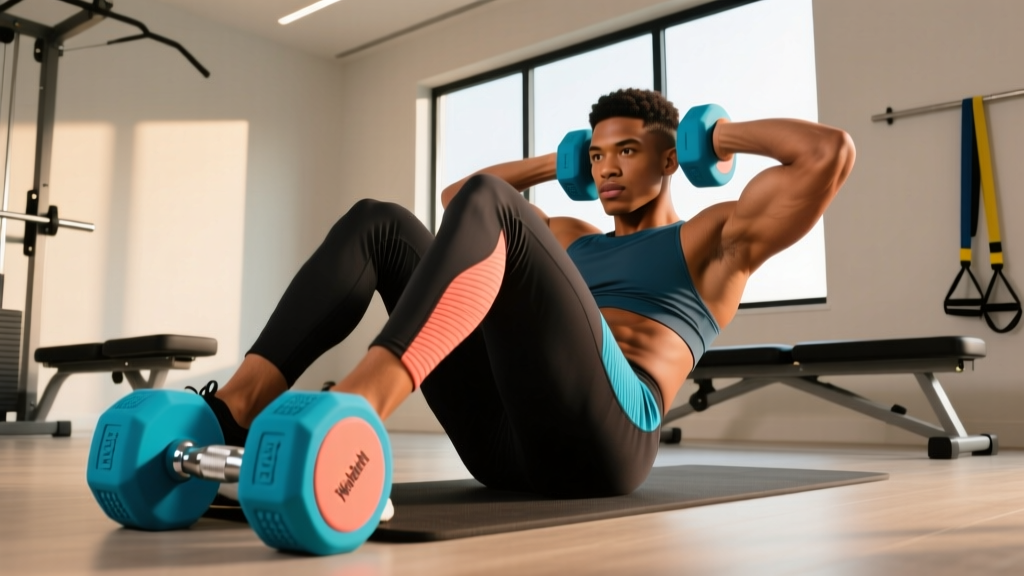
Beginner Guide: Dumbbell Toe Touch Crunch with Neoprene Weights
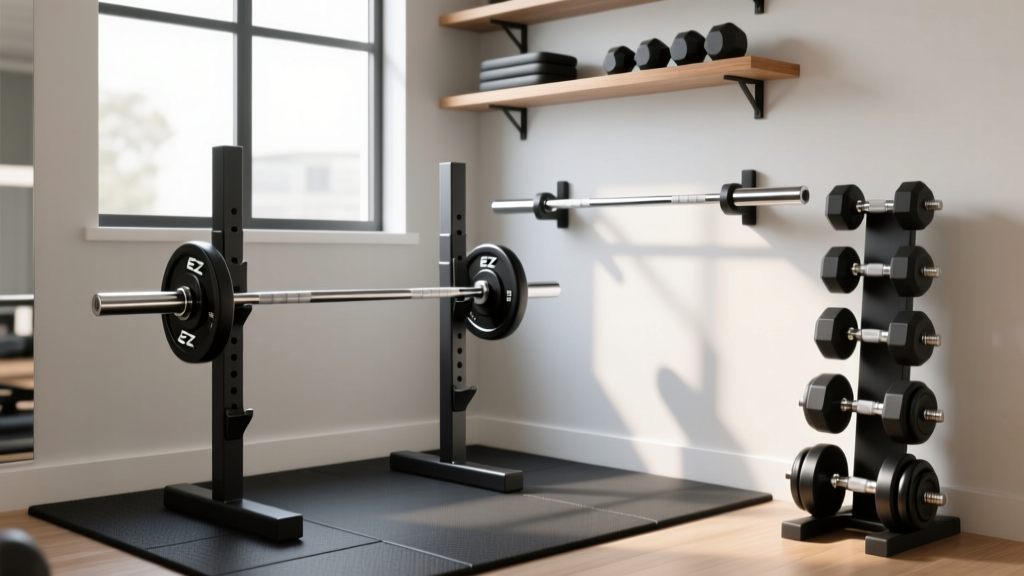
EZ Bar vs Straight Bar: Space Layouts & Dumbbell Pullover Clearance

Optimize Space: Dumbbell Racks & Shrugs Workout Layouts
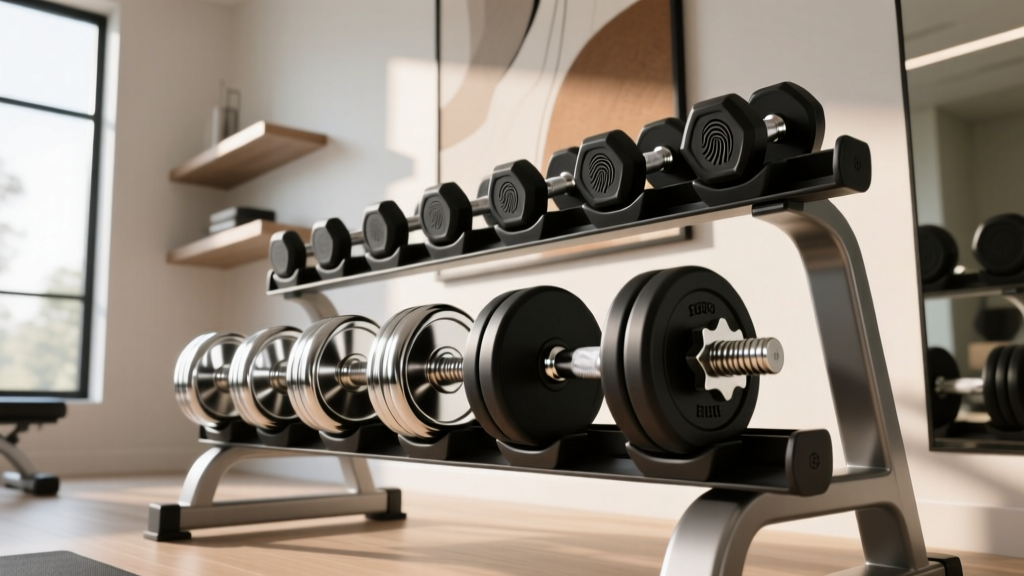
How Dumbbell Workout Photos Drive 2026 Rack Trends