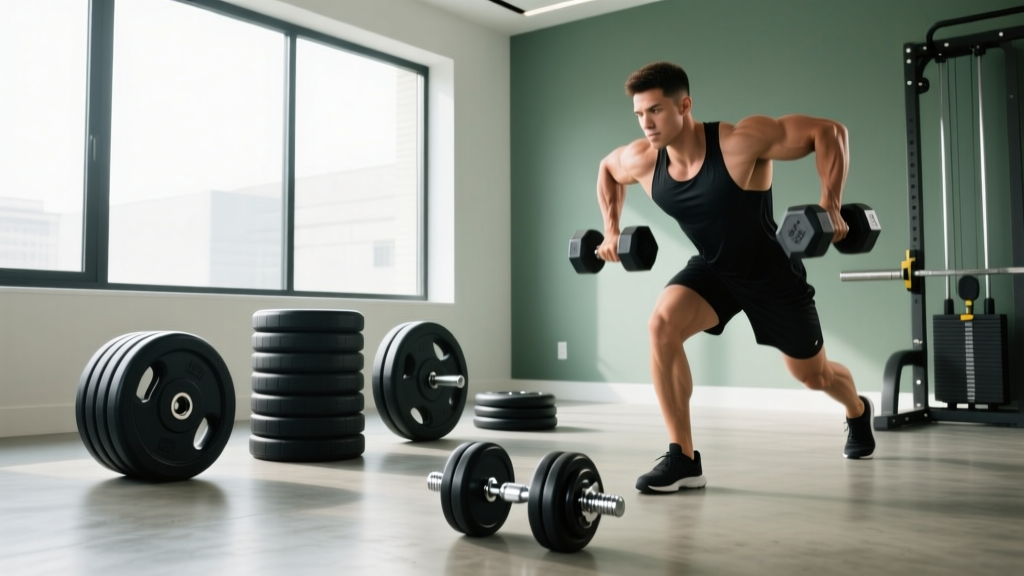
Are Loadable Dumbbells Best for Your Dumbbell Kick Back? A Value Analysis
Discover if loadable dumbbells with interchangeable plates offer the best ROI for your dumbbell kick back workouts in our detailed budget and value analysis.

The Biomechanics of the Dumbbell Kick Back: Why Weight Selection Matters
When optimizing a home gym for hypertrophy, the triceps brachii often requires precise, incremental loading. The dumbbell kick back is a staple isolation movement that demands strict form and relatively light loads. Because the resistance curve peaks at full elbow extension, lifters typically max out between 15 and 30 pounds per hand. This creates a unique budgetary challenge: do you invest hundreds of dollars in a full rack of fixed, light-weight dumbbells, or do you pivot to a loadable dumbbell system with interchangeable plates?
From a pure value analysis perspective, loadable dumbbell handles paired with standard iron plates represent one of the most cost-effective equipment decisions you can make in 2026. However, not all loadable handles are created equal, and the biomechanics of the kick back expose specific design flaws in cheaper models. Below, we break down the exact costs, failure modes, and ROI of utilizing loadable dumbbells for isolation work.
⚠️ The Grip Fatigue Edge Case: During a kick back, your torso is hinged and your wrist is locked in a neutral or slightly pronated position. If your loadable handle features a thick 1.3-inch grip (common in budget powerlifting-style handles), your forearm flexors will fatigue before your triceps reach mechanical failure. For isolation movements, a grip diameter between 1.1 and 1.2 inches is mandatory.2026 Market Pricing: Loadable Handle Comparison Matrix
To determine the true value of loadable dumbbells, we must compare the top contenders on the market. Pricing for specialized gym gear has stabilized in 2026, but the differences in sleeve length and collar security drastically affect their utility for exercises like the kick back.
| Brand & Model | Price (Per Pair) | Grip Diameter | Sleeve Length | Collar Mechanism | Kick Back Suitability |
|---|---|---|---|---|---|
| Rogue Loadable Handle | $110.00 | 1.20" | 6.5" | Snap Collar / Spring | Excellent (High security, optimal grip) |
| Titan Fitness Loadable | $69.99 | 1.30" | 6.3" | Spring Collar | Fair (Thick grip causes forearm fatigue) |
| Yes4All Olympic Handle | $45.99 | 1.15" | 5.5" | Spin-Lock Threaded | Good (Secure, but slow weight changes) |
The Hidden Cost: Fractional Plates and Collar Security
Buying the handles is only step one. The true budget breakdown requires analyzing the plates. For a dumbbell kick back, you need to make micro-jumps in weight—typically 2.5 lb or 5 lb increments per hand. Standard 45-lb bumper plates are entirely useless here; their thickness prevents you from loading light weights securely on a 6.5-inch sleeve.
Calculating the True Cost Per Pound vs. Fixed Dumbbells
Let us run the exact math on building a light-weight arsenal for triceps isolation versus buying fixed urethane dumbbells.
- The Fixed Dumbbell Route: Purchasing pairs of 10, 15, 20, 25, and 30 lb urethane hex dumbbells (10 total dumbbells, 200 lbs of iron). At the current industry average of $2.25 per pound, this set costs $450.00.
- The Loadable Route: A pair of Titan Fitness handles ($70.00) plus 60 lbs of calibrated cast-iron fractional plates (ranging from 0.5 lbs to 10 lbs, averaging $1.50/lb = $90.00). Total investment: $160.00.
The loadable route saves you nearly $300 upfront. Furthermore, as noted by equipment experts at BarBend, loadable handles offer infinite scalability. When you eventually need to overload the triceps with heavy close-grip presses or floor presses, those same handles can be loaded up to 65 lbs per hand, whereas the fixed dumbbells become expensive paperweights.
Pros and Cons of the Loadable Route for Isolation
Pros
- Unmatched ROI: Cost per pound drops to under $1.00 when utilizing existing barbell plates.
- Micro-Loading Capability: Fractional plates allow for 1.25 lb jumps, essential for small muscle group progressive overload.
- Space Efficiency: Two handles and a stack of plates take up less than 2 square feet, replacing an entire 5-tier dumbbell rack.
Cons
- Time Tax: Changing weights between drop-sets takes 30-60 seconds, disrupting metabolic stress protocols.
- Balance Discrepancies: Asymmetrical plate loading slightly alters the center of gravity compared to a solid cast dumbbell.
- Knurling Aggression: Some Olympic handles feature deep powerlifting knurling that tears calluses during high-rep, light-weight triceps work.
Failure Modes: Gravity, Hinges, and Slipping Collars
While the budget analysis heavily favors loadable dumbbells, we must address the physical failure modes specific to the kick back. When you hinge at the hips and extend your arm backward, the dumbbell sleeve points directly at the floor. Gravity is actively pulling the plates away from the handle and toward the collar.
"In a hinged isolation movement, the sheer force on the dumbbell collar is magnified. A cheap spring clip can slowly slide off a smooth Olympic sleeve mid-set, resulting in a 10-pound iron plate dropping directly onto your calf or ankle."
The Solution: If you opt for smooth Olympic sleeves (like Rogue or Titan), you must invest in high-tension Lockjaw collars or threaded snap-collars. Do not rely on standard wire spring clips for kick backs. If you choose the Yes4All threaded spin-lock handles, the plates are physically bolted against the handle, eliminating the slip risk entirely—though you will sacrifice 30 to 45 seconds per set twisting the nuts on and off, which can ruin the density of your superset triset routines.
Step-by-Step: Loading for the Perfect Kick Back
To maximize the value and safety of your loadable setup, follow this precise loading protocol for isolation work:
- Start with a Buffer Plate: Always slide a 2.5 lb or 5 lb steel plate on first. This protects the handle's inner flange from the harsh edges of heavier cast iron.
- Stack Fractionals Inward: Load your 1.25 lb and 0.5 lb micro-plates closest to the large plates, keeping the center of mass tight against the handle.
- Seat the Collar Flush: Push the collar completely flush against the outermost plate. If there is even a 2-millimeter gap, the plates will "click" and shift during the eccentric phase of the kick back, destroying your mind-muscle connection.
- Verify the Hinge: Before lifting, hold the loaded dumbbell at arm's length pointing downward. Shake it gently. If you hear metallic rattling, re-seat the collar immediately.
A Note on Plate Material: Avoid using rubber-grip plates or thick urethane grips for loadable dumbbell isolation work. The extra width of the rubber housing eats up valuable sleeve real estate. A standard 10-lb cast iron plate is roughly 1.1 inches thick, whereas a rubber-grip 10-lb plate can be up to 1.6 inches thick. On a 6.5-inch sleeve, that difference dictates whether you can safely fit a collar and execute a 25-lb kick back without the plates sliding off the edge.
Final Verdict: Are Loadable Dumbbells Worth It?
If your primary goal is to perform the dumbbell kick back and other light isolation movements, loadable dumbbells with interchangeable plates offer an undeniable financial advantage. The initial capital expenditure is roughly 65% lower than purchasing a dedicated set of fixed light dumbbells. However, value is not just about the price tag; it is about utility. By selecting a handle with a sub-1.2-inch grip diameter and pairing it with secure, flush-fitting collars, you eliminate the biomechanical bottlenecks of grip fatigue and collar slippage. For the budget-conscious home gym owner in 2026, the loadable dumbbell remains the undisputed king of ROI.
More gear to consider
All reviews
Power Rack vs Squat Rack vs Squat Stand & EZ Dumbbell Curl Guide
Mastering Dumbbell Deadlift Variations with Neoprene Home Weights: Mistakes & Fixes
Collar vs Clamp Types: Securing Pull Day Workout Dumbbells & Bars
Rogue Loadable Dumbbells vs Neoprene Weights: Home Gym Guide
Barbell Weight & Knurling Guide: Press vs Incline Bench Dumbbell Fly