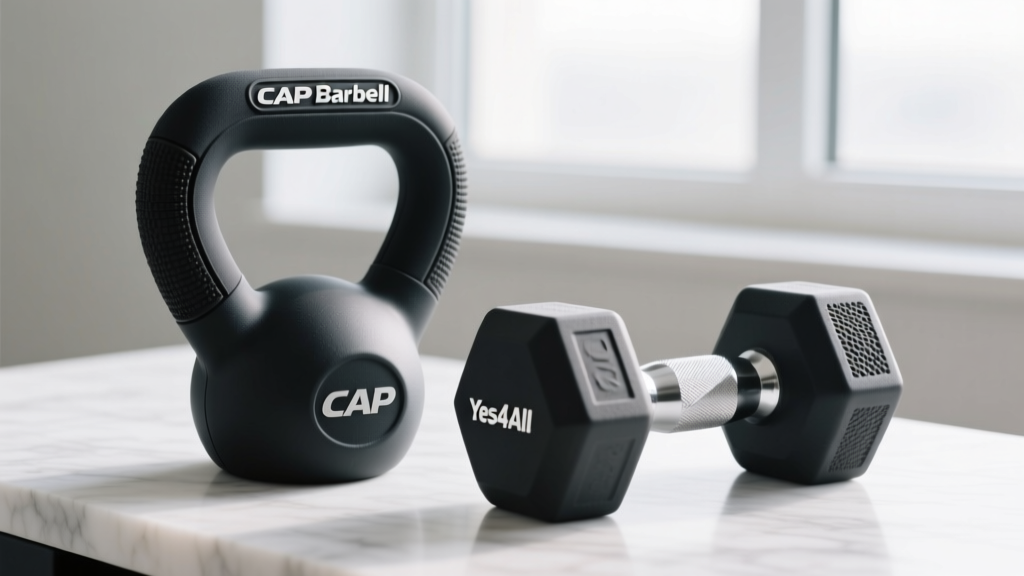
Neoprene Dumbbells Head-to-Head: Optimizing the Dumbbell Isolation Curl
We compare CAP Barbell and Yes4All neoprene dumbbells to find the best grip, coating, and ergonomics for your dumbbell isolation curl workouts.

When executing a strict dumbbell isolation curl, momentum is the enemy. Unlike heavy compound movements where chalk and aggressive knurling are mandatory, isolation work demands sustained grip endurance, precise wrist alignment, and equipment that will not slip as sweat accumulates during high-repetition sets. For home gym owners, neoprene-coated dumbbells have become the default choice for floor-friendly, quiet, and comfortable lifting. But not all neoprene is created equal, and the subtle differences in handle geometry and coating density drastically alter the mechanics of your workout.
In this 2026 head-to-head comparison, we are pitting the two most popular fixed-weight neoprene lines on the market against each other: the CAP Barbell Neoprene Hex Series and the Yes4All Neoprene Coated Hex Series. Our testing specifically evaluates how these dumbbells perform during the dumbbell isolation curl, analyzing grip fatigue, supination torque, and coating durability under the stress of strict, high-volume arm training.
The Biomechanical Demand of the Dumbbell Isolation Curl
To understand why equipment choice matters, we must look at the biomechanics of the movement. The biceps brachii is responsible for two primary actions: elbow flexion and forearm supination. According to anatomical and kinesiological data from ExRx, maximizing the contraction of the biceps requires full supination at the peak of the curl.
When you perform a dumbbell isolation curl—whether it is a standing supinating curl, a seated concentration curl, or a preacher curl—the wrist and forearm flexors are under constant isometric tension to stabilize the load. If the dumbbell handle is too thick, the flexors fatigue before the biceps do. If the neoprene coating is too soft or overly textured, it can create friction burns or slip when saturated with sweat. Furthermore, the American Council on Exercise (ACE Fitness) emphasizes that maintaining strict joint alignment during isolation exercises is critical for preventing tendinopathy in the distal biceps tendon, making handle ergonomics a safety issue, not just a comfort feature.
The Contenders: CAP Barbell vs. Yes4All
Quick Specs Overview
- CAP Barbell Neoprene Hex: Cast iron core, 32mm straight handle, Shore A 80 neoprene, flat hexagonal heads.
- Yes4All Neoprene Hex: Cast iron core, 34mm contoured handle, Shore A 75 neoprene, beveled hexagonal heads.
Both brands dominate the budget-to-mid-tier home fitness market, with pricing generally hovering between $1.15 and $1.60 per pound depending on the weight increment. However, their design philosophies diverge significantly when placed under the microscope of isolation training.
Handle Geometry and Supination Torque
The most critical point of failure during a heavy set of dumbbell isolation curls is grip integrity during the supination phase. As you rotate your palm upward at the top of the movement, the dumbbell's center of mass shifts slightly, requiring micro-adjustments from your fingers.
CAP Barbell: The Straight 32mm Profile
CAP Barbell utilizes a uniform 32mm diameter handle across most of its neoprene line (from 5 lbs to 25 lbs). The handle features a subtle, molded knurling pattern beneath the neoprene. This thinner profile is highly advantageous for lifters with smaller hands or those who experience rapid forearm pump. During the isolation curl, the 32mm grip allows the fingers to wrap fully around the core, securing the dumbbell firmly in the palm rather than resting on the calluses. This direct palm-contact reduces the lever arm on the wrist, allowing for cleaner supination without the dumbbell wobbling.
Yes4All: The Contoured 34mm Profile
Yes4All opts for a slightly thicker 34mm handle with a contoured, hourglass-like taper in the center. While this taper feels luxurious during a bicep curl where the hand naturally finds the middle groove, it becomes a liability during exercises requiring grip shifts. More importantly, the 34mm thickness forces lifters with average-to-small hands to rely on finger-grip rather than palm-grip. By the 12th repetition of a strict isolation curl, the forearm flexors are heavily fatigued, and the thicker handle often leads to premature grip failure, cutting the set short before the biceps reach true mechanical failure.
Neoprene Formulation and Sweat Management
Neoprene (polychloroprene) is favored for home gyms because it protects floors and dampens sound. However, the vulcanization process and the durometer (hardness) rating dictate how the dumbbell feels in a sweaty hand.
- CAP Barbell (Shore A 80): The firmer coating feels almost like dense rubber. It does not absorb sweat, meaning moisture pools on the surface. During high-rep isolation curls, this requires the user to keep a towel nearby, as the slick surface can compromise the concentric phase of the lift.
- Yes4All (Shore A 75): The slightly softer, more porous coating offers a tactile, almost grippy feel when dry. However, once saturated with sweat, the softer neoprene can feel slightly spongy, creating a 'squish' sensation that reduces proprioceptive feedback from the iron core.
Expert Insight: For strict isolation work where tactile feedback is paramount, a firmer neoprene (like CAP's) is generally preferred by advanced lifters, provided they manage sweat with chalk or a towel. Softer neoprene mutes the connection between the hand and the iron core.
Head-to-Head Comparison Matrix
| Feature | CAP Barbell Neoprene Hex | Yes4All Neoprene Hex |
|---|---|---|
| Handle Diameter | 32mm (Straight) | 34mm (Contoured) |
| Coating Hardness | Shore A 80 (Firm) | Shore A 75 (Medium) |
| Hex Head Design | Flat, sharp edges | Beveled, rounded edges |
| Odor Off-Gassing | Moderate (3-5 days) | High (7-10 days) |
| Avg. Price per Pound | $1.25 | $1.45 |
| Grip Fatigue Factor | Low | Moderate to High |
Real-World Edge Cases: Seated Concentration Curls
A true test of any dumbbell marketed for home use is its behavior during seated concentration curls. This movement requires the user to rest the dumbbell head against the inner thigh while seated on a bench or chair.
The CAP Barbell features a very flat, sharply angled hex head. While this prevents rolling on the floor, the sharp 90-degree neoprene edge can dig uncomfortably into the femoral artery and inner thigh tissues when resting a 30 lb or 40 lb dumbbell against the leg between sets. Conversely, the Yes4All dumbbells feature heavily beveled, rounded hex edges. This ergonomic bevel makes resting the dumbbell on the thigh significantly more comfortable, preventing the 'biting' sensation of the CAP Barbell. However, the beveled edges mean the Yes4All dumbbells are slightly more prone to rolling if placed on an uneven floor surface, as the contact point is rounded rather than flat.
Final Verdict: Which Wins for Home Gyms?
If your primary focus is the dumbbell isolation curl and strict arm training, the CAP Barbell Neoprene Hex Series takes the win, primarily due to its superior 32mm handle geometry. The thinner, straight grip allows for uncompromised forearm supination and delays grip fatigue, ensuring your biceps reach failure before your hands do. The firmer neoprene also provides better tactile feedback, which is crucial for mind-muscle connection during isolation work.
However, if your home gym routine involves a high volume of seated concentration curls, or if you share your equipment with users who have smaller hands and prefer a softer, contoured grip, the Yes4All series offers a more comfortable, albeit slightly more fatiguing, alternative. For the dedicated bodybuilder prioritizing strict isolation mechanics, CAP Barbell remains the undisputed budget king in 2026.
Frequently Asked Questions
Can I use chalk with neoprene dumbbells for isolation curls?
Yes, but with caution. Liquid chalk is highly recommended over block chalk for neoprene coatings. Block chalk can become trapped in the microscopic pores of the neoprene, creating a messy, white residue that is difficult to scrub out and can eventually dry out the rubber coating, leading to premature cracking.
Does the neoprene coating degrade over time with heavy sweat exposure?
Human sweat is mildly acidic and contains salts that can degrade poorly vulcanized neoprene over several years. To extend the lifespan of your dumbbells, wipe them down with a damp microfiber cloth and a mild, non-bleach antibacterial spray after every high-rep isolation session. Avoid harsh chemical degreasers, which will strip the neoprene of its plasticizers, causing it to harden and flake.
Why do my wrists hurt during dumbbell isolation curls with thick handles?
Wrist pain during supinating curls is often linked to handle diameter. A handle thicker than 33mm forces the wrist into slight extension to maintain a secure grip. This misalignment places undue shear stress on the radiocarpal joint and the distal biceps tendon during the peak contraction phase. Switching to a 30mm-32mm handle (like the CAP Barbell) allows for a neutral, stacked wrist position, alleviating joint strain.
More gear to consider
All reviews
Best Adjustable Dumbbells for Arm and Shoulder Exercises
Best Adjustable Dumbbells for Dumbbell Windmills: 2026 Review
Storing Thomas Inch Dumbbells: Rack & Storage Value Analysis

Top Dumbbell Racks & Storage for Quad Focused Dumbbell Exercises

Beyond Dumbbell Workout Pictures: Rubber Hex vs Urethane Value
