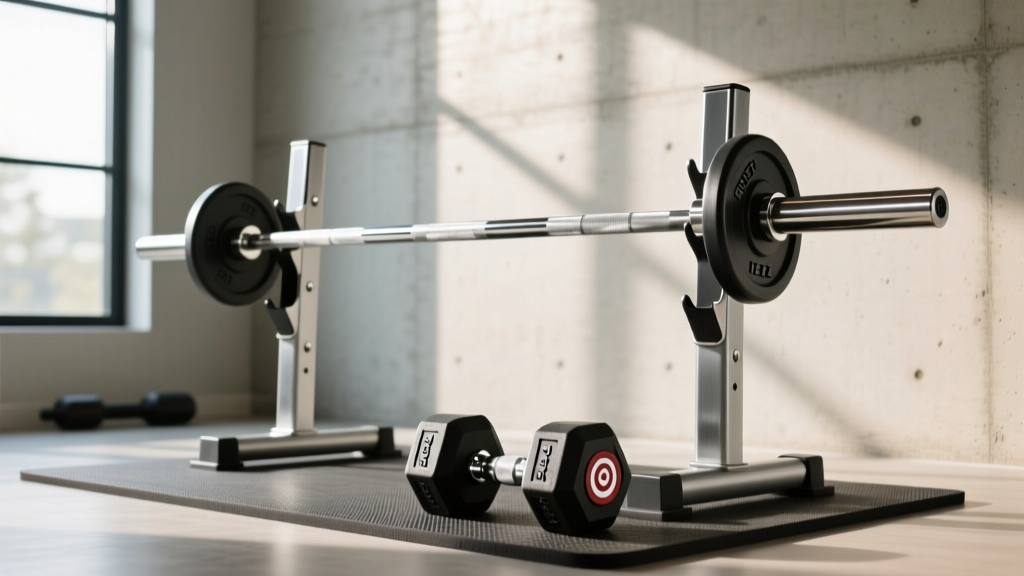
EZ Curl Bar vs Straight Bar Care & Target 8 lb Dumbbells Maintenance
Compare EZ curl bar vs straight bar longevity and maintenance. Plus, learn how to clean and preserve your Target 8 lb dumbbells for lasting home gym use.

The Hidden Science of Free Weight Longevity
Building a home gym is a significant financial investment, but preserving that investment requires a nuanced understanding of metallurgy, coatings, and material science. While most lifters know to wipe down their gear, true equipment longevity hinges on targeted maintenance protocols. The structural demands and care routines for a heavy Olympic barbell differ vastly from those of lighter, coated accessories. In this guide, we break down the mechanical vulnerabilities of the EZ curl bar vs straight bar, outline exact maintenance matrices for various steel finishes, and provide specialized care instructions for ubiquitous rehab tools like Target 8 lb dumbbells.
Structural Longevity: EZ Curl Bar vs. Straight Bar
When comparing an EZ curl bar to a standard straight barbell, the most obvious difference is the shaft geometry. However, from a maintenance and longevity perspective, these geometric differences dictate how the equipment ages, where it fails, and how it should be stored.
Stress Risers and Tensile Strength
A high-quality straight bar (such as the Rogue Ohio Bar) features a uniform shaft that distributes load evenly across its 190,000+ PSI tensile steel core. Conversely, the angled bends of an EZ curl bar create natural stress concentrators (or stress risers) at the vertices of each curve. If you purchase a budget EZ bar with a lower yield strength (typically under 150,000 PSI) and routinely load it past 150 lbs for heavy skull crushers or close-grip bench presses, the bar will eventually suffer permanent plastic deformation at these bends.
Longevity Tip: Reserve heavy, low-rep loading for your straight bar. Use the EZ curl bar strictly for its intended purpose: moderate-weight, high-rep isolation movements that spare the wrists and elbows. According to equipment testing by BarBend, respecting the yield limits of specialized bars is the single most effective way to prevent permanent warping.
Knurling Wear and Chalk Trapping
Because EZ bars are used heavily for bicep and tricep work, lifters tend to grip the angled sections aggressively. The knurling on these angled segments often traps dead skin, sweat, and gym chalk more readily than the continuous knurl of a straight bar. If left uncleaned, this organic matter holds moisture against the steel, initiating flash rust deep within the knurl valleys.
⚠️ WARNING: The WD-40 MythNever use standard WD-40 to clean or lubricate your barbells. WD-40 is primarily a solvent and water displacer, not a long-term lubricant. It will strip away the factory protective oils, attract microscopic dust that turns into an abrasive paste, and ultimately accelerate knurling degradation. Always use a dedicated mineral oil or 3-IN-ONE Multi-Purpose Oil.
The Barbell Maintenance Matrix
Different barbell coatings require entirely different maintenance schedules. What preserves a Cerakote bar will ruin a bare steel bar. Below is the definitive 2026 maintenance matrix for your straight and EZ bars.
| Coating Type | Oxidation Resistance | Cleaning Tool | Maintenance Frequency |
|---|---|---|---|
| Bare Steel | Very Low | Nylon Brush + 3-IN-ONE Oil | Weekly oiling, post-workout wipe |
| Black Oxide | Low to Moderate | Nylon Brush + Light Mineral Oil | Bi-weekly oiling |
| Hard Chrome | High | Brass or Nylon Brush, No Oil Needed | Monthly deep brush |
| Cerakote | Extreme | Nylon Brush ONLY (No Brass/Metal) | As needed, wipe with damp cloth |
For authoritative guidance on preserving specialized coatings, Garage Gym Reviews emphasizes that using brass wire brushes on Cerakote or Black Oxide will permanently strip the finish, exposing the raw steel underneath to immediate oxidation. Always default to a stiff nylon bristle brush.
Coated Accessories: Caring for Target 8 lb Dumbbells
A well-rounded home gym isn't just about heavy barbells; it also requires lighter tools for warm-ups, physical therapy, and high-rep metabolic conditioning. Retail fitness gear, such as the popular Target 8 lb dumbbells (typically from their in-house All in Motion or Threshold brands), are staples for lateral raises, rehab protocols, and shadow boxing. However, the maintenance of these neoprene or vinyl-coated cast-iron weights requires a completely different chemical approach than bare steel.
The Vulnerability of Neoprene and Vinyl
Neoprene is a synthetic rubber that provides an excellent, sweat-resistant grip. However, it is highly susceptible to two environmental factors:
- UV Degradation: Prolonged exposure to direct sunlight breaks down the polymer chains in neoprene, causing the coating to chalk, fade, and eventually crack, exposing the cast iron core to rust.
- Chemical Breakdown: Cleaning your Target 8 lb dumbbells with bleach-based sprays, ammonia, or harsh alkaline gym wipes will strip the factory sealant. This leaves the dumbbells feeling permanently sticky or causes them to dry-rot.
"The best way to sanitize neoprene-coated dumbbells is a simple 50/50 mixture of distilled white vinegar and water, applied with a microfiber cloth. It kills surface bacteria without degrading the rubberized coating."
Storage for Lighter Dumbbells
Never leave your 8 lb neoprene dumbbells on a concrete garage floor. Concrete wicks moisture from the ground, and the temperature differential between the cold concrete and the warmer room air creates condensation. Over time, this moisture will seep through microscopic pores in the vinyl/neoprene, causing the iron core to rust and expand, which splits the coating from the inside out. Always store them on a tiered rack or a rubber mat.
Step-by-Step Monthly Deep Clean Protocol
To maximize the lifespan of both your heavy bars and lighter accessories, implement this 30-minute monthly maintenance routine:
- Dry Brush the Knurling: Take a stiff nylon brush and vigorously scrub the knurling of your straight bar and EZ curl bar. This dislodges chalk, dead skin, and dust.
- Apply Solvent (If Necessary): If the knurling is caked with grime, apply a few drops of 3-IN-ONE oil to the brush and work it into the steel. Let it sit for 3 minutes.
- Wipe Down: Use a clean, lint-free microfiber towel to wipe away the loosened grime and excess oil. The bar should feel tacky, not slippery.
- Sleeve Maintenance: Remove any C-clips or end caps (if your bar model allows) and apply a drop of synthetic grease to the bushings or bearings to ensure smooth sleeve rotation during Olympic lifts or heavy curls.
- Sanitize Accessories: Wipe down your Target 8 lb dumbbells and any other neoprene/vinyl gear with the 50/50 vinegar-water solution. Dry immediately with a separate towel.
Environmental Controls and Rack Storage
The environment in which you store your free weights is just as critical as the physical cleaning. If your home gym is in a garage or basement, humidity is your biggest enemy. Maintain ambient humidity below 60% using a dehumidifier to prevent flash rusting on chrome and black oxide bars.
Furthermore, inspect your power rack or squat stand. If your J-cups and spotter arms are bare metal, they will grind against the knurling of your straight bar and the bends of your EZ curl bar every time you rack them. Upgrade to J-cups lined with UHMW (Ultra-High Molecular Weight) plastic. UHMW is incredibly dense and impact-resistant, providing a protective buffer that preserves your barbell's finish and prevents the loud metal-on-metal clanging that disrupts home workouts.
Final Thoughts on Equipment Stewardship
Whether you are loading 300 lbs onto a Cerakote straight bar, performing skull crushers with an EZ curl bar, or doing shoulder rehab with Target 8 lb dumbbells, treating your equipment with material-specific care ensures it will outlast your fitness journey. By understanding the structural limits of bent bars and the chemical sensitivities of neoprene coatings, you transition from merely owning gym equipment to truly mastering your training environment.
More gear to consider
All reviews
Mastering Dumbbell Raises: Beginner Guide for Neoprene Weights

Dumbbell Chest Exercises for Beginners: 2026 Loadable Gear Trends
Power Rack vs Squat Rack vs Stand: Beyond the Bar Dumbbell Phase

Power Rack vs Squat Rack vs Stand & Back Workout With One Dumbbell

Maintaining Loadable Dumbbells for the Incline Dumbbell Press
