
EZ Curl Bar vs Straight Bar: Space Layouts & Dumbbell Tricep Exercises
Compare the EZ curl bar vs straight bar for space optimization, storage layouts, and integration with dumbbell tricep exercises in compact home gyms.

The Spatial Dilemma: Barbell Footprints in Compact Gyms
When designing a high-density home gym or optimizing a commercial facility's arm-day zone in 2026, the debate between an EZ curl bar vs straight bar extends far beyond wrist ergonomics. It is fundamentally a question of spatial geometry, storage logistics, and ceiling clearance. While powerlifters prioritize the standard 7-foot straight bar for compound lifts, hypertrophy-focused lifters in compact spaces must weigh the 47-inch EZ curl bar against versatile dumbbell tricep exercises to maximize their usable square footage.
Space optimization is no longer just about fitting equipment into a room; it is about creating an efficient workflow that minimizes transition time and eliminates clutter. A poorly planned free weight layout can turn a 200-square-foot garage gym into an obstacle course. This guide breaks down the exact dimensions, storage requirements, and biomechanical trade-offs of specialty bars versus dumbbells, helping you engineer the perfect arm-training station.
Dimensional Breakdown: EZ Curl Bar vs. Straight Bar
To understand how these bars impact your floor plan, we must look at the exact specifications. The standard Olympic straight bar (like the Rogue Ohio Bar) and the Olympic EZ Curl Bar (like the Rogue Curl Bar) occupy vastly different spatial envelopes. The nearly 40-inch difference in total length dictates everything from wall-rack placement to bench clearance.
| Specification | Olympic Straight Bar | Olympic EZ Curl Bar | Spatial Impact & Layout Notes |
|---|---|---|---|
| Total Length | 86 inches (7 ft 2 in) | 47.24 inches | EZ bar fits standard 4-foot wall racks; Straight bar requires 7-foot horizontal storage or vertical stands. |
| Shaft Length | 51.5 inches | 31.5 inches | Straight bar requires wider bench clearance to avoid hitting uprights during close-grip presses. |
| Sleeve Length | 16.4 inches | 7.8 inches | EZ bar sleeves limit plate capacity (typically max 3-4 plates per side), reducing its footprint when loaded. |
| Bar Weight | 45 lbs (20 kg) | 35 lbs (15.8 kg) | Lighter EZ bars are easier to maneuver in tight aisles and load/unload from low storage positions. |
| Max Rack Width | Standard 48-49 inches | Can be racked at 24-30 inches | EZ bars can be stored on narrow 2x2 upright racks, saving crucial lateral wall space. |
Storage Solutions & Rack Compatibility
In a space-optimized layout, how you store the bar is just as important as how you use it. The 2026 trend in micro-gyms favors vertical integration and multi-functional rack attachments over standalone storage units.
Layout Pro-Tip: The J-Cup Storage MethodIf you lack wall space for a dedicated horizontal gun rack, utilize the J-cups on your power rack. An EZ curl bar can rest securely on standard J-cups set at the lowest height, effectively turning the base of your squat rack into a zero-footprint storage zone. Straight bars can also be stored this way, but their 86-inch length means they will protrude significantly if your rack is placed near a doorway or high-traffic walkway.
Wall-Mounted vs. Vertical Storage
- Horizontal Wall Racks: Ideal for EZ curl bars. A 4-foot wall rack can be mounted above a plate tree or bench, utilizing dead vertical space. Straight bars require massive 7-foot wall spans, which are often interrupted by doors, windows, or mirrors.
- Vertical Barbell Holders: While vertical holders save floor space, they demand high ceilings. Extracting a 7-foot straight bar from a vertical holder requires at least 8.5 feet of ceiling clearance to safely tilt and remove the bar. EZ curl bars only require about 6 feet of clearance, making them vastly superior for basement gyms with low-hanging HVAC ducts or drop ceilings.
Biomechanics & Spatial Clearance: Integrating Dumbbell Tricep Exercises
The choice between an EZ curl bar, a straight bar, and dumbbells is heavily influenced by the vertical clearance of your room and the specific biomechanics of tricep isolation. When performing overhead extensions or skull crushers, the equipment's physical envelope expands dramatically.
Overhead Extensions & Ceiling Clearance
Performing standing overhead tricep extensions with a straight bar is a spatial nightmare in rooms with standard 8-foot ceilings. A 6-foot tall lifter holding an 86-inch bar overhead creates a vertical envelope that easily exceeds 9 feet, risking drywall damage or equipment collision. The EZ curl bar reduces the lateral overhang, but the vertical height remains an issue.
This is where dumbbell tricep exercises become the undisputed champions of space optimization. By utilizing a single heavy dumbbell (e.g., a 50 lb to 80 lb hex dumbbell) for seated overhead extensions, you eliminate the lateral barbell overhang entirely. The spatial envelope is confined strictly to the lifter's immediate vertical axis. Furthermore, seated dumbbell variations reduce the overall vertical footprint by approximately 2 feet compared to standing barbell variations.
Skull Crushers vs. Dumbbell Kickbacks
For horizontal pressing movements like skull crushers, the EZ curl bar offers a superior ergonomic angle (semi-supinated grip) that reduces valgus stress on the elbows compared to the fully pronated grip of a straight bar. However, if your bench is positioned flush against a wall or in a narrow alcove, the 47-inch width of the EZ bar (when loaded with plates) might clip the surrounding walls during the descent phase.
In these ultra-compact scenarios, transitioning to dumbbell tricep exercises like lying dumbbell extensions (neutral grip) or standing cable-rope kickbacks (if you have a functional trainer) allows you to keep your elbows tucked and the equipment footprint confined to a 24-inch width.
Cost vs. Space ROI Matrix
When outfitting a gym in 2026, budget must be weighed against the spatial return on investment (ROI). Here is how the costs break down for a dedicated arm-training station.
| Equipment Setup | Estimated Cost (2026) | Floor Space Required | Versatility Score |
|---|---|---|---|
| Rogue Curl Bar + 100 lbs Bumpers | $450 - $550 | 12 sq ft (including loading zone) | High (Curls, Skull Crushers, Close-Grip Press) |
| Standard Ohio Bar + 100 lbs Bumpers | $500 - $600 | 24 sq ft (requires wider clearance) | Maximum (All compound and isolation lifts) |
| Urethane Dumbbell Set (15-50 lbs) | $800 - $1,200 | 8 sq ft (on a 3-tier A-frame rack) | Maximum (Unilateral work, neutral grips, zero ceiling limits) |
Note: While dumbbells require a higher initial capital investment, their spatial efficiency and ability to facilitate unilateral dumbbell tricep exercises often yield a better long-term ROI for lifters in spaces under 150 square feet.
Frequently Asked Questions (FAQ)
Can I store an EZ curl bar on a standard power rack?
Yes. Most modern power racks feature 2x2 or 3x3 uprights with standard 1-inch or 5/8-inch hole spacing. You can rest an EZ curl bar directly on the J-cups or use specialized horizontal barbell hangers that attach to the uprights, keeping the bar off the floor and out of your walking paths.
Are dumbbell tricep exercises better for elbow health than barbell extensions?
From a biomechanical standpoint, yes. Biomechanical analyses show that dumbbells allow for a neutral grip (palms facing each other), which aligns the wrist, elbow, and shoulder joints more naturally than the fixed pronation of a straight bar or the fixed semi-supination of an EZ bar. This reduces torque on the medial epicondyle and is highly recommended for lifters with a history of golfer's elbow.
What is the best layout for a 10x10 garage gym?
In a 100-square-foot space, prioritize a folding wall-mounted squat rack or a compact 4-foot power rack. Store your EZ curl bar vertically in a corner base holder or horizontally on the rack's lower crossmembers. Skip the 7-foot straight bar entirely, and invest in a high-quality adjustable dumbbell set (like Nuobell or PowerBlock) to perform your dumbbell tricep exercises and pressing movements without cluttering the floor.
More gear to consider
All reviews
Power Rack vs Squat Rack vs Stand: Setup & SpongeBob Dumbbells
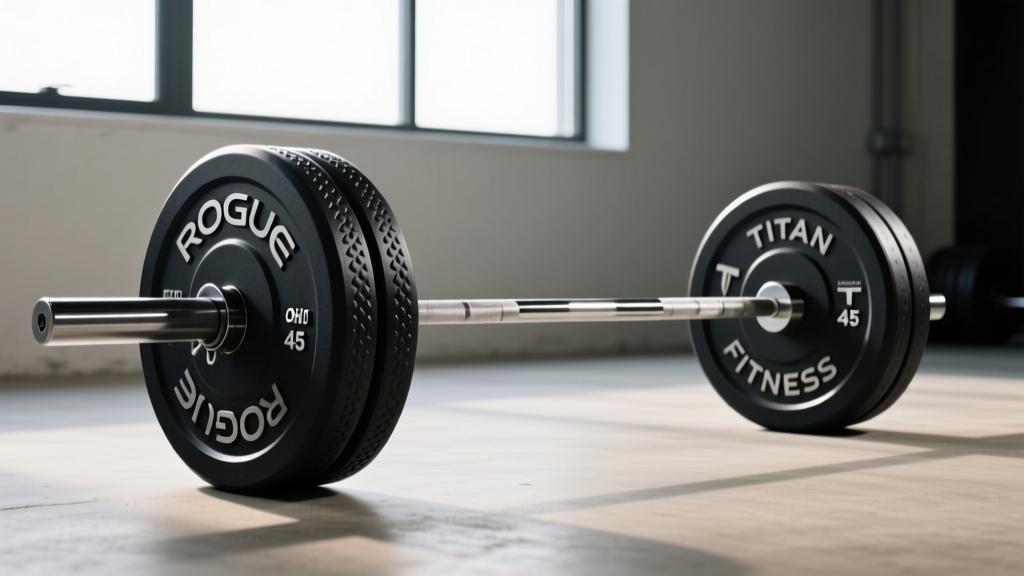
Barbell Knurling: Rogue vs Titan & Supinated Dumbbell Biceps Curl

Power vs Squat Rack Setup & Inner Thigh Exercises with Dumbbells

Dumbbell Lateral Raise Machine vs Loadable Dumbbells: Value Analysis

Bumper vs Iron Plates: Space Layouts & Wide Dumbbell Curl Zones
