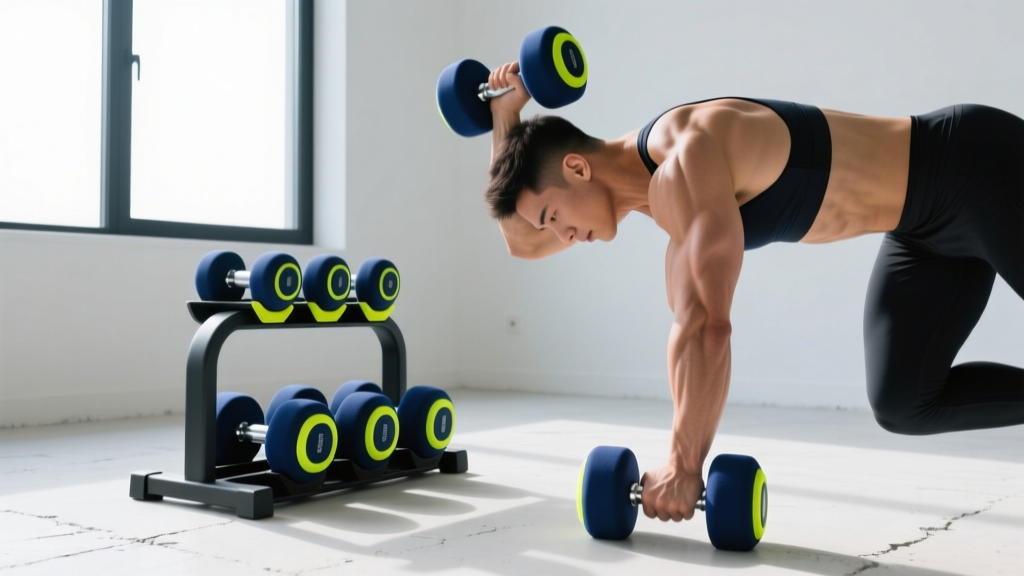
Dumbbell Rack Maintenance: Protecting Your Light Dumbbell Sets
Learn essential dumbbell rack maintenance tips to prevent structural sagging, protect your light dumbbell sets from coating damage, and extend gear life.

The Hidden Cost of Neglected Dumbbell Storage
Most home gym owners and commercial facility managers treat their dumbbell racks as static, indestructible furniture. In reality, a fully loaded 3-tier horizontal rack is a dynamic structural system bearing anywhere from 500 to 1,500 pounds of shifting iron. When maintenance is ignored, the resulting frame warping and tier sagging don't just ruin the rack—they cause severe collateral damage to your free weights. Ironically, it is often the light dumbbell inventory (typically 5 lb to 20 lb pairs) that suffers the most irreversible cosmetic and structural degradation due to improper storage mechanics.
As of 2026, replacing a warped neoprene or urethane light dumbbell pair costs between $30 and $45, while a commercial-grade 3-tier rack averages $350 to $500. Implementing a rigorous maintenance protocol for your storage solutions is not just about safety; it is a critical financial strategy to protect your entire free weight ecosystem.
The Physics of Rack Sag and Coating Damage
To understand why maintenance matters, you must understand how rack fatigue occurs. When heavy hex or urethane dumbbells (50+ lbs) are dropped onto the lower tiers, the kinetic energy transfers through the steel frame. Over time, this micro-vibration loosens the M10 and M12 carriage bolts that secure the tier trays to the uprights.
⚠️ Warning: The "Bookending" Failure ModePlacing heavy dumbbells on the far left and right edges of a tier while leaving the center empty creates a fulcrum effect. This accelerates the bowing of the steel tier tray by up to 40% compared to evenly distributed loads, according to structural load analyses on gym equipment.
Why Your Light Dumbbell Pairs Suffer the Most
When a rack's frame twists or the tier trays bow, the spacing and angle of the storage cradles shift. Light dumbbell pairs are particularly vulnerable for two reasons:
- Shorter Handle Geometry: A 10 lb light dumbbell has a significantly shorter handle and narrower head than a 50 lb dumbbell. If the rack sags and the cradle spacing widens, the light dumbbell can slip through the gap or rest at a severe angle.
- Softer Coating Materials: Light dumbbells are frequently coated in neoprene or softer-durometer urethane for high-rep and rehabilitation comfort. When a misaligned rack forces the metal edge of a warped tier tray to press into the dumbbell head, it slices and tears this softer coating, leading to the dreaded "sticky" degradation and eventual crumbling.
"Proper equipment storage is a primary pillar of facility safety and equipment longevity. Racks must be inspected for structural integrity and bolt tightness on a bi-annual basis to prevent catastrophic failure and secondary damage to free weights." — National Strength and Conditioning Association (NSCA) Facility Guidelines.
Step-by-Step Rack Maintenance Protocol
Follow this exact 4-step maintenance routine every six months to ensure your dumbbell rack remains perfectly calibrated to protect your inventory.
Step 1: The Torque Verification
Do not simply hand-tighten loose bolts with an Allen key. You must use a calibrated torque wrench. For standard M10 bolts found on most 3-tier racks (like those from Rep Fitness or Titan), torque to 35–40 Nm. For heavier-duty M12 bolts on 5-tier commercial racks, torque to 50–55 Nm. Over-torquing will strip the threads on the welded nutserts, requiring a costly drill-out and re-threading.
Step 2: Cradle and Tray Inspection
Inspect the plastic or rubber UHMW (Ultra-High-Molecular-Weight) polyethylene cradles that line the metal trays. If they are cracked, missing, or compressed flat, the bare steel of the rack will grind against the metal handles of your dumbbells. Replace cracked cradles immediately; a full set of replacement UHMW liners typically costs under $40 and saves hundreds in ruined knurling.
Step 3: The Pyramid Loading Rule
Always enforce a strict weight distribution hierarchy. The top tier should exclusively house your light dumbbell sets (5 lb – 25 lb). The middle tier holds mid-range weights (30 lb – 50 lb), and the bottom tier holds the heavy pairs (55 lb+). This lowers the rack's center of gravity and prevents the top tier from experiencing excessive static deflection.
Step 4: Neutral-pH Cleaning
Sweat and chalk dust accumulate in the crevices of the rack trays, creating an acidic paste that accelerates steel oxidation and degrades rubber cradles. According to equipment care experts at Garage Gym Reviews, you should avoid bleach or ammonia-based cleaners. Instead, wipe down the rack tiers and cradles monthly using a 1:10 dilution of Simple Green and distilled water, or a 50/50 mix of white vinegar and water.
Storage Solutions: Matching the Rack to the Coating
Not all racks interact with your dumbbells the same way. The table below breaks down how different storage solutions impact maintenance needs and the longevity of your light dumbbell coatings.
| Rack Type | Maintenance Frequency | Light Dumbbell Compatibility & Risk | Average Cost (2026) |
|---|---|---|---|
| 3-Tier Horizontal | High (Bi-annual torque checks required) | Excellent. Top tier isolation prevents heavy weights from crushing light dumbbell coatings. | $250 - $450 |
| A-Frame / Vertical | Low (Minimal vibration transfer) | Moderate. Handle-down storage can warp light dumbbell neoprene grips if left resting on bare metal pegs. | $150 - $300 |
| Wall-Mounted Slat | Medium (Drywall/stud anchor checks) | Poor for heavy weights, but ideal for a dedicated light dumbbell rehab wall. Zero tier sagging. | $80 - $180 |
Environmental Controls: Preventing the "Sticky" Degradation
Maintenance isn't just mechanical; it's environmental. The synthetic rubbers used in light dumbbell coatings (especially neoprene and lower-grade urethanes) are highly susceptible to hydrolysis and UV degradation. When these materials break down, they exude a sticky, tar-like residue that transfers to your rack trays and ruins the equipment.
- Humidity Control: The Environmental Protection Agency (EPA) recommends keeping indoor humidity between 30% and 50%. In damp basement gyms, excess moisture accelerates the chemical breakdown of neoprene. Run a dehumidifier to maintain a strict 45% RH (Relative Humidity) year-round.
- UV Exposure: Never position your dumbbell rack directly in front of a south-facing window. UV radiation breaks the polymer chains in urethane, causing it to chalk, fade, and eventually crack. If window placement is unavoidable, apply a UV-blocking window film (look for a 99% UV rejection rating).
- Ozone Generators: Avoid using ozone-generating air purifiers in your gym space. Ozone aggressively attacks the double bonds in synthetic rubber molecules, causing rapid surface cracking on both your rack's rubber feet and your dumbbell heads.
Frequently Asked Questions
How do I fix a light dumbbell that has already been sliced by a warped rack?
If the neoprene or urethane coating is torn but the cast iron core is intact, you can clean the area with isopropyl alcohol and apply a flexible, high-strength marine adhesive like 3M Marine Adhesive Sealant 5200. However, if the tear exposes the iron core and rust has begun, the dumbbell head must be sanded, treated with a rust converter, and coated with a liquid rubber dip (like Plasti Dip) before returning it to the rack.
Should I use rubber mats under my dumbbell rack?
Yes, but with a caveat. Placing a 3/4-inch horse stall mat under the rack dampens the acoustic vibration of dropping heavy weights, protecting the floor. However, if the mat is too soft, it can cause the rack's adjustable feet to sink unevenly, introducing a torsional twist to the frame. Always use a high-density rubber mat (Shore A hardness of 60 or higher) and ensure the rack's leveling feet are tightened firmly against the mat to prevent micro-shifting.
Can I store kettlebells and light dumbbells on the same rack tier?
It is highly discouraged. Kettlebells have a completely different center of gravity and base geometry. Storing them on a standard horizontal dumbbell tray forces the rack to bear uneven point-loads. Furthermore, the wide handles of kettlebells can easily knock adjacent light dumbbell pairs off the tier when being removed, leading to dropped weights and torn coatings.
More gear to consider
All reviews
Good Tricep Workouts With Dumbbells: Neoprene Home Guide

Barbell Buying Guide: Knurling, Weight & Alternating Dumbbell Snatch

Olympic vs Standard Plates & Lat Exercises with Dumbbells at Home

Olympic vs Standard Plates for the Athlean X Dumbbell Workout PDF
Olympic vs Standard Plates: Buying Guide & Dumbbell RDL for Glutes