EZ Curl Bar vs Straight Bar and Dumbbell for Biceps and Triceps Costs
Compare the EZ curl bar, straight bar, and adjustable dumbbell for biceps and triceps. We break down cost-per-pound, biomechanics, and hidden storage fees.

The True Cost of Arm Training: Beyond the Sticker Price
When building a home gym or upgrading a commercial arm-day station, most lifters focus solely on the weight plates. However, the implements you use to transfer that load to your muscles dictate your joint longevity, range of motion, and overall budget efficiency. In 2026, the market for isolation bars and free weights has fractured into premium ergonomic tiers and budget-friendly mass-produced options. To make a mathematically sound purchasing decision, we must evaluate the cost-per-pound of the implement itself, the biomechanical return on investment, and the hidden storage costs associated with each tool.
2026 Budget Snapshot & Value Matrix- Straight Bar (5ft Olympic): Lowest entry cost, highest wrist strain. Best for heavy overloads.
- EZ Curl Bar: Mid-tier cost, optimal valgus relief. The gold standard for triceps extensions.
- Adjustable Dumbbells: Highest upfront cost, lowest space footprint. Ultimate unilateral versatility.
The Straight Bar: Baseline Metrics and Biomechanical Tax
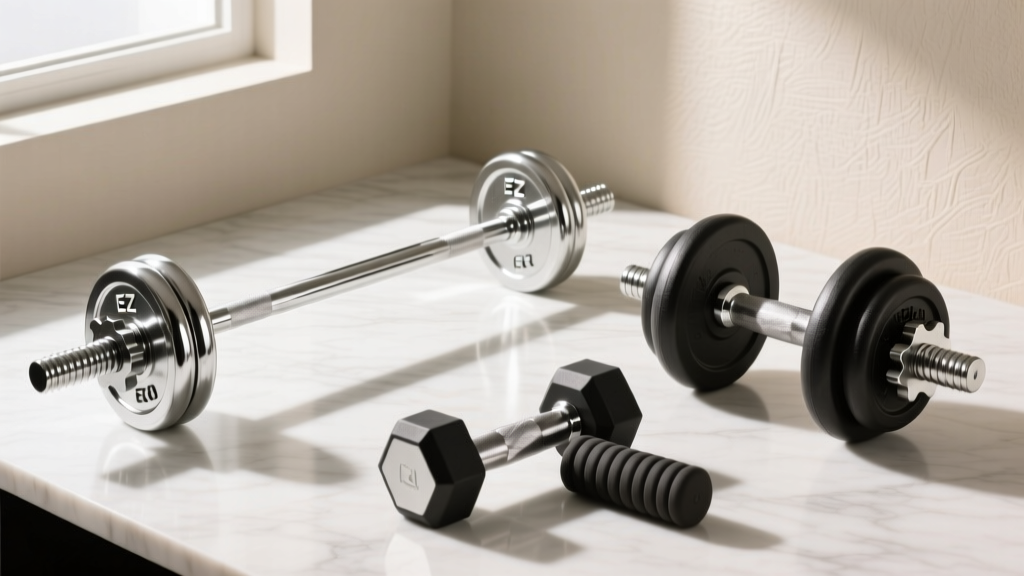
The standard 5-foot Olympic straight bar is the traditional starting point for arm training. Models like the CAP Barbell 5-Foot Solid Olympic Bar (OB-5) typically retail between $55 and $70. Weighing in at roughly 25 pounds, your cost-per-pound for the implement itself sits at an attractive $2.20 to $2.80.
The Hidden Biomechanical Tax
While financially efficient, the straight bar forces the wrists into full supination. According to the ExRx kinesiology directory, the human carrying angle (the natural outward divergence of the forearms from the elbows) means that forcing a perfectly straight grip places severe valgus stress on the wrists and elbows. During heavy biceps curls or tight-grip skull crushers, this misalignment frequently leads to medial epicondylitis (golfer's elbow) or TFCC (triangular fibrocartilage complex) wrist irritation. If a $60 straight bar eventually forces you into physical therapy or requires you to buy wrist wraps and elbow sleeves to manage pain, its true cost skyrockets.
EZ Curl Bar: Paying a Premium for Ergonomics
The EZ curl bar introduces angled grips that allow for a semi-supinated or neutral wrist position, drastically reducing joint shear. But how does the pricing break down in the current market?
- Budget Tier (Titan Fitness / CAP Barbell): Ranging from $60 to $89, these bars usually weigh 15 to 22 pounds and utilize basic bushing systems. The Titan Fitness Olympic EZ Curl Bar ($89) offers a 30-pound shaft with decent knurling, bringing the cost to roughly $2.96 per pound.
- Premium Tier (Rogue / Eleiko): High-end options like the Rogue Curl Bar ($135) feature hardened spring steel, composite bushings for smooth sleeve rotation, and aggressive knurling. Weighing 35 pounds, the cost-per-pound jumps to $3.85, but the failure rate drops to near zero.
"During triceps extensions, the EZ bar's angled grips allow the elbows to tuck naturally without forcing the wrists into extreme extension, making it arguably the most cost-effective tool for heavy triceps isolation in a commercial or home gym setting."
Failure Modes to Watch For
When buying budget EZ bars, inspect the sleeve retention mechanism. Cheap models use external snap-rings that can pop off if the bar is dropped loaded, sending 45-pound plates sliding off the sleeve. Premium models use internal retaining pins or high-grade snap-rings seated in deep grooves, a vital safety feature for overhead triceps work.
The Dumbbell for Biceps and Triceps: Ultimate Value?
While bars are excellent for bilateral overload, no bar can fix a left-to-right strength imbalance. This is where selecting the right dumbbell for biceps and triceps becomes a critical budget decision. You have two primary routes: fixed hex dumbbells or adjustable systems.
Fixed Hex vs. Adjustable Economics
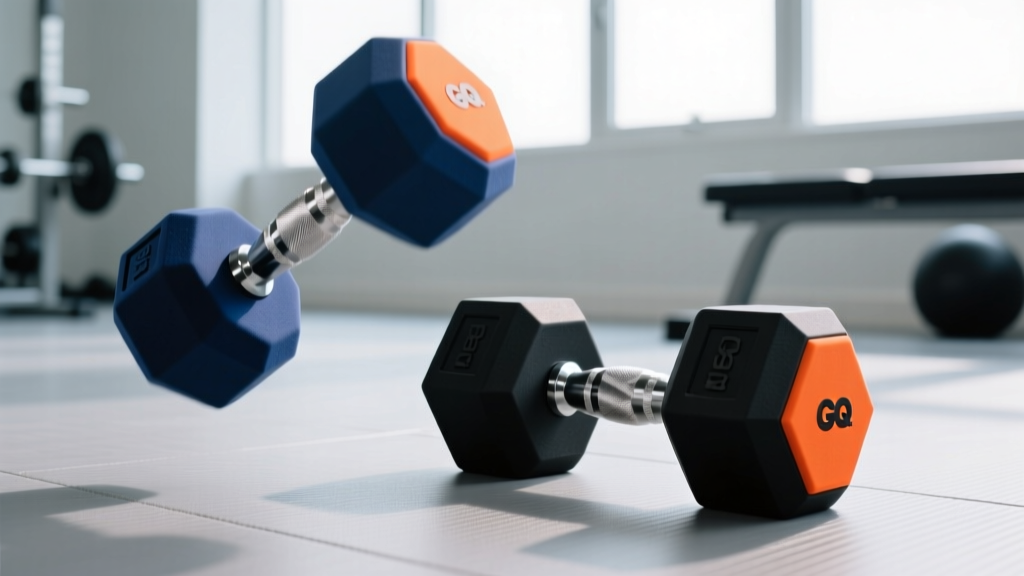
Rubber hex dumbbells generally cost between $1.50 and $2.00 per pound. To build a usable arm-training set (e.g., pairs of 25s, 35s, and 50s), you are looking at an upfront cost of roughly $440 to $550. Furthermore, you must factor in storage. A 3-tier dumbbell rack costs an additional $120 to $180 and consumes 4 square feet of floor space.
Adjustable dumbbells, conversely, consolidate an entire rack into a 2-square-foot footprint. The PowerBlock Elite USA series ranges from $159 to $399 depending on the weight expansion kit (up to 90 lbs per hand). At $399 for a 90lb pair, you are paying roughly $2.21 per pound of accessible weight, making it vastly superior in value to buying fixed pairs. Brands like PowerBlock also offer commercial-grade warranties that protect your investment against manufacturing defects.
Edge Cases and Dropping Risks
Not all adjustable dumbbells survive the triceps extension drop. Models utilizing plastic dial mechanisms or internal plastic cradles (like certain versions of the Bowflex 552 or Nuobell) have a high failure rate if dropped from just 12 inches onto rubber matting. The plastic housing cracks, rendering the $329 set useless. For heavy triceps kickbacks or overhead extensions where grip fatigue might cause a drop, traditional cast-iron adjustable handle sets (like the classic York or CAP 1-inch spin-lock handles at $35 a pair) remain the most indestructible, budget-friendly option, despite the tedious plate-changing process.
Cost-Per-Pound & Versatility Matrix
| Equipment Type | Avg. 2026 Market Price | Cost / lb (Implement) | Wrist Ergonomics | Unilateral Capability |
|---|---|---|---|---|
| 5ft Straight Bar | $60 - $90 | $2.40 - $3.60 | Poor (High Valgus Stress) | None |
| Olympic EZ Curl Bar | $89 - $135 | $2.96 - $3.85 | Excellent (Neutral/Semi) | None |
| Rubber Hex Dumbbells | $1.50 - $2.00 / lb | $1.50 - $2.00 | Perfect (Free Rotation) | Full |
| Premium Adjustable DBs | $329 - $450 (Pair) | $1.82 - $2.50 | Perfect (Free Rotation) | Full |
Hidden Costs: Storage, Maintenance, and Space Economics
When performing a value analysis, the physical footprint of your equipment translates directly to real estate costs, especially in apartment gyms or garage setups where square footage is at a premium.
The Storage Tax
A 5-foot straight bar or EZ curl bar requires 60 inches of horizontal clearance. If you leave it on the floor, it becomes a tripping hazard and the sleeves will attract dust and degrade the bushings. Wall-mounted bar hangers cost roughly $40 to $80, while vertical bar storage trees cost $120+. Dumbbells, while compact, require a specialized tier rack to prevent rolling and floor damage. A heavy-duty 3-tier rack capable of holding 500+ pounds will cost between $130 and $200. If you opt for adjustable dumbbells, the storage cost is effectively zero, as they rest in their included cradles.
Maintenance and Longevity
Steel implements require basic maintenance. Budget straight bars and EZ bars often feature chrome finishes that can flake or rust if exposed to humidity in a garage gym. Bare steel or black oxide finishes (common on premium Rogue or Eleiko bars) require occasional wiping with 3-in-1 oil and a nylon brush to maintain the knurling. Rubber hex dumbbells, while maintenance-free regarding rust, suffer from a different failure mode: the rubber degrades, becomes sticky, and emits a volatile organic compound (VOC) odor when exposed to direct UV sunlight or extreme heat over several years. Urethane-coated dumbbells solve this but jump the price to $3.50+ per pound.
Final Verdict: Building the Ultimate Budget Arm Arsenal
If your budget is strictly under $100, the 5-foot straight bar remains the undisputed king of raw cost-per-pound, provided you manage your wrist angles and avoid excessive heavy preacher curls. However, for the majority of lifters looking to maximize hypertrophy while preserving joint health, the EZ curl bar in the $89 to $135 range offers the highest biomechanical ROI for triceps and biceps isolation.
Ultimately, integrating a high-quality adjustable dumbbell for biceps and triceps into your routine provides the unilateral tracking and neutral-grip hammer curls that no barbell can replicate. By pairing a mid-tier Titan or Rogue EZ bar ($89-$135) with a set of PowerBlock or Nuobell adjustable dumbbells ($329-$399), you secure a complete, joint-friendly, space-efficient arm training ecosystem for under $550—a fractional cost compared to commercial gym memberships or physical therapy bills down the line.
More gear to consider
All reviews
Dumbbell Lat Raise: Beginner's Step-by-Step Form Guide
Barbell Collars Compared: Securing Squats & Dumbbell Floor Press

Rubber Hex vs Urethane: Budgeting Your Arm Workout With Dumbbells
Dumbbell Front Foot Elevated Split Squat: Beginner Home Guide

Olympic Barbell Buying Guide & Dumbbell Exercises for Building Muscle