Power Rack vs Squat Rack vs Squat Stand for Dumbbell Complexes
Compare power racks, squat racks, and squat stands to find the best setup for heavy barbell lifts and high-volume dumbbell complexes in your home gym.

The Hybrid Athlete’s Dilemma: Space vs. Safety
As home gym programming evolves in 2026, the line between heavy strength training and high-volume metabolic conditioning has blurred. Athletes are increasingly pairing heavy barbell lifts with grueling dumbbell complexes—strings of 4 to 6 exercises like the Dumbbell Bear Complex or Man-Makers performed without dropping the weights. This hybrid approach demands equipment that can safely catch a missed 300-pound back squat while simultaneously staying out of the way of lateral lunges, renegade rows, and sprawling thruster sequences.
Choosing between a power rack, a squat rack (half rack), and squat stands is no longer just about your ceiling height or budget. It is about how the steel footprint interacts with your floor work. According to biomechanics data from ExRx.net, complex movements require unrestricted multi-planar space to maintain proper spinal alignment and joint tracking. If your rack restricts this space, your form breaks down under fatigue. Let’s break down the structural differences, exact dimensions, and real-world applications of each rack type for the hybrid athlete.
The Spatial Demands of Dumbbell Complexes
Before comparing the steel, we must define the spatial requirements of a proper dumbbell complex. A standard DB Bear Complex (Clean, Front Squat, Push Press, Back Squat, Push Press) requires a minimum clear floor zone of 6 feet by 6 feet to accommodate stepping back, dropping into deep squats, and managing the lateral sway of fatigue.
Expert Insight: When performing unilateral dumbbell complexes (like alternating reverse lunges into overhead presses), athletes frequently step backward or laterally. A standard 4-post power rack interior is typically 41 inches wide by 41 inches deep. Attempting dynamic dumbbell complexes inside a full cage increases the risk of clipping the uprights with the dumbbell heads, leading to wrist injuries or damaged knurling.Power Racks (Full Cages): Maximum Safety, Restricted Flow
Power racks are the undisputed kings of safety. Constructed from 3x3-inch 11-gauge steel, they offer four points of contact and enclosed safety straps or pin-pipe safeties. However, for dumbbell complexes, they present a distinct spatial paradox.
The 43x43 Footprint Problem
Take the industry-standard Rogue RML-390F (Flat Foot). It boasts a 43" x 43" exterior footprint and a 90" height. While the flat-foot design means you don't have to bolt it down (provided you use the rear weight storage pegs as a counterbalance), the four uprights create a visual and physical cage. If you transition from heavy rack pulls directly into a dumbbell thruster complex, you are forced to step outside the cage. This transition breaks the metabolic flow and requires you to dedicate an additional 36 square feet of floor space directly in front of the rack.
Pros & Cons for Complex Training
- Pros: Unmatched safety for heavy barbell work; supports heavy attachments like monolifts and belt squat mechanisms; enclosed pull-up bars for complex transitions (e.g., DB floor press to pull-up).
- Cons: High cost ($1,100 - $1,500+); restricts interior floor space; visually cluttered for video analysis of complex form.
Squat Racks (Half Racks): The Open-Front Compromise
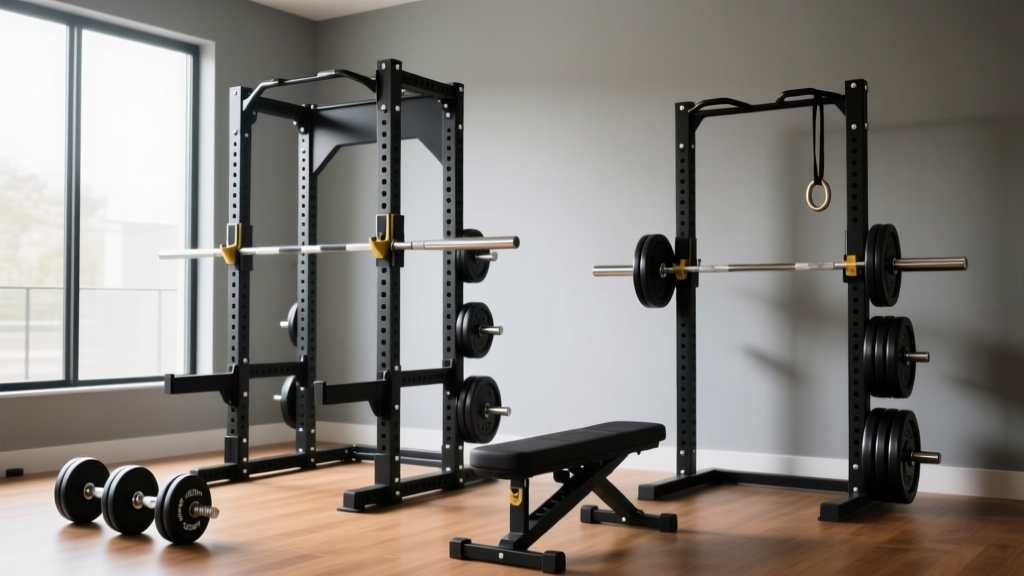
Squat racks, commonly known as half racks, feature two main front uprights and two rear stabilizing uprights. This design pushes the bulk of the steel to the back, leaving the front completely open.
Unrestricted Anterior Space
The Rep Fitness PR-4000 is a prime example of a modern half rack optimized for hybrid work. With an open front, you can perform your heavy barbell squats, rack the bar, and immediately drop into a dumbbell complex without ever leaving the lifting platform. The open front allows for sprawling movements, burpees, and lateral DB lunges without the fear of striking a front post. Furthermore, half racks often feature integrated weight storage on the rear uprights, keeping heavy 50lb+ hex dumbbells organized and out of the tripping zone.
Pros & Cons for Complex Training
- Pros: Open-front design perfectly accommodates sprawling dumbbell complexes; integrated rear storage clears floor space; typically 20-30% cheaper than full cages.
- Cons: Requires bolting to the floor or a massive rear counterweight to prevent forward tipping during rack pulls; deeper overall footprint (often 50"+ deep including the rear uprights).
Squat Stands: Ultimate Freedom for Floor Work
Squat stands consist of two independent uprights. They are the minimalist’s choice and the ultimate enabler for floor-based dumbbell complexes.
Unrestricted Movement Patterns
Models like the Rogue SML-2C (90" height) or the Titin Fitness T-2 Folding Squat Stand take up virtually zero floor space when not in active use for barbell lifts. If your programming heavily favors high-volume dumbbell complexes, kettlebell flows, and Olympic lifting variations, squat stands allow you to utilize a full 8x8 foot rubber-matted zone. When it’s time to bench press or back squat, you simply wheel or carry the stands into position, set your spotter arms, and work.
Safety Warning: The National Strength and Conditioning Association (NSCA) strictly advises against performing heavy, unassisted barbell lifts without proper safety catches. If you use squat stands, you must invest in independent spotter arms with UHMW plastic liners to protect your barbell knurl and catch missed reps safely.Pros & Cons for Complex Training
- Pros: Ultimate floor freedom for expansive dumbbell complexes; highly portable; budget-friendly ($150 - $350); easy to store in multi-use garages.
- Cons: Zero attachment compatibility (no cable pulleys, no lat towers); lower overall weight capacity (usually 600-800 lbs); requires careful alignment before every heavy barbell set.
Head-to-Head Comparison Matrix
| Feature | Power Rack (Full Cage) | Squat Rack (Half Rack) | Squat Stands |
|---|---|---|---|
| Best For | Heavy barbell focus, minimal floor work | Hybrid athletes, open-front complexes | Dumbbell/Kettlebell focus, small spaces |
| Standard Footprint | 43" x 43" (Enclosed) | 48" x 52" (Open Front) | 24" x 24" (Independent) |
| Steel Spec (2026 Std) | 3x3" 11-Gauge | 3x3" 11-Gauge | 2x2" or 3x3" 11-Gauge |
| Avg. Price Range | $800 - $1,600+ | $500 - $900 | $150 - $350 |
| Complex Flow Rating | Low (Restricted Interior) | High (Open Anterior) | Maximum (Unrestricted Floor) |
| Bolting Required? | No (if using storage/flat foot) | Yes (Highly Recommended) | No (But spotter arms need weight) |
Designing Your Complex Zone: Layout & Safety Protocols
According to research and programming guidelines discussed on Stronger By Science, fatigue management during metabolic conditioning is heavily influenced by your physical environment. Tripping hazards or restricted ranges of motion will spike your heart rate prematurely and degrade your technical execution. Follow this step-by-step layout guide for your hybrid gym:
- Establish the Drop Zone: Allocate a minimum 6'x6' area of 3/4-inch thick vulcanized rubber matting directly in front of your rack. This is your dedicated dumbbell complex zone.
- Position the Rack: If using a Half Rack or Power Rack, ensure the front uprights are at least 36 inches away from any wall or mirror to allow for backward stepping during DB lunges or man-makers.
- Store DBs Laterally: Do not store heavy dumbbells on the floor near your complex zone. Utilize vertical dumbbell racks or rear-mounted rack shelves to keep the floor clear for sprawling movements.
- Implement Westside Spacing: When configuring your rack's safety straps, ensure your uprights feature 1-inch Westside hole spacing in the bench/squat zone. This allows you to set safeties exactly 1 inch below your barbell's bottom position, crucial for safely bailing out of a heavy push-press that might cap off a complex.
Expert Verdict: Which Should You Buy?
The decision ultimately hinges on your primary training modality. If your programming is 80% heavy barbell strength and 20% metabolic conditioning, invest in a Power Rack. The safety and attachment ecosystem are worth the spatial compromise; simply perform your dumbbell complexes outside the cage.
However, if you are a true hybrid athlete running daily dumbbell complexes, barbell flows, and functional fitness WODs, the Squat Rack (Half Rack) is the undisputed champion. The open-front design of models like the Rep PR-4000 provides the perfect marriage of heavy barbell safety and unobstructed floor space, allowing you to transition from a heavy 5x5 front squat directly into a brutal 5-round dumbbell thruster complex without missing a beat or striking a steel upright.
More gear to consider
All reviews
Best Adjustable Dumbbells & Top Dumbbell Exercises for Bat Wings

Olympic vs Standard Plates: Building the Biggest Dumbbell Setup

EZ Curl Bar vs Straight Bar: Good Upper Body Workouts with Dumbbells

Bumper Plate vs Iron Plate for 1 Inch Dumbbell Handles

Olympic Barbell Knurling Setup & Jump Squats with Dumbbells Guide