EZ Curl vs Straight Bar Care & Single Dumbbell Squat Mechanics
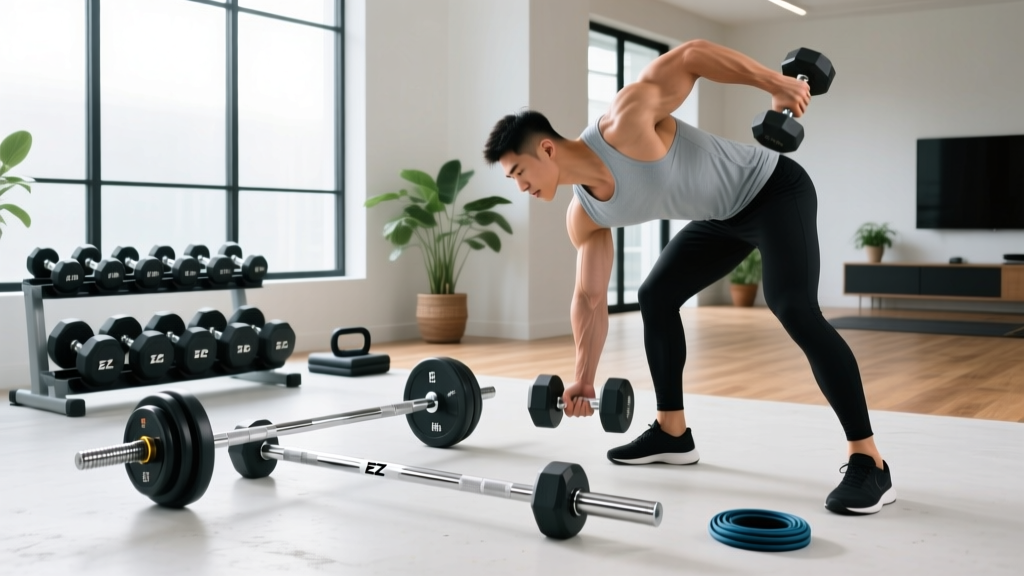
Master EZ curl vs straight bar maintenance to prevent rust and sleeve wear, while using the single dumbbell squat to extend your barbell's lifespan.

The Metallurgy of Grip: EZ Curl vs. Straight Bar Knurling
When outfitting a home gym in 2026, lifters often obsess over rack stability or plate calibration, yet the most intimate point of contact—the barbell knurling—is frequently neglected until it degrades. Understanding the maintenance differences between an EZ curl bar and a standard Olympic straight bar is critical for maximizing the lifespan of your free weights.
Straight bars, such as the Rogue Ohio Bar or Eleiko Sport Training Bar, typically feature a continuous 'volcano' knurling pattern. This design provides maximum surface area for grip but creates thousands of microscopic peaks that trap dead skin, sebum, and magnesium carbonate (chalk). Over time, this organic buildup mixes with ambient humidity to form a mildly acidic paste that accelerates oxidation, particularly on bare steel or basic zinc-coated shafts.
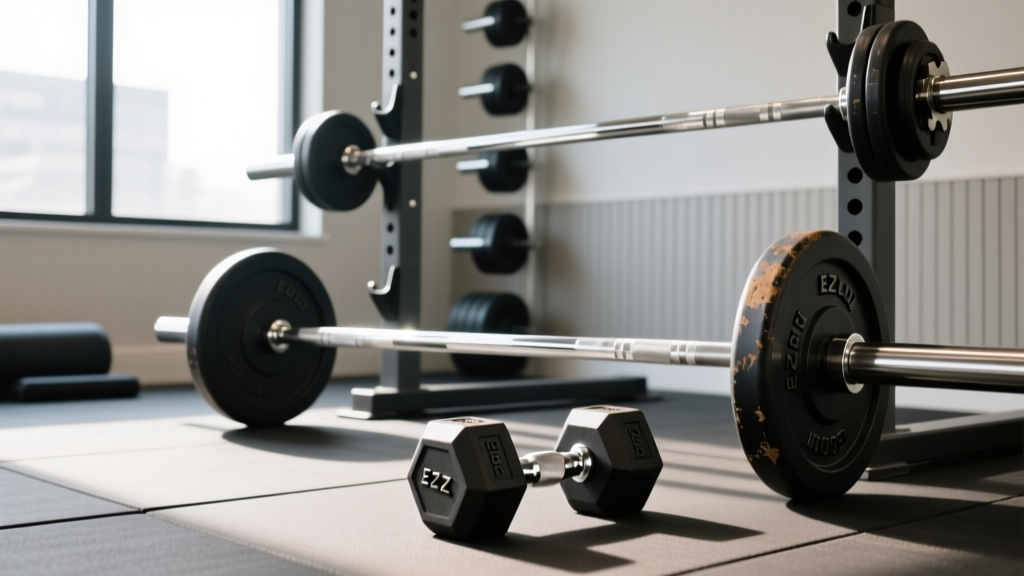
Conversely, EZ curl bars (like the CAP Barbell Super Curl Bar or Titan Fitness Curl Bar) utilize angled grip zones with deeper, more aggressive 'mountain' or coarse hill knurling. Because the hands are positioned at supinated or semi-pronated angles, the lateral friction applied to the knurling is different. However, the sharp crevices of an EZ bar are notorious for trapping chalk deep within the grooves, making them significantly harder to clean than a straight bar.
⚠️ Critical Warning: Never use a stiff wire brush on chrome or zinc-coated EZ curl bars. Wire bristles will strip the protective coating, exposing the underlying carbon steel to immediate rust. Always use a firm nylon-bristle brush paired with a few drops of 3-in-One oil to lift debris without compromising the finish.Sleeve Spin and Bushing Longevity
The rotational mechanics of your bars dictate how they handle dynamic loads, and their maintenance requirements differ vastly.
Straight Bar Bearings vs. Bushings
High-end straight bars utilize needle bearings or high-quality bronze bushings to allow the sleeve to spin independently of the shaft during Olympic lifts. To maintain these, you must periodically lubricate the sleeve interface. Using a dropper, apply 3 to 5 drops of synthetic motor oil (10W-30) or specialized barbell oil directly into the gap between the shaft and the sleeve. Rotate the sleeve 20 times to distribute the lubricant, then wipe away excess to prevent dust adhesion.
EZ Curl Bar Snap-Rings and Brass Bushings
Most EZ curl bars on the market prioritize cost-efficiency, utilizing basic brass bushings and external snap-rings (C-clips) to retain the sleeves. Because EZ bars are rarely dropped from overhead, the bushings experience less catastrophic shock loading. However, the snap-rings are vulnerable to sweat corrosion. Every six months, use snap-ring pliers to remove the retaining clip, slide the sleeve off, wipe the inner shaft with isopropyl alcohol, and apply a thin layer of white lithium grease before reassembling. This prevents the dreaded 'sleeve seize' that renders the bar useless for curls or tricep extensions.
The Single Dumbbell Squat: A Longevity Strategy for Your Bar
While physical cleaning is vital, true equipment longevity also involves strategic programming to reduce unnecessary mechanical wear and tear. This is where the single dumbbell squat becomes a secret weapon for home gym owners looking to preserve their premium straight bars.
Heavy, high-volume barbell back squats subject the center knurling and the shaft's structural integrity to immense compressive and shear forces. Over a decade of use, aggressive center knurling can literally wear smooth from the friction of heavy squatting, while the sleeves endure repetitive shock loading. By substituting accessory leg work with the single dumbbell squat—holding a 50 lb to 80 lb adjustable dumbbell (such as the Ironmaster Quick-Lock V2 or Nuobell 80) in a goblet or offset position—you achieve comparable quad and glute hypertrophy via unilateral loading while giving your straight bar a much-needed rest.
According to the National Strength and Conditioning Association (NSCA), unilateral movements like the single dumbbell squat are highly effective at correcting bilateral imbalances, reducing spinal compression, and stimulating muscle growth with lower absolute systemic loads. By programming the single dumbbell squat for your high-rep hypertrophy blocks, you drastically reduce the high-friction, high-load cycles on your straight bar. This preserves the aggressive center knurling for heavy max-effort squats and Olympic variations, effectively extending the functional lifespan of your $300+ barbell by years.
2026 Maintenance & Wear Comparison Matrix
| Equipment | Primary Wear Point | Maintenance Protocol | 10-Year Replacement Cost |
|---|---|---|---|
| Olympic Straight Bar | Center Knurling & Sleeve Bushings | Monthly oiling; Bi-weekly nylon brushing | $0 (if maintained properly) |
| EZ Curl Bar | Angled Grip Crevices & Snap-Rings | Bi-weekly deep brushing; Annual grease | $45 - $90 (Sleeve seize/rust) |
| Adjustable Dumbbell | Handle Knurling & Selector Dial | Wipe down post-use; Never drop | $150 - $350 (Internal mechanism drop damage) |
Oxidation, Coatings, and Storage Realities
The environment in which you store your free weights dictates their chemical degradation. In 2026, the market is dominated by three primary finishes: Hard Chrome, Zinc, and Cerakote.
- Hard Chrome: Excellent corrosion resistance but can flake if the underlying steel is compromised. Requires occasional wiping with a silicone-treated cloth.
- Zinc (Black or Clear): Provides a sacrificial layer of oxidation protection. Black zinc tends to fade and turn gray over time due to UV exposure and hand oils. Clean with a mild degreaser and re-oil.
- Cerakote: A ceramic-polymer coating that has become the gold standard for home gyms. It is virtually impervious to sweat and humidity. As noted in the Garage Gym Reviews Barbell Maintenance Guide, Cerakote bars require minimal maintenance—usually just a quick wipe with a damp microfiber cloth and a light brushing of the knurling.
"If your home gym is in a garage or basement where relative humidity frequently exceeds 60%, investing in a Cerakote-coated straight bar and a stainless steel EZ curl bar is the most cost-effective longevity strategy you can employ."
Proper Storage Configurations
Never leave your straight bar loaded in a power rack or squat stand for extended periods. The constant downward pressure on the sleeves, combined with the tension of the barbell resting on the J-cups, can lead to microscopic shaft deformation over several months. Store bars horizontally on a dedicated wall-mounted bar rack or vertically in a barbell holder to ensure the sleeves and bushings rest in a neutral, unloaded state.
Final Verdict on Equipment Lifespan
Maximizing the ROI of your free weights requires a dual approach: meticulous physical maintenance and intelligent programming. By committing to a strict nylon-brush and oiling routine for both your EZ curl and straight bars, you prevent the insidious creep of rust and sleeve seizure. Furthermore, by strategically integrating the single dumbbell squat into your leg days, you spare your premium straight bar from thousands of unnecessary high-friction cycles, ensuring its knurling remains as aggressive in 2036 as the day you unboxed it.
More gear to consider
All reviews
2026 Market Trends: Urethane vs Rubber Hex for Heavy Dumbbell Shrugs for Shoulders

Ethos Dumbbells Review: Rubber Hex vs Urethane Tested

Dumbbell Wall Sit Setup: Neoprene Weights & Storage Guide
Master the Underhand Dumbbell Press & Olympic Barbell Guide

Maintaining Gear for Heavy Dumbbell Exercises: Rubber Hex vs Urethane