EZ Curl Bar vs Straight Bar & Tricep Curls Dumbbell Value Analysis
Compare the EZ curl bar vs straight bar for budget home gyms. We analyze costs, biomechanics, and tricep curls dumbbell alternatives for max value.

The Budget Arm-Day Dilemma: Barbells vs. Adjustable Dumbbells
When building a home gym on a strict budget, isolating the biceps and triceps often forces a compromise between specialized equipment and versatile tools. The debate usually centers on the EZ curl bar vs straight bar, but a third contender frequently enters the conversation for budget-conscious lifters: adjustable dumbbells. Many lifters searching for the ultimate arm builder wonder if they should invest in a dedicated barbell setup or stick to a classic tricep curls dumbbell routine. As a senior equipment reviewer at FitGearPulse, I have tested dozens of budget bars and adjustable dumbbells to determine which setup offers the highest return on investment for hypertrophy, joint health, and long-term progression.
In this comprehensive value analysis, we will break down the exact upfront costs, hidden expenses, and biomechanical advantages of the 47-inch EZ curl bar, the 5-foot straight bar, and adjustable dumbbell sets. Whether you are doing heavy skull crushers or high-rep hammer curls, understanding the financial and physiological cost-per-exercise is critical for maximizing your home gym budget in 2026.
The Contenders: Upfront Costs and Equipment Footprint
To accurately compare the value of these three setups, we must look at the real-world pricing of entry-level to mid-tier home gym equipment. The prices below reflect the average market rates for reliable, non-commercial-grade equipment suitable for home use.
| Equipment Setup | Estimated Cost (2026) | Storage Footprint | Weight Capacity | Primary Versatility |
|---|---|---|---|---|
| Budget 47-inch EZ Curl Bar + 160lb Plates | $165 - $195 | Low (Bar + 2 small plates) | 200 - 300 lbs | Bilateral Curls, Skull Crushers |
| 5-Foot Straight Olympic Bar + 160lb Plates | $175 - $210 | Medium (5ft bar + plates) | 350 - 500 lbs | Heavy Curls, Floor Presses, Rows |
| Pair of Adjustable Dumbbells (e.g., 5-50 lbs) | $299 - $399 | Low (Single rack footprint) | 50 lbs per hand | Unilateral Work, Full Body |
The Case for the EZ Curl Bar
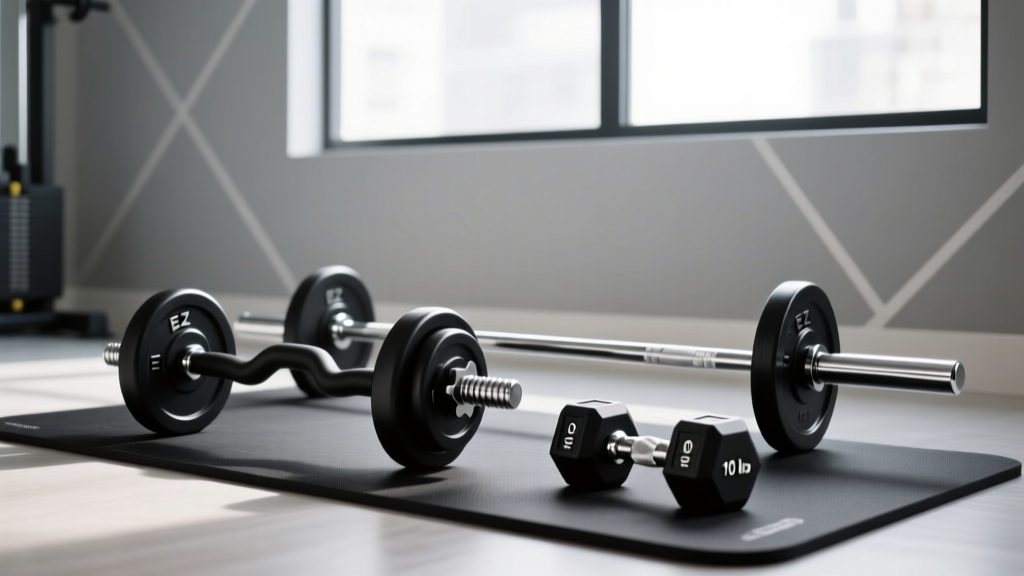
The standard 47-inch EZ curl bar is a staple for a reason. A reliable budget option like the CAP Barbell 47-inch Super Curl Bar costs around $35, while a premium upgrade like the Rogue Curl Bar sits at $115. When paired with a basic set of 160 lbs of cast iron Olympic plates (roughly $130), your total investment is under $200. The EZ bar's angled grips (typically set at 30 and 45 degrees) reduce wrist valgus stress, making it significantly more comfortable for heavy tricep extensions and strict bicep curls compared to a straight bar.
The Case for the Straight Bar
A 5-foot straight bar, such as the Titan Fitness 5ft Olympic Bar ($65), forces your wrists into full supination. While this maximizes biceps brachii activation, it can lead to medial epicondylitis (golfer's elbow) if you lack the natural wrist mobility for heavy, high-volume curling. However, the straight bar wins on sheer load capacity and multi-purpose utility, allowing you to perform bent-over rows, floor presses, and deadlifts in addition to arm isolation work.
The Tricep Curls Dumbbell Approach
If your current arm day relies heavily on a tricep curls dumbbell protocol, you are likely using adjustable dumbbells like the Bowflex SelectTech 552 ($399/pair) or the more compact Nuobell 80 ($425/pair). While the upfront cost is more than double that of a budget barbell setup, dumbbells allow for unilateral training, independent joint tracking, and neutral-grip variations (like hammer curls and single-arm overhead extensions) that barbells simply cannot replicate.
Biomechanics & Muscle Activation: Where Does the Money Go?
When evaluating value, you must consider the physiological return on your investment. According to BarBend's biomechanical analysis of arm training implements, the angle of your grip drastically alters muscle recruitment patterns.
- Straight Bar (Full Supination): Places the biceps brachii in its shortest, most mechanically advantageous position for peak contraction. Excellent for strict, heavy overload, but highly taxing on the radioulnar joint.
- EZ Curl Bar (Semi-Supinated): Shifts a portion of the load to the brachialis and brachioradialis. This is the superior choice for tricep skull crushers and overhead extensions, as the semi-pronated grip aligns the elbow joint more naturally with the long head of the triceps.
- Adjustable Dumbbells (Neutral to Supinated): Offers the highest degree of freedom. Dumbbells allow you to rotate your wrists through the concentric phase of a curl, a technique that maximizes muscle fiber recruitment while minimizing joint strain. For triceps, single-arm dumbbell extensions allow the elbow to flare naturally, avoiding the impingement some lifters feel with a fixed barbell.
Expert Insight: The Joint Health Tax
If you have a history of wrist or elbow tendonitis, the 'cheapest' option might end up costing you physical therapy bills. The EZ bar and adjustable dumbbells act as an insurance policy for your joints. As noted by Mayo Clinic's strength training guidelines, maintaining proper joint alignment during resistance training is critical for preventing overuse injuries in repetitive isolation movements.
Hidden Costs and Long-Term Failure Modes
Budget breakdowns often ignore the long-term maintenance and failure modes of fitness equipment. Here is what you need to know about the lifespan of your investment.
Barbell Sleeve Bushings and Knurling
Budget EZ bars and straight bars (under $50) typically use cheap brass bushings and low-grade steel. Over time, the sleeves can develop a 'grinding' feeling when spinning during curls, and the knurling can become sharp or wear flat. Furthermore, budget bars often feature a 30mm to 35mm shaft diameter, which is noticeably thicker than the 28.5mm shaft found on premium bars like Rogue or Eleiko. This thicker shaft can cause premature forearm fatigue during heavy tricep extensions, limiting your tricep growth before the muscle actually reaches failure.
Adjustable Dumbbell Mechanisms
While a tricep curls dumbbell routine is highly effective, adjustable dumbbells are fragile. Dial-based systems (like Bowflex) and pin-lock systems (like PowerBlock) contain internal plastic components. Dropping a 50lb adjustable dumbbell on a rubber mat after a heavy set of skull crushers can easily shatter the internal selector mechanism, rendering a $400 investment completely useless. Unlike a solid steel barbell, which will last generations, adjustable dumbbells require careful handling and strict 'no-drop' rules.
Building the Ultimate Budget Arm Arsenal: Decision Framework
How should you allocate your hard-earned cash? Use this decision matrix to choose the right setup for your specific home gym constraints.
- Scenario A: The $150 Minimalist (Strict Budget)
Purchase a 47-inch EZ Curl Bar and a set of 100 lbs in standard (non-Olympic) cast iron plates. This setup is incredibly cheap, easy to store under a bed, and perfectly adequate for beginners and intermediates doing bicep curls and lying tricep extensions. Limitation: Standard bars max out at around 200 lbs total and lack the durability of Olympic setups. - Scenario B: The $250 Hybrid Lifter (Best Value)
Invest in a 5-foot Olympic Straight Bar and an EZ Curl Bar attachment, sharing a single set of 160 lbs of Olympic bumper or iron plates. This gives you the heavy loading capacity of the straight bar for rows and presses, while preserving your wrists for dedicated arm isolation work. - Scenario C: The $400 Space-Saver (Premium Versatility)
Skip the bars entirely and buy a high-quality pair of adjustable dumbbells (e.g., Nuobell or PowerBlock). If your home gym is limited to a 4x4 foot space, the ability to perform unilateral tricep extensions, hammer curls, and full-body movements makes the dumbbells the undisputed king of cost-per-exercise value.
Frequently Asked Questions
Can I use a straight bar for tricep extensions?
Yes, but it is not recommended for heavy, high-volume work. A straight bar forces your wrists into an unnatural angle during overhead extensions or skull crushers, placing immense shear stress on the medial elbow. An EZ bar or a tricep curls dumbbell setup is vastly superior for tricep isolation.
Are cheap EZ curl bars safe for heavy lifting?
Budget EZ bars (typically rated for 200-300 lbs) are safe for strict isolation work. However, they should never be used for heavy, standing compound movements or dropped on the floor, as the welds on budget sleeve connections are a known failure point under dynamic stress.
Which is better for bicep peaks: EZ bar or dumbbells?
Dumbbells allow for a supinating twist at the top of the movement, which strongly targets the short head of the biceps (the 'peak'). The EZ bar is better for overall mass and brachialis thickness due to the ability to safely overload the semi-pronated grip.
Final Verdict
When analyzing the budget breakdown, the EZ curl bar remains the undisputed champion of dedicated arm isolation value. For under $200, it provides joint-friendly angles for both biceps and triceps, outperforming the straight bar in safety and comfort. However, if your budget allows for a $400 investment and your space is limited, a high-quality adjustable dumbbell set provides a broader range of motion, unilateral benefits, and full-body versatility that no single barbell can match. Choose the bar for heavy, budget-friendly overload, and choose the dumbbells for joint longevity and ultimate space efficiency.
More gear to consider
All reviews
Bent Over Two Dumbbell Row with Palms In: Olympic vs Standard Plate Fixes

Rubberized Dumbbells vs Olympic & Standard Weight Plates

Olympic vs Standard Plates & Bench Rows With Dumbbells: Beginner Guide
Collar & Clamp Comparison: Best Exercises for Lats with Dumbbells

Bumper vs Iron Plate Maintenance & Dumbbell Lateral Press Care