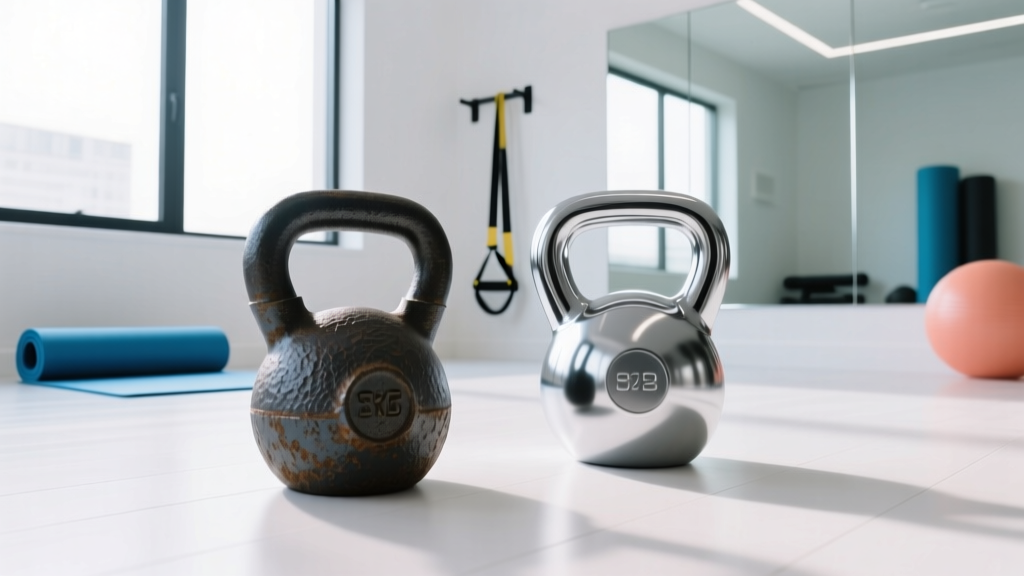
Best Exercise for Arms Without Dumbbells: Cast Iron vs Competition
Find the best exercise for arms without dumbbells using kettlebells. We compare cast iron vs competition bells with a 2026 budget and value breakdown.

The Search for the Perfect Arm Exercise Without Dumbbells
When building a home gym or traveling for fitness, finding an effective exercise for arms without dumbbells is a common challenge. While resistance bands and bodyweight dips have their place, they often lack the progressive overload required for serious hypertrophy and strength gains. Enter the kettlebell. Due to its unique center of mass and offset handle, the kettlebell provides unparalleled stabilizer engagement, making it the ultimate tool for bicep, tricep, and shoulder development when traditional dumbbells are unavailable.
However, not all kettlebells are created equal. If you are investing in kettlebells specifically for arm isolation and upper-body functional work, you must choose between cast iron and competition styles. In this 2026 budget breakdown and value analysis, we dissect the geometry, pricing, and real-world application of both styles to help you maximize your arm training ROI.
Cast Iron vs. Competition: Geometry and Arm Ergonomics
Before analyzing the budget, we must understand how the physical dimensions of these bells impact arm exercises. According to StrongFirst SFG Certification Standards, grip mechanics and bell clearance are foundational to safe and effective pressing and curling.
Cast Iron Kettlebells: The Variable Variable
Cast iron bells are poured into molds that scale with weight. An 8kg (17.6 lbs) cast iron bell is physically smaller than a 24kg (53 lbs) bell. Consequently, the handle diameter and the distance between the horn (the sides of the handle) and the bell body change as the weight increases.
- Handle Diameter: Ranges from 30mm on lighter bells to 40mm+ on heavier ones.
- Arm Impact: A thicker handle on a heavier bell drastically increases grip fatigue during high-rep curls or overhead presses, shifting the stimulus from the biceps/triceps to the forearms.
- Horn Clearance: Narrower on lighter bells, which can pinch the wrist during rack positions or bottoms-up presses.
Competition Kettlebells: The Uniform Standard
Competition kettlebells are made of steel and maintain the exact same physical dimensions regardless of weight. An 8kg competition bell is the same size as a 32kg bell; only the internal filling (usually steel shot or lead) changes.
- Handle Diameter: Universally 35mm (with rare 33mm variations for smaller hands).
- Arm Impact: The consistent 35mm handle allows your grip and wrist mechanics to remain identical whether you are curling 12kg or pressing 24kg. This consistency is vital for tracking progressive overload in arm isolation movements.
- Horn Clearance: Wide and uniform, allowing the wrist to sit comfortably in the rack position without bone-on-steel bruising.
Expert Insight: The 35mm Sweet Spot
For arm-specific training, a 35mm handle is generally the biomechanical sweet spot. It is thick enough to challenge the brachioradialis and forearm flexors during towel curls, yet narrow enough to maintain a secure grip during heavy tricep extensions. If your primary goal is arm hypertrophy without dumbbells, the uniform handle of a competition bell offers superior long-term value for tracking strength metrics.
2026 Budget Breakdown: Price Per Pound and Long-Term Value
Kettlebell pricing has stabilized following the supply chain disruptions of the early 2020s, but premiums for competition-grade steel remain high. Below is a comparative analysis of current market leaders, focusing on the cost-to-value ratio for arm training.
| Brand / Model | Type | Avg. Price/Lb (2026) | Handle Dia. | Best Arm Exercise Application |
|---|---|---|---|---|
| Rep Fitness Cast Iron | Cast Iron | $1.35 - $1.60 | Variable (32-38mm) | Heavy Kettlebell Halos, Floor Presses |
| Rogue Cast Iron | Cast Iron | $1.80 - $2.10 | Variable (33-40mm) | Offset Curls, Gorilla Rows |
| Kettlebell Kings Competition | Competition | $3.60 - $4.10 | 35mm Uniform | Bottoms-Up Press, Towel Curls |
| Eleiko Competition | Competition | $5.50 - $6.20 | 35mm Uniform | Strict Military Press, Tricep Extensions |
The Value Verdict: Where Should Your Money Go?
If you are buying a single kettlebell for general arm conditioning (e.g., a 16kg or 20kg bell for curls and presses), a premium cast iron bell from Rep Fitness or Rogue offers the best immediate ROI. The powder coating provides excellent grip without chalk, and the variable geometry won't matter if you aren't switching between multiple bells mid-workout.
However, if you are building a complete set for progressive arm hypertrophy (e.g., 12kg, 16kg, 20kg, 24kg), competition bells win the long-term value analysis. The ability to maintain identical wrist alignment and grip width across all weights prevents the micro-adjustments and joint strain associated with switching between differently shaped cast iron bells. Research published by the National Institutes of Health (NIH) highlights that consistent biomechanical positioning in resistance training is critical for isolating target muscle groups and preventing overuse injuries in the elbow and shoulder joints.
Top 3 Arm Exercises Without Dumbbells (Using Kettlebells)
To maximize your investment, here are three highly effective arm movements that exploit the kettlebell's unique offset center of gravity.
1. The Towel Kettlebell Curl (Biceps & Forearms)
Loop a thick cotton towel through the handle of your kettlebell. Grip the ends of the towel and perform standard bicep curls.
- Why it works: The towel eliminates the rigid grip of the handle, forcing your brachioradialis and forearm flexors to work overtime to stabilize the swinging weight. It is arguably the most effective exercise for arms without dumbbells for building the brachialis.
- Bell Recommendation: Competition bell. The 35mm handle provides a perfect, consistent loop size for standard gym towels.
2. Bottoms-Up Kettlebell Press (Shoulders, Triceps & Core)
Clean the kettlebell so the bell portion is pointing directly at the ceiling, balancing on your palm and wrist. Press overhead while maintaining the inverted balance.
- Why it works: This requires immense grip strength and tricep stabilization. The triceps must fire continuously to prevent the bell from tipping forward or backward.
- Bell Recommendation: Cast iron. The wider, powder-coated handles on heavier cast iron bells provide more surface area for the palm to grip during the initial clean into the bottoms-up position.
3. The Kettlebell Arm Bar (Rotator Cuff & Shoulder Stability)
Lying on your back, press a light kettlebell overhead. Slowly roll onto your opposite side while keeping the arm locked out and perpendicular to the floor.
- Why it works: This is a premier rehabilitative and prehabilitative movement for the shoulder capsule, engaging the deltoids and triceps isometrically.
- Bell Recommendation: Either style works, but competition bells are preferred because their flat, wide bases rest more comfortably against the forearm when transitioning between positions.
Final Decision Matrix: Which Style Fits Your Budget?
Buy Cast Iron If:
- You are on a strict budget (under $1.50/lb).
- You only plan to buy 1 or 2 bells for general fitness.
- You prefer a textured powder-coat grip for heavy, low-rep presses.
- Space is limited and you want compact, smaller bells for lighter weights.
Buy Competition If:
- You are building a full set for progressive arm hypertrophy.
- You have joint sensitivities and need consistent 35mm wrist alignment.
- You practice sport-specific movements like snatches and jerks.
- You prioritize uniform handle clearance for advanced rack positions.
Frequently Asked Questions
Can I build big arms using only kettlebells?
Yes. Hypertrophy is driven by mechanical tension, metabolic stress, and muscle damage. By utilizing techniques like towel curls, slow eccentrics on bottoms-up presses, and high-volume halo variations, you can generate sufficient stimulus for arm growth without ever touching a dumbbell or barbell.
Are adjustable kettlebells a good budget alternative?
Adjustable kettlebells (like the Bowflex SelectTech 840 or Kettlebell Kings Adjustable) offer incredible space savings and cost efficiency per pound. However, their bulky, blocky geometry makes them poor choices for arm-specific exercises. The wide base interferes with the rack position, and the thick, awkward handles ruin the biomechanics of curls and presses. Stick to fixed-weight cast iron or competition bells for arm training.
What weight should I start with for arm isolation?
For strict bicep curls and tricep extensions, most intermediate lifters should start with a 12kg (26 lbs) or 16kg (35 lbs) bell. For shoulder-dominant movements like halos and presses, a 16kg to 20kg bell is the standard entry point for men, while 8kg to 12kg is standard for women.
More gear to consider
All reviews
Loadable Dumbbells & The Dumbbell Floor Press GIF Trend in 2026
EZ Curl Bar vs Straight Bar & Cable Fly Alternative with Dumbbells

Dumbbell Rack Maintenance for Incline Dumbbell Extension Safety

EZ Curl vs Straight Bar Budget: The One Dumbbell Lunge Alternative

Best Dumbbell Racks for Flat Bench Dumbbell Fly Setups (2026)
