EZ Curl Bar vs Straight Bar & the 40kg Dumbbell 2026 Trends
Analyze 2026 market trends comparing the EZ curl bar vs straight bar, and discover why the heavy 40kg dumbbell is disrupting modern arm training routines.

The 2026 Arm Training Equipment Landscape
The landscape of hypertrophy training has shifted dramatically as we move through 2026. While the debate surrounding the EZ curl bar vs straight bar has been a staple in bodybuilding forums for decades, a new market disruptor has emerged in both commercial facilities and premium home gyms: the ultra-heavy unilateral tier, specifically anchored by the 40kg dumbbell. According to RunRepeat's comprehensive home gym equipment analysis, investments in heavy, specialized isolation equipment have outpaced general barbell purchases by 14% over the last eighteen months, driven by a growing emphasis on fixing bilateral imbalances and optimizing joint longevity.
For gym owners, equipment buyers, and serious lifters, understanding the biomechanical nuances and market ROI of these three distinct tools—the straight bar, the EZ curl bar, and the 40kg dumbbell—is no longer optional. It is essential for programming efficiency and injury prevention. This trend report breaks down the exact specifications, pricing shifts, and kinesiological realities of modern arm training equipment.
Biomechanical Breakdown: EZ Curl Bar vs Straight Bar
To understand purchasing trends, we must first look at the anatomical realities of the biceps brachii and its supporting structures. As detailed in ExRx's kinesiological breakdown of the biceps brachii, the primary function of the biceps is elbow flexion and forearm supination. However, the tool you use dictates the stress placed on the wrists, elbows, and anterior deltoids.
The Straight Bar: Maximum Load, Maximum Risk
The traditional Olympic straight bar (typically a 20kg barbell or a specialized 10kg curl bar) forces the lifter into a fully supinated grip (palms facing directly up). While this position places the biceps brachii in its most mechanically advantageous position for peak contraction, it ignores human anatomical variance.
Forcing the wrists into full extension and the forearms into maximum supination while under heavy load creates severe valgus stress on the elbow and compressive forces on the radioulnar joint. In 2026, sports physiotherapists increasingly advise against heavy straight-bar curling for lifters with a high carrying angle (cubitus valgus), as it frequently leads to medial epicondylitis and distal biceps tendon strain.
The EZ Curl Bar: The Ergonomic Standard
The EZ curl bar was engineered to solve the straight bar's ergonomic flaws. By introducing angled grips—typically set at 30 to 45 degrees—the EZ bar allows for a semi-supinated grip. This slight rotation shifts a portion of the load from the short head of the biceps to the brachialis and brachioradialis, while significantly reducing torque on the ulnar collateral ligament (UCL).
2026 Market Shift: The Rise of the Rackable EZ BarHistorically, EZ bars were 35 inches long, meaning they could not be unracked from a standard power rack. The biggest equipment trend this year is the 'Rackable EZ Bar' (47 inches). Models like the Rogue Rackable Curl Bar ($135) and the Titan Fitness Rackable Curl Bar ($89.99) now allow lifters to perform floor-start curls or heavy eccentrics directly inside a squat rack, merging the safety of a rack with the ergonomics of an EZ bar.
The Market Disruptor: Surging Demand for the 40kg Dumbbell
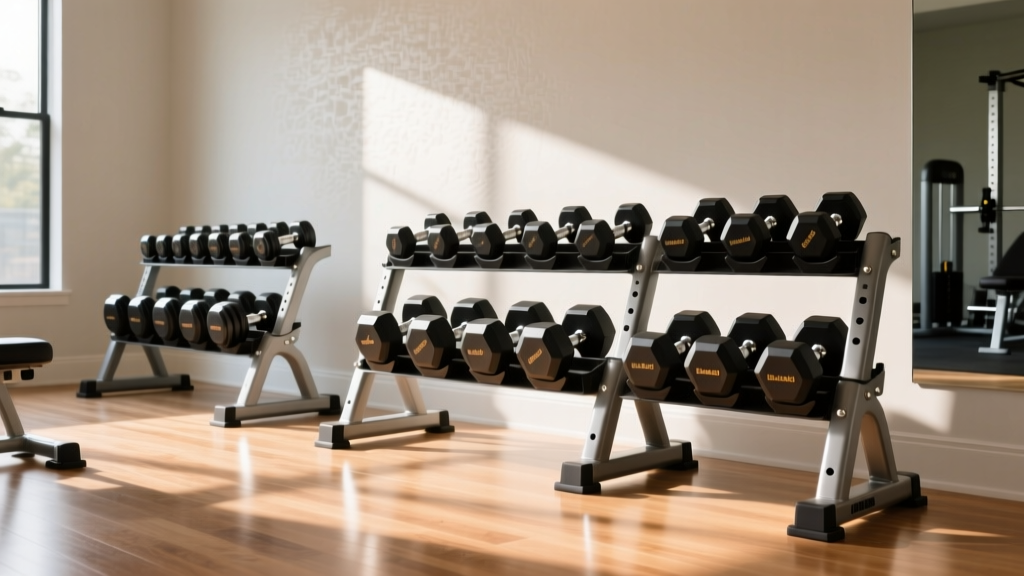
While specialty bars dominate the bilateral conversation, the unilateral market has seen an explosion in demand for the 40kg dumbbell (approximately 88 lbs). Historically, commercial gyms capped their dumbbell racks at 30kg or 35kg, assuming that loads beyond this were strictly for chest pressing or rowing. However, the modern hypertrophy meta has proven that heavy, controlled unilateral curls are vital for recruiting high-threshold motor units and stabilizing the shoulder girdle.
Fixed Urethane vs. Adjustable Systems
The 40kg dumbbell represents a premium tier of equipment. Purchasing a pair of fixed 40kg urethane dumbbells from commercial-grade suppliers like Rep Fitness or Eleiko will cost between $400 and $650 per pair in 2026. This high price point has fueled the secondary market for heavy adjustable dumbbells.
Systems like the PowerBlock Elite USA (which can be expanded to 90 lbs / 40.8 kg) or the Nuobell 80lb paired with custom micro-plate adapters are flying off shelves. Lifters are realizing that a single 40kg dumbbell requires immense core anti-rotation and stabilizer recruitment that a barbell simply cannot replicate. When you curl a 40kg dumbbell, your rotator cuff and obliques must work in overdrive to prevent the weight from pulling your torso into lateral flexion.
2026 Cost & Space Matrix: Building Your Arm Arsenal
When outfitting a home gym or upgrading a commercial facility, budget and spatial footprint are just as critical as biomechanics. Below is a comparative matrix of the 2026 market averages for these three equipment categories.
| Equipment Type | Avg. 2026 Cost | Space Footprint | Primary Muscle Bias | Joint Stress Level |
|---|---|---|---|---|
| Standard Straight Bar (10kg) | $75 - $110 | Low (47" length) | Biceps Brachii (Short Head) | High (Wrists/Elbows) |
| Rackable EZ Curl Bar | $90 - $145 | Medium (47" x 3" dia) | Brachialis / Brachioradialis | Low to Moderate |
| Pair of 40kg Fixed Urethane | $420 - $650 | High (Requires heavy rack) | Unilateral Biceps / Core Stabilizers | Moderate (Wrist dependent) |
| Adjustable 40kg System (Pair) | $350 - $499 | Very Low (Compact base) | Full Arm / Stabilizers | Low (Neutral grip options) |
Programming Protocols & Injury Prevention
Acquiring the right equipment is only half the battle; applying it correctly within a periodized program is where the true value lies. The clinical realities of repetitive strain cannot be ignored. As noted by the Mayo Clinic's clinical guidelines on repetitive strain tendinitis, micro-tears in the tendon from improper load management and fixed joint angles are the primary catalyst for chronic elbow pain in weightlifters.
The 2026 Arm Day Decision Framework
- Phase 1: Heavy Overload (Weeks 1-4): Utilize the Rackable EZ Curl Bar for 4-6 rep ranges. The semi-supinated grip protects the wrists while allowing you to move near-maximal loads safely from the pins of a power rack.
- Phase 2: Unilateral Stabilization (Weeks 5-8): Transition to the 40kg dumbbell (or your maximal adjustable equivalent) for 8-10 reps per arm. Focus on the eccentric phase. The independent nature of the dumbbell will expose and correct any left-to-right strength discrepancies that a barbell masks.
- Phase 3: Metabolic Stress & Pump (Weeks 9-12): Return to a standard Straight Bar or cable attachment for high-rep (15-20) drop sets. Because the load is lighter, the valgus stress on the elbows is minimized, allowing you to safely chase metabolic accumulation without risking connective tissue failure.
"The biggest mistake lifters make in 2026 is treating the straight bar as a default rather than a specialized tool. If you are over 30 or have a history of medial elbow pain, the straight bar should be entirely replaced by the EZ bar or heavy neutral-grip dumbbell variations."
Expert Verdict: The Optimal Equipment Investment
The EZ curl bar vs straight bar debate is no longer a binary choice; it is a spectrum of joint management and muscle targeting. For the vast majority of lifters, the rackable EZ curl bar offers the highest ROI, providing heavy load capacity without the connective tissue tax of a straight bar.
However, the surging market dominance of the 40kg dumbbell highlights a vital evolution in training science: the recognition that unilateral, heavy stabilization is just as important as raw bilateral force production. If your budget allows, bypassing the straight bar entirely in favor of a premium EZ bar and a pair of heavy, adjustable 40kg dumbbells will yield superior hypertrophy, better joint health, and a more resilient physique in the long term.
More gear to consider
All reviews
Barbell Collar Types for Presses and Dumbbell Bench Chest Workout

EZ vs Straight Bar: 2026 Trends for Dumbbell Row Weight Plateaus

Barbell Collar Types: One Arm Dumbbell Bench Press Alternatives

Market Trends: Dumbbell Racks for Any Tricep Exercise With Dumbbells

Olympic vs Standard Plates: 45 Dumbbell Mistakes Fixed