Beyond an Easy Dumbbell Workout: Barbell Weight & Knurling Guide
Outgrow your easy dumbbell workout? Our step-by-step guide decodes Olympic barbell weight tolerances, shaft dimensions, and knurling for your first upgrade.

The Plateau: Why Move Beyond an Easy Dumbbell Workout?
If you have spent the last six months mastering an easy dumbbell workout routine with adjustable 52.5 lb dumbbells, you have likely hit a systemic loading ceiling. While dumbbells are phenomenal for unilateral stabilization and correcting muscle imbalances, they eventually limit your central nervous system's ability to handle maximal loads. Transitioning to an Olympic barbell is the definitive next step for building raw, functional strength. However, buying your first barbell is not as simple as picking up a piece of steel. The market in 2026 is saturated with options ranging from $120 budget imports to $1,200 competition-grade tools. To make an informed investment, you must understand the critical nuances of barbell weight tolerances, shaft dimensions, and knurling patterns.
Step 1: Demystifying Barbell Weight and Calibration Tolerances
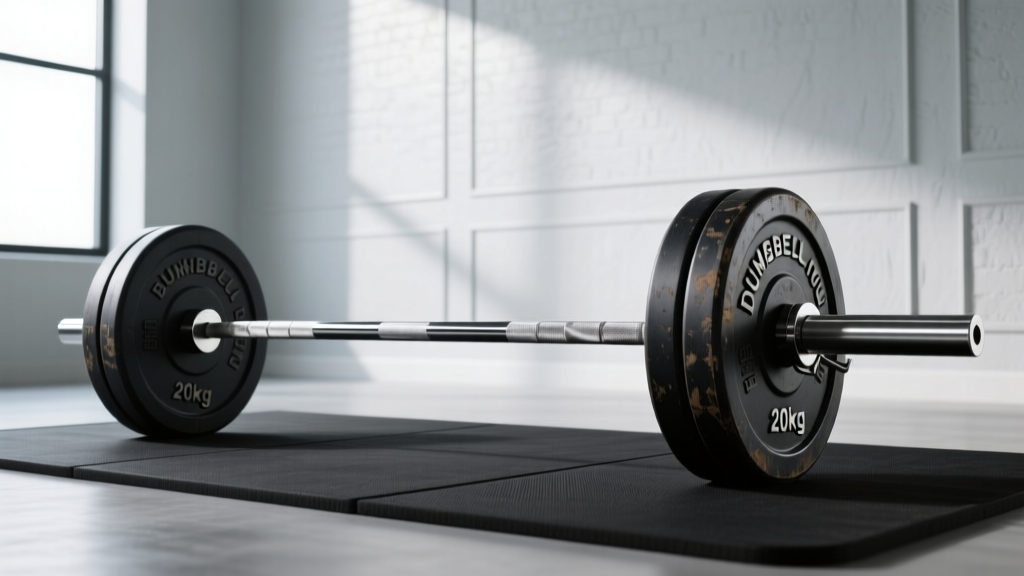
When you graduate from an easy dumbbell workout to barbell training, the first thing to understand is standardization. According to the International Weightlifting Federation (IWF), a standard men's Olympic barbell must weigh exactly 20 kilograms (44.09 lbs), while a women's bar weighs 15 kilograms (33.07 lbs). But not all 20kg bars are created equal.
Data Highlight: Weight Tolerances
- Competition Calibrated: +/- 15 grams. (e.g., Eleiko Sport Training Bar, ~$1,100). Required for sanctioned meets.
- Standard Training: +/- 50 grams. (e.g., Rogue Ohio Bar, ~$345 in 2026). Perfect for 99% of home gym lifters.
- Budget/Uncalibrated: +/- 150+ grams. Often found in sub-$150 bars. Avoid these if you are tracking precise progressive overload.
For a beginner transitioning from dumbbells, a standard training bar with a +/- 50g tolerance provides more than enough accuracy. Paying the premium for a calibrated competition bar is unnecessary unless you plan to compete in powerlifting or Olympic weightlifting within the next 12 months.
Step 2: Shaft Diameter and Tensile Strength (The 'Whip' Factor)
The shaft is the center portion of the barbell where you place your hands. Its diameter and tensile strength (measured in PSI) dictate how the bar feels and behaves under heavy loads.
Diameter Standards
- 28mm: Standard for Olympic weightlifting. The thinner shaft allows for a secure hook grip and provides 'whip' (elastic bounce) during cleans and snatches.
- 29mm: Standard for powerlifting. A thicker shaft provides rigidity and reduces wobble during heavy squats and deadlifts.
- 28.5mm: The multi-purpose sweet spot. If you are leaving your easy dumbbell workout behind for a mix of squats, presses, and occasional Olympic lifts, a 28.5mm shaft is the ultimate hybrid choice.
Tensile Strength (PSI)
Tensile strength measures the steel's resistance to bending and permanent deformation. In 2026, any reputable barbell should feature a minimum of 165,000 PSI. However, the gold standard for a lifelong training bar is 190,000 PSI to 215,000 PSI. Bars in this range, such as the Rogue Fitness Ohio Bar (190k PSI), will not permanently bend even if you drop a 400 lb deadlift from the hip.
Step 3: Decoding the Knurling Matrix (Grip is Everything)
Knurling is the cross-hatched pattern machined into the steel shaft. It is arguably the most subjective and crucial element of barbell selection. When moving from the knurled handles of iron dumbbells to a barbell, you will notice distinct 'shapes' of knurling that affect your skin and grip security.
| Knurl Shape | Characteristics | Best For | Example Brand |
|---|---|---|---|
| Volcano | Cratered peaks that grab the skin without tearing it. Excellent balance of grip and comfort. | Multi-purpose, Powerbuilding | Rogue, Rep Fitness |
| Mountain | Flattened peaks. Very passive, feels smooth but provides immense surface area friction. | High-rep Olympic lifting, Beginners | Eleiko |
| Hill | Rounded, shallow peaks. Often found on cheap bars. Lacks bite and causes slipping. | Avoid (Unless strictly for light pressing) | Budget Amazon Imports |
| Aggressive/Sharp | Deep, sharp peaks. Acts like a cheese grater. Maximum security but tears calluses. | Heavy 1-Rep Max Deadlifts | Texas Power Bars |
Expert Tip: If your previous easy dumbbell workout involved high-rep, low-weight movements, a sharp 'Hill' or 'Aggressive' knurl will quickly tear your hands. Opt for a 'Volcano' knurl with a Cerakote or Zinc finish for the best beginner-friendly transition.
Step 4: Bushings vs. Bearings (The Spin Mechanics)
Unlike dumbbells, which rotate freely in your hand, a barbell's sleeves rotate independently of the shaft via internal mechanisms. This rotation is vital for Olympic lifts (cleans and snatches) to prevent the bar's momentum from tearing your wrists.
Bronze Bushings
Bushings are solid rings of bronze that provide a slow, controlled spin. They are incredibly durable, require minimal maintenance, and are ideal for powerlifting and general fitness. If your routine consists of squats, bench presses, and deadlifts, choose a bushing bar.
Needle Bearings
Bearings use tiny steel needles to create a fast, frictionless spin. They are mandatory for competitive Olympic weightlifting but are more expensive and require regular lubrication. A hybrid bar (combining two bearings and two bushings per sleeve) offers a great middle ground for the modern home gym.
Step 5: Center Knurl and Your Decision Framework
Before finalizing your 2026 purchase, you must decide on the center knurl—a small band of knurling in the exact middle of the shaft.
⚠️ Warning: The Center Knurl Debate
IPF powerlifting rules mandate a center knurl to help the bar grip the upper back during low-bar squats. However, if you plan to do high-rep cleans or front squats, an aggressive center knurl will scrape your collarbones raw. Recommendation: Buy a bar with a passive center knurl, or no center knurl at all, unless you are strictly competing in equipped powerlifting.
Step 6: Essential Barbell Maintenance for Longevity
Leaving the adjustable dumbbell rack means taking on new equipment maintenance responsibilities. Even the best Cerakote-coated barbells require care to prevent rust and maintain sleeve rotation.
- Weekly Brushing: Use a nylon or brass bristle brush (never steel, which damages the finish) to scrub chalk and dead skin out of the knurling grooves.
- Monthly Lubrication: Apply 3-in-One oil to the sleeve bushings/bearings. Wipe the shaft down with a light coat of oil on a microfiber cloth to displace ambient moisture.
- Storage Protocol: Never leave the barbell on the floor or loaded on a rack for extended periods. Constant tension on a loaded bar can cause micro-bending over years of storage. Unload it and hang it horizontally on a dedicated wall-mounted barbell rack.
Final Thoughts on Your Upgrade
Moving beyond an easy dumbbell workout is an exciting milestone in your fitness journey. By prioritizing a 190k+ PSI tensile strength, a 28.5mm multi-purpose shaft, and a volcano knurl pattern, you will secure a barbell that adapts to your evolving strength for decades. Skip the ultra-budget options that compromise on weight tolerance and spin mechanics, and invest in a certified training bar that bridges the gap between beginner gains and elite performance.
More gear to consider
All reviews
Fixing Bowflex Dumbbells: Barbell Weight & Knurling Guide

Budget Racks for Lateral Head Tricep Exercises Dumbbells
Beginner Guide: Dumbbell Toe Touch Crunch with Neoprene Weights

2026 Dumbbell Hang Clean and Press: Urethane vs Rubber Hex Trends
Flat Dumbbell Press Technique & Barbell Weight Knurling Guide
