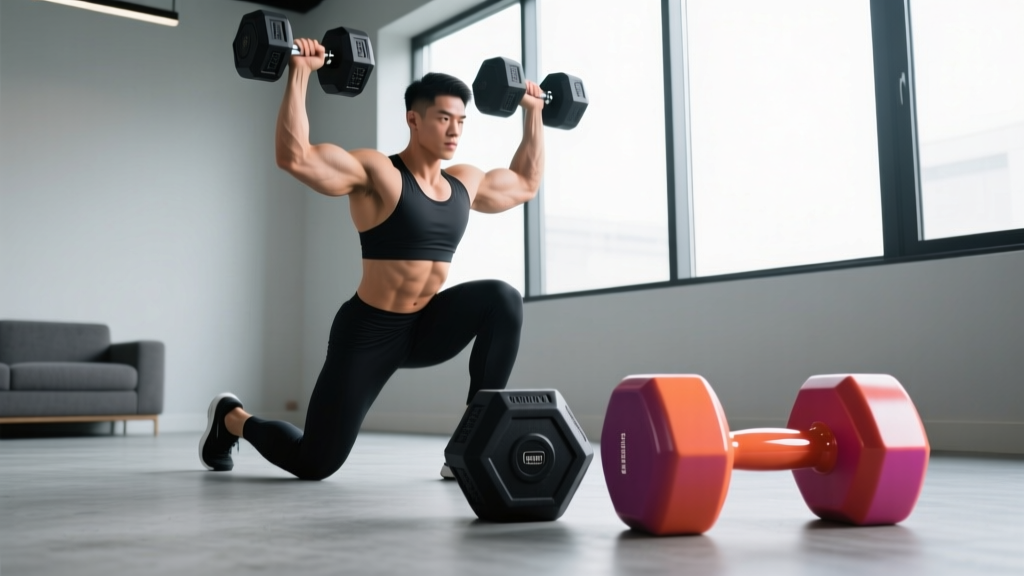
Bumper Plate vs Iron Plate: Budgeting for Lifts and Flat Dumbbell Fly
Compare bumper plate vs iron plate costs in 2026. Learn how your weight plate budget impacts gear for the flat dumbbell fly and heavy barbell lifts.

The 2026 Home Gym Economy: Bumper vs. Iron
Building a comprehensive home gym in 2026 requires ruthless budget optimization. With fitness equipment prices stabilizing but still hovering higher than pre-2020 baselines, every dollar allocated to one category is a dollar stolen from another. The most common financial bottleneck for home gym owners is the barbell plate debate: should you invest in bumper plates or traditional cast iron?
This decision extends far beyond your deadlift platform. The capital you sink into your plate collection directly dictates the quality of the rest of your equipment, including the adjustable dumbbells or loadable handles you need for isolation movements like the flat dumbbell fly. In this budget breakdown and value analysis, we will dissect the true cost of ownership for both plate types, uncover hidden expenses, and reveal how your choice impacts your ability to properly outfit your gym for both heavy compound lifts and precise hypertrophy work.
Cost-Per-Pound Breakdown: Where Does Your Money Go?
To understand the value proposition, we must look at the raw cost per pound. The market has segmented into distinct tiers based on material composition and manufacturing tolerances. Below is the current 2026 pricing landscape for standard 45 lb (20 kg) plates.
| Plate Material | Average Cost Per Pound | Example Model | Best Use Case |
|---|---|---|---|
| Cast Iron (Machined) | $1.50 - $1.90 | Titan Fitness Cast Iron Plates | Powerlifting, Bodybuilding, Budget Gyms |
| Crumb Rubber Bumper | $2.10 - $2.60 | Rogue Echo Bumper Plates | CrossFit, Olympic Lifting, Garage Gyms |
| Virgin Rubber Bumper | $3.50 - $4.80 | REP Fitness Virgin Bumpers | Commercial Gyms, High-End Home Gyms |
| Urethane | $6.00 - $8.50+ | Eleiko Competition Plates | Elite Facilities, Drop-Heavy Environments |
If you are outfitting a gym with 300 lbs of iron plates, you are looking at an investment of roughly $450 to $570. That same 300 lbs in crumb rubber bumpers will cost between $630 and $780. While a $200 difference might seem negligible in the grand scheme of a home gym build, that $200 represents the exact cost of a high-quality pair of loadable Olympic dumbbell handles—a critical piece of gear for executing a heavy, progressive flat dumbbell fly.
Hidden Costs: Flooring, Space, and Acoustic Dampening
The sticker price of the plates is only the beginning of the financial analysis. You must also factor in the environmental requirements of the equipment.
Warning: The Concrete Cracking Factor
Dropping cast iron plates from shoulder height onto a standard 3/4-inch horse stall mat will eventually crack a residential concrete garage slab. Repairing a fractured concrete subfloor can cost anywhere from $500 to $1,500 depending on the severity and local contractor rates. If you plan on performing Olympic lifts or high-rep touch-and-go deadlifts where dropping the bar is inevitable, bumpers are not a luxury; they are an insurance policy for your foundation.
Conversely, iron plates offer a massive advantage in spatial efficiency. A standard 45 lb cast iron plate is approximately 1.3 inches thick. A 45 lb crumb rubber bumper plate is nearly 3.5 inches thick. If you have a narrow power rack or limited floor space, iron plates allow you to load significantly more weight onto the barbell sleeve before running out of real estate. For lifters pushing past a 500 lb deadlift, iron is practically mandatory to keep the weight centered and the barbell balanced.
The Opportunity Cost: Funding Your Flat Dumbbell Fly
Here is where the budget analysis intersects with exercise selection and biomechanics. The flat dumbbell fly is a staple isolation movement for pectoral hypertrophy, requiring precise weight increments and a specific range of motion. In a commercial gym, you simply walk over to the dumbbell rack. In a home gym, you have to buy that weight.
If you overspend on virgin rubber bumper plates for your barbell, you may be forced to purchase cheap, fixed-weight hex dumbbells that max out at 25 lbs per hand. For an intermediate or advanced lifter, 25 lbs is entirely insufficient for a challenging flat dumbbell fly. To properly progress this movement, you need either expensive adjustable dumbbells (like the Nuobell 80s, which retail around $350 per pair) or a set of Olympic loadable dumbbell handles paired with fractional and standard plates.
The Sleeve Space Problem
If you opt for loadable dumbbell handles to save money and perform the flat dumbbell fly, iron plates are vastly superior to bumpers. Consider the physics of a 10 lb plate:
- 10 lb Bumper Plate: Typically 2.25 inches thick. Loading just two 10 lb bumpers and a 5 lb bumper on each side of a standard 10-inch dumbbell sleeve completely maxes out the space, yielding only 35 lbs per hand.
- 10 lb Iron Plate: Typically 0.9 inches thick. You can easily stack multiple 10 lb and 5 lb iron plates on the same sleeve, allowing you to load 50+ lbs per hand while maintaining a secure collar lock.
According to equipment testing by Garage Gym Reviews, using thick bumper plates on short dumbbell sleeves alters the center of gravity, making the flat dumbbell fly feel awkward and unstable at the bottom of the eccentric stretch. Iron plates keep the mass close to the handle, mimicking the feel of a fixed commercial dumbbell and allowing for a safer, more effective chest stretch.
Longevity and Failure Modes
Value is also determined by how long the equipment survives. Both materials have distinct failure modes that home gym owners must anticipate.
- Cast Iron Failure Modes: The primary enemy is oxidation. If your garage gym experiences high humidity or temperature fluctuations, uncoated or poorly painted iron will rust. Additionally, the paint on cheaper iron plates will chip and flake over time, creating a messy black dust on your flooring. However, structurally, a cast iron plate will outlive you. It will never crack, warp, or degrade from UV exposure.
- Bumper Plate Failure Modes: Rubber is susceptible to environmental degradation. Cheaper crumb bumpers will develop a permanent 'taco' shape (warping) if stored vertically on a tree rack for long periods. Furthermore, the steel center insert (the hub) can work itself loose from the rubber matrix after repeated drops, rendering the plate dangerous to use. According to specifications outlined by major manufacturers like Rogue Fitness, high-quality virgin rubber mitigates this, but it comes at the premium $3.50+/lb price point.
The Final Decision Matrix
To maximize your 2026 fitness budget, use this framework to make your final purchasing decision:
Buy Cast Iron If: You are primarily focused on powerlifting, bodybuilding, and strict barbell work. You want to maximize your budget to afford premium adjustable dumbbells or loadable handles for isolation exercises like the flat dumbbell fly. You have adequate floor matting and do not plan on dropping the barbell from overhead.
Buy Bumper Plates If: Your training revolves around Olympic weightlifting, CrossFit, or high-volume deadlift drops. You have the disposable income to cover the 40% price premium without sacrificing the quality of your secondary equipment, or you are willing to buy a basic pair of fixed dumbbells and delay your flat dumbbell fly progression until your budget allows for an upgrade.
Ultimately, the smartest home gym builders in 2026 are adopting a hybrid approach. They purchase a baseline set of iron plates (e.g., two 45s, two 25s, two 10s) for heavy loading and dumbbell sleeve compatibility, while supplementing with a single pair of 15 lb or 25 lb crumb bumpers specifically for dropping during high-fatigue conditioning workouts. This strategy protects your floor, preserves your wallet, and ensures you never have to compromise on the mechanics of your flat dumbbell fly.
More gear to consider
All reviews
Cast Iron vs Competition Kettlebells & Pec Workout with Dumbbells

Olympic vs Standard Weight Plates vs PowerBlock Dumbbells
EZ Bar vs Straight Bar and Dumbbell Seated Front Raise Budget Analysis

Best Neoprene Dumbbells for Dumbbell Chest Flyes: 2026 Comparison
Bumper vs Iron Plates: 2026 Trends & The Woman Lifting Dumbbells Boom