
Working Out With Dumbbells at Home: Standard vs Olympic Plates
Master working out with dumbbells at home. Our beginner step-by-step guide compares Standard vs Olympic weight plates for your adjustable dumbbells.

The Dumbbell Dilemma: Sizing Up Your Home Gym Plates
If you are just starting your fitness journey and working out with dumbbells at home, adjustable spin-lock dumbbells are one of the most cost-effective investments you can make. However, once you decide to buy additional weight plates to increase your resistance, you will immediately hit a fork in the road: Standard versus Olympic weight plates. Choosing the wrong size means your plates literally will not fit on your dumbbell handles, resulting in wasted money and frustrating returns.
This beginner-friendly, step-by-step guide breaks down the exact differences between Standard and Olympic plates, provides real-world 2026 pricing, and walks you through the exact protocol for safely loading and securing your adjustable dumbbells.
Standard vs. Olympic Plates: A Side-by-Side Comparison
The primary difference between these two plate types comes down to the center hole diameter and the corresponding barbell or dumbbell sleeve they are designed to fit. While 'Standard' implies a baseline, in the fitness industry, it actually refers to the smaller, 1-inch hole format typically found in budget-friendly home gym sets.
| Feature | Standard Weight Plates | Olympic Weight Plates |
|---|---|---|
| Center Hole Size | 1 inch (Actual: ~1.03 inches) | 2 inches (Actual: 1.97 inches / 50mm) |
| Dumbbell Handle Type | 1-inch Threaded Spin-Lock Handles | 2-inch Olympic Dumbbell Handles |
| Max Load per Dumbbell | Typically 100 - 150 lbs | 300 - 500+ lbs |
| Average 2026 Cost | $1.20 - $2.00 per pound | $2.50 - $5.50 per pound |
| Space Efficiency | High (Thinner cast iron profiles) | Lower (Thicker rubber/urethane) |
According to equipment specifications from major manufacturers like REP Fitness, Olympic plates are built around the 50mm sleeve standard used in commercial gyms and competitive powerlifting. Standard plates, conversely, are almost exclusively a consumer-grade home gym product.
Step-by-Step Guide: Setting Up Your Adjustable Dumbbells
When working out with dumbbells at home, safety and balance are paramount. An improperly loaded dumbbell can shift mid-rep, leading to wrist sprains or dropped weights. Follow this exact protocol every time you change your working weight.
Step 1: Audit Your Sleeve Length
Before buying plates, measure the 'sleeve' of your dumbbell handle—the smooth or threaded metal portion where the plates slide. A standard 14-inch dumbbell handle typically offers only 2.5 to 3.5 inches of usable sleeve space per side after accounting for the collar. If you buy thick rubber-coated Standard plates, you might only fit one 10lb plate per side, capping your dumbbell at a mere 25 lbs.
Step 2: Select the Right Plate Material
- Cast Iron (Standard & Olympic): The most space-efficient and durable option. A 10lb cast iron plate is roughly 1.1 inches thick.
- Rubber-Encased (Olympic): Excellent for dropping on garage gym floors, but the thick rubber casing limits how many plates you can fit on a short dumbbell sleeve.
- Cement/Vinyl-Filled (Standard): Often sold in beginner kits. Avoid these if possible. They are incredibly bulky; a 10lb cement plate can be over 2 inches thick, severely limiting your loading capacity.
Step 3: The Symmetrical Loading Protocol
Always load plates symmetrically. If you are using multiple plate sizes (e.g., 25s, 10s, and 5s), load the heaviest plates closest to the dumbbell handle collar, and the lightest plates on the outside. This keeps the center of gravity tight to your hand, reducing rotational torque on your wrists during movements like dumbbell chest presses or lunges.
Step 4: Secure with the Proper Collar
For 1-inch Standard handles, you will use threaded 'star collars.' For 2-inch Olympic dumbbell handles, you must use specialized spring collars or lock-jaw clamps. Tighten star collars until they are flush against the outer plate, ensuring no lateral movement.
⚠️ Real-World Edge Case: The 'Wobble' Failure Mode
A common failure mode for beginners working out with dumbbells at home is the 'star collar slip.' If you use standard plates with slightly warped or bent 1-inch bars, the plates will wobble. Over time, the repetitive vibration from setting the dumbbell down on the floor will slowly unthread the star collar. The Fix: Inspect your collars every 4 weeks. If the internal threads are stripped, replace them immediately, or upgrade to silicone-lined lock-jaw collars designed for 1-inch bars.
2026 Purchasing Framework: Which Should You Buy?
Your choice between Standard and Olympic plates should be dictated by your long-term fitness goals and available space. Here is a practical decision framework to help you spend your money wisely.
Scenario A: The Apartment Lifter (Choose Standard)
If you live in an apartment, have limited floor space, and your primary goal is general fitness, hypertrophy, and working out with dumbbells at home using lighter weights (under 50 lbs per hand), stick to Standard Cast Iron Plates. They are cheaper, easier to store on a small wall-mounted rack, and perfectly adequate for high-rep dumbbell work.
Scenario B: The Garage Gym Powerbuilder (Choose Olympic)
If you plan to eventually buy a full barbell set, a power rack, or you are strong enough that you need dumbbells weighing 80+ lbs per hand, you must buy Olympic Plates. You will need to purchase specialized Olympic dumbbell handles (which feature 2-inch sleeves and usually weigh 8-10 lbs empty). Commercial-grade rubber grip plates, like those available from Rogue Fitness, are the gold standard here, offering easy handling and floor protection.
Pro Tip: Olympic dumbbell handles are significantly thicker than standard handles. If you have small hands, the 2-inch grip diameter can make holding heavy dumbbells for exercises like Romanian Deadlifts highly taxing on your grip strength. Consider keeping a pair of 1-inch standard handles for isolation exercises like lateral raises.
Frequently Asked Questions
Can I use an adapter to put Olympic plates on Standard dumbbells?
No. While you can buy adapters to put Standard (1-inch) plates on an Olympic (2-inch) barbell, the reverse is physically impossible. A 2-inch Olympic plate will simply slide right off a 1-inch Standard dumbbell handle.
Why do my 1-inch Standard plates have a hole slightly larger than 1 inch?
Manufacturing tolerances. Standard bars are typically 1.0375 inches in diameter. Therefore, Standard plates are cast with a hole of roughly 1.05 to 1.1 inches to ensure they slide on smoothly without getting stuck due to rust or paint buildup.
Is it safe to use mismatched plate brands on the same dumbbell?
Yes, as long as the center hole diameter matches the sleeve and the total weight is balanced equally on both the left and right dumbbell. Mixing a Rogue plate with a vintage York plate on the same side is fine, provided they sit flush against one another.
Final Thoughts
Building a home gym is a marathon, not a sprint. When working out with dumbbells at home, understanding the mechanical limitations and sizing standards of your equipment ensures your safety and maximizes your progress. Measure your sleeves, calculate your loading capacity, and invest in the plate style that aligns with your 5-year strength goals.
More gear to consider
All reviews
Beyond Bench Press Using Dumbbells: Barbell Collar Guide
Fitness Insanity Neoprene Dumbbell vs. Top Rivals (2026)
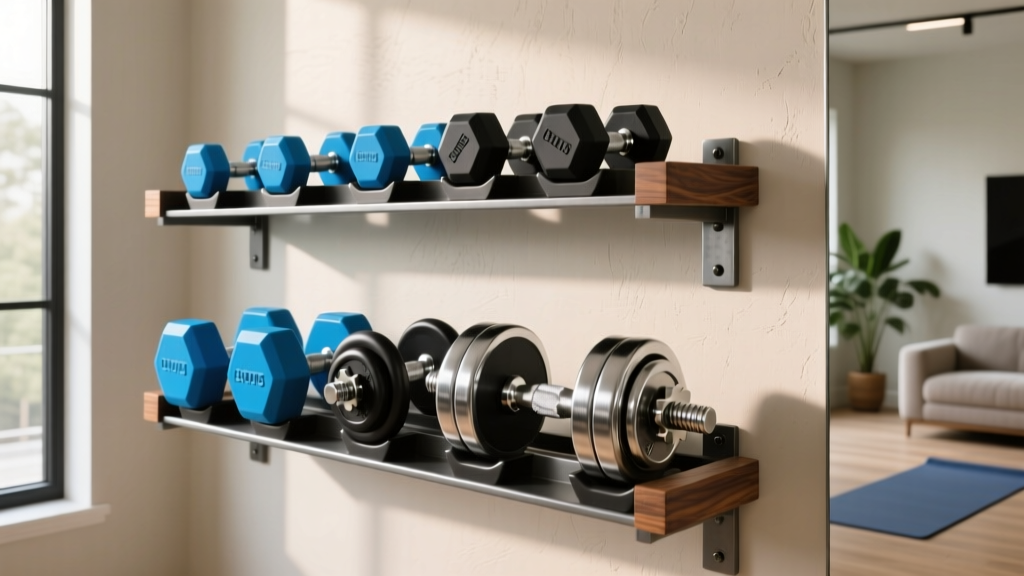
Adjustable Dumbbell Review & Dumbbell Shelf Setup Guide

Top Adjustable Dumbbells for a Quad Workout With Dumbbells: Setup

EZ vs Straight Bar: Seated Dumbbell Tricep Extension Trends 2026
