Hex vs Urethane: Gear for a 4 Week Dumbbell Workout Plan PDF
Compare rubber hex vs urethane dumbbells for your 4 week dumbbell workout plan pdf. 2026 market analysis, pricing, and durability data for home gyms.

The 2026 Home Gym Paradigm: Matching Gear to Structured Programming
The home fitness landscape in 2026 has shifted dramatically away from ad-hoc, random workouts toward highly structured, periodized programming. Today, the most effective way to build muscle or burn fat at home is to download a professionally programmed 4 week dumbbell workout plan pdf and execute it with precision. However, committing to a high-volume, 20-session monthly program puts your equipment under a condensed, rigorous stress test.
When you are performing daily drop sets, renegade rows, and metabolic finishers, the material composition of your dumbbells dictates not just the longevity of your gear, but the safety of your floors and the air quality of your gym. The two dominant market players in the fixed-weight category are rubber hex dumbbells and urethane dumbbells. While they may look similar to the untrained eye, their polymer chemistry, manufacturing processes, and long-term failure modes are vastly different. This market analysis breaks down the exact data you need to choose the right iron for your next training block.
Material Science: Virgin Urethane vs. Recycled Rubber Hex
To understand market pricing and durability, we must look at the durometer hardness and bonding processes of both materials. According to comprehensive equipment testing by BarBend, the primary difference lies in the elastomer used and how it adheres to the steel core.
Rubber Hex Dumbbells: The Budget Workhorse
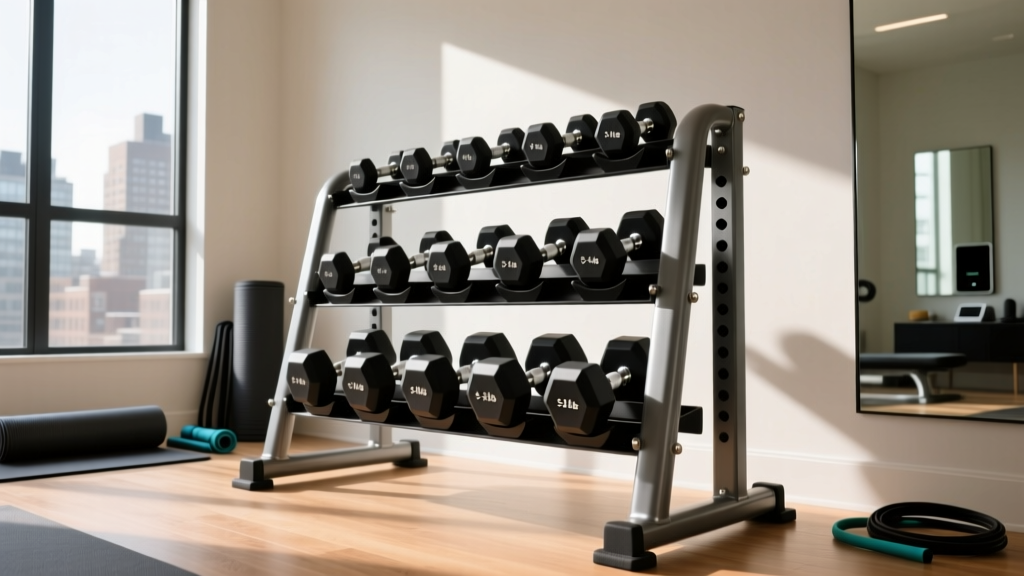
Rubber hex dumbbells are typically manufactured using recycled rubber (often repurposed from automotive tires) that is vulcanized and bonded to a chrome or zinc-plated steel handle using industrial adhesives. They generally register between 75 and 85 on the Shore A hardness scale. This makes them slightly softer and more prone to picking up dust, oils, and sweat over time. The hexagonal head design prevents rolling, making them a staple for floor-based exercises like push-up rows and devil presses.
Urethane Dumbbells: The Commercial Standard
Urethane (polyurethane elastomer) is a premium, virgin synthetic polymer. In high-end models like the REP Fitness Urethane Dumbbells, the material is over-molded directly onto a steel core under high pressure, creating a mechanical and chemical bond that is nearly impossible to separate without destroying the weight. Urethane registers between 85 and 95 on the Shore A scale, meaning it is denser, highly resistant to UV degradation, and virtually impervious to sweat and ozone.
Programmer's Note: The 'PDF' Factor
Why does your specific 4 week dumbbell workout plan pdf matter? If your downloaded program features heavy eccentric loading, floor work, and high-impact drops (e.g., CrossFit-style DB snatches or metabolic conditioning), the repetitive kinetic shock will quickly degrade the adhesive in budget rubber hex bells. If your program is strictly hypertrophy-focused with controlled tempos and rack-based movements, rubber hex will suffice.
2026 Market Pricing & Cost-Per-Pound Matrix
Supply chain normalization in 2026 has stabilized fitness equipment prices, but the gap between rubber and urethane remains significant due to raw material costs. Below is the current market matrix for fixed-weight pairs.
| Feature / Metric | Rubber Hex Dumbbells | Virgin Urethane Dumbbells |
|---|---|---|
| Average Cost Per Pound (2026) | $1.40 - $1.90 / lb | $2.60 - $3.40 / lb |
| Shore A Hardness | 75A - 85A (Softer) | 85A - 95A (Denser) |
| Odor Off-Gassing Time | 2 to 6 weeks | 0 to 3 days |
| Impact / Drop Tolerance | Moderate (Adhesive fatigue) | High (Over-molded core) |
| UV & Ozone Resistance | Low (Degrades outdoors) | Exceptional |
| Warranty Standard | 1 Year (Limited) | Lifetime (Commercial) |
For a standard pair of 50 lb dumbbells, you are looking at an investment of roughly $160 for rubber hex versus $280 for urethane. For home gym owners on a strict budget, rubber hex remains the undisputed entry-level champion, provided they are treated with care.
Real-World Failure Modes: What Breaks First?
When analyzing warranty claims and user reports across major fitness communities, the failure modes for these two materials diverge sharply after about 18 months of heavy use.
The Rubber Hex 'Rattle' and Head Separation
The most common failure point for rubber hex dumbbells—such as the widely popular Rogue Rubber Hex Dumbbells (which utilize a high-quality rubber but still rely on traditional bonding)—is head separation. When dropped from shoulder height onto a hard surface, the kinetic energy travels through the steel handle. Over time, this shockwave degrades the adhesive bonding the rubber head to the steel. The first symptom is a distinct 'rattle' during the concentric phase of a curl. The final stage is the rubber head completely sliding off the handle mid-rep, which poses a severe safety hazard.
Urethane Cosmetic Scratching and Edge Chipping
Urethane dumbbells rarely suffer from structural failure. The over-molding process ensures the head will not detach. However, because urethane is harder and less forgiving than rubber, dropping them on unprotected concrete can result in cosmetic scratching or slight chipping on the sharp hexagonal edges. Furthermore, urethane is prone to showing scuff marks when rubbed against metal power rack uprights or adjustable benches.
Indoor Air Quality: The Hidden Cost of Recycled Rubber
An often-overlooked variable in the 2026 home gym market is indoor air quality (IAQ). Recycled rubber hex dumbbells are notorious for their strong, persistent 'tire shop' odor. This off-gassing is caused by volatile organic compounds (VOCs) released from the sulfur and carbon black used in the vulcanization process.
'If you are setting up a gym in a spare bedroom, basement, or attached garage, the VOCs from a full set of cheap rubber hex dumbbells can cause headaches and respiratory irritation for up to a month. Urethane, being a virgin polymer, is virtually odorless straight out of the box.'
If your 4 week dumbbell workout plan pdf requires you to train in a poorly ventilated indoor space, the premium paid for urethane is effectively an investment in your respiratory health and comfort.
Final Verdict: Aligning Your Purchase With Your Programming
Choosing between rubber hex and urethane ultimately comes down to the specific demands of your training block and your long-term financial strategy.
- Buy Rubber Hex If: You are executing a controlled, hypertrophy-based 4 week dumbbell workout plan pdf that focuses on strict tempos, rack-supported rows, and floor presses where the weights are placed down gently. It is also the right choice if your budget strictly caps at $1.75 per pound and your gym is in a detached, well-ventilated garage.
- Buy Urethane If: Your programming includes high-impact metabolic conditioning, dumbbell snatches, renegade rows on hardwood floors, or if you plan to keep the equipment for a decade or more. The higher upfront cost ($2.80+ per pound) is amortized over a lifetime of commercial-grade durability.
As the home fitness market continues to mature in 2026, the smartest consumers are no longer just buying 'weights'—they are buying specialized tools engineered to withstand the exact programming they intend to follow. Match your polymer to your PDF, and your equipment will outlast your fitness goals.
More gear to consider
All reviews
Olympic vs Standard Plates and Exercises with 10lb Dumbbells
Barbell Guide: Knurling, Weight & Quadriceps Exercises with Dumbbells

Power Rack vs Squat Rack vs Squat Stand: RDL Dumbbell Setup Guide

Best Adjustable 50 Pound Dumbbells: 2026 Buying Guide

Barbell Collars Compared for Your Dumbbell Strength Training Program