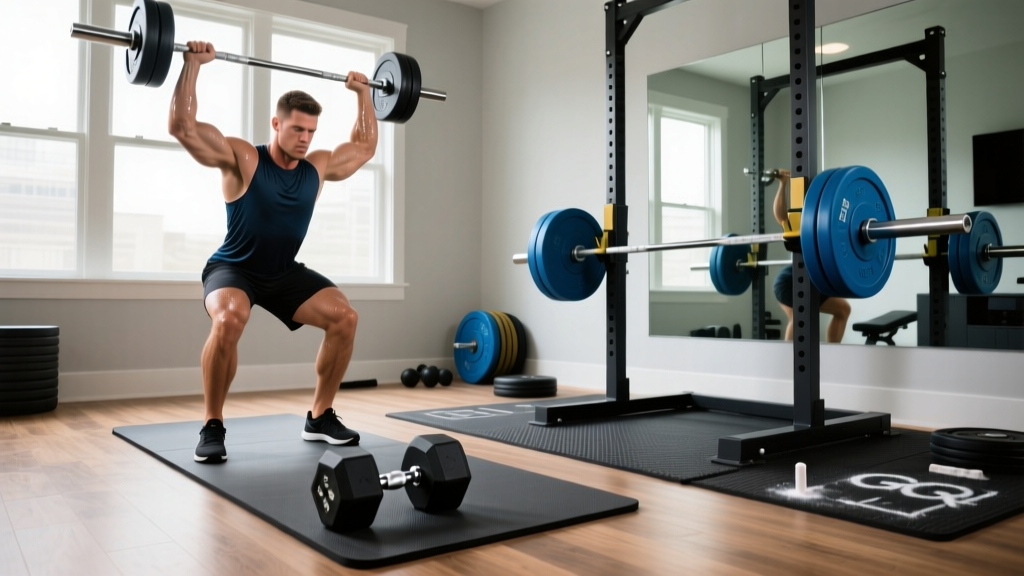
Dumbbell Workout at Home for Men vs Olympic Barbells
Compare a dumbbell workout at home for men with Olympic barbells. Expert guide on barbell weight tolerances, knurling profiles, and top 2026 models.

The Plateau: Why Transition from a Dumbbell Workout at Home for Men?
For many lifters, a dumbbell workout at home for men is the gateway to serious resistance training. Adjustable dumbbells like the Bowflex SelectTech or Nuobell offer incredible versatility for hypertrophy, unilateral work, and spatial efficiency. However, as your foundational strength compounds, you will inevitably hit a mechanical and physiological plateau. Dumbbells max out at 90–120 lbs per hand for most commercial home sets, making heavy compound movements like squats, deadlifts, and heavy bench presses mechanically awkward and neurologically limiting.
Transitioning to an Olympic barbell unlocks bilateral progressive overload, central nervous system (CNS) adaptation, and the ability to move 300+ lbs safely. But buying an Olympic barbell is not as simple as picking up a 45-pound piece of steel. The nuances of weight tolerances, tensile strength, and knurling geometry dictate whether a barbell will last a lifetime or permanently bend under a heavy 5x5 squat cycle. In this 2026 head-to-head guide, we break down the exact specifications you need to know before upgrading your home gym.
Olympic Barbell Weight Standards: 20kg vs. 45lb and the PSI Trap
When shopping for an Olympic barbell, you will encounter two primary weight standards: the Imperial 45 lb bar and the Metric 20 kg (44.09 lbs) bar. While the 1-pound difference seems negligible, metric bars are typically calibrated to International Weightlifting Federation (IWF) standards, featuring a 28mm shaft diameter optimized for the "whip" (elastic deformation) required in Olympic lifts like the snatch and clean & jerk.
Powerlifting bars, conversely, often stick to the 45 lb standard with a thicker 29mm shaft to minimize whip during heavy back squats and bench presses.
⚠️ The Yield Strength vs. Tensile Strength TrapMany budget brands advertise "Tensile Strength" (the point where the steel snaps) to hide a low "Yield Strength" (the point where the steel bends permanently). For a home gym, you must look for a minimum Yield Strength of 165,000 PSI. Anything below 150k PSI risks permanent deformation if you drop a loaded barbell during a failed deadlift. Premium bars sit between 190,000 and 215,000 PSI.
Knurling Deep Dive: Volcano, Mountain, and Hill Profiles
Knurling is the cross-hatched pattern machined into the steel shaft. It is the single most important tactile factor in your training. In 2026, manufacturers have moved beyond "aggressive" or "mild" marketing terms, standardizing around three distinct geometric profiles:
1. Mountain Knurl (Aggressive)
Mountain knurling features sharp, pointed peaks. It provides maximum bite, essential for heavy, low-rep deadlifts where grip failure is the limiting factor. However, the sharp peaks will tear calluses during high-rep Olympic lifts or dynamic barbell rows. Best for: Powerlifting and strongman training.
2. Hill Knurl (Passive)
Hill knurling has rounded, flattened peaks. It feels smooth in the hands and is forgiving on the skin during high-volume training. The trade-off is a lack of grip security during heavy, chalk-less pulling movements. Best for: High-rep CrossFit WODs, Olympic weightlifting, and beginners.
3. Volcano Knurl (The Gold Standard)
Volcano knurling is machined with a sharp, pronounced outer rim but a small "crater" in the center of each peak. This design provides the aggressive bite of a mountain profile without the skin-tearing sharpness, as the crater reduces the surface area digging into your epidermis. Best for: All-around home gym use, powerbuilding, and mixed-modal training.
Head-to-Head Barbell Comparison Matrix (2026 Models)
To illustrate how these specifications translate to real-world performance, we tested three of the most popular Olympic barbells on the market against the baseline of a traditional dumbbell-focused routine.
| Feature | Rogue Ohio Bar (Stainless) | Rep Fitness Colorado Bar | Eleiko Olympic WL Bar |
|---|---|---|---|
| Price (2026) | ~$395.00 | ~$259.00 | ~$1,150.00 |
| Weight / Shaft | 20kg / 28.5mm | 20kg / 28.5mm | 20kg / 28mm |
| Tensile Strength | 190,000 PSI | 190,000 PSI | 215,000+ PSI |
| Knurl Profile | Volcano (Moderate-Aggressive) | Dual: Volcano (Center) / Hill (Outer) | Hill / Moderate IWF Standard |
| Sleeve Spin | Composite Bushings | Needle Bearings | Precision Needle Bearings |
| Finish | Stainless Steel Shaft & Sleeves | Stainless Steel Shaft, Hard Chrome Sleeves | Bare Steel / Hard Chrome |
Breaking Down the Contenders
Rogue Ohio Bar (Stainless): According to Rogue Fitness, the Ohio Bar remains the benchmark for multi-purpose home gyms. The stainless steel shaft requires zero maintenance and resists humidity-induced oxidation far better than zinc or black oxide coatings. The volcano knurl is aggressive enough for 405 lb deadlifts but won't shred your hands during front squats.
Rep Fitness Colorado Bar: The Colorado Bar introduces a brilliant "Dual Knurl" concept. The center of the bar features a sharper volcano knurl for back squats, while the outer pulling zones feature a milder hill knurl to save your shins and hands during cleans. Priced at $259, it offers unparalleled value, though the hard chrome sleeves require occasional 3-in-1 oiling to prevent surface rust in non-climate-controlled garages.
Eleiko Olympic Weightlifting Bar: If your goal is strictly Olympic weightlifting, the Eleiko Olympic WL Bar is the undisputed king. According to BarBend's extensive barbell testing database, the Swedish steel offers a whip that actively aids in the turnover phase of a clean. However, the passive hill knurl and $1,150 price tag make it a poor choice for general powerbuilding or heavy, slow deadlifts.
Sleeve Construction: Bushings vs. Bearings
When transitioning from a dumbbell workout at home for men, you may not realize that the sleeves of an Olympic barbell are designed to spin independently of the shaft. This rotation prevents the rotational inertia of the weight plates from tearing your wrists during explosive movements.
- Bushings (Bronze/Composite): Provide a slower, more controlled spin. Ideal for powerlifting (squat, bench, deadlift) where you want the bar to feel stable and not "whippy" or unpredictable.
- Needle Bearings: Offer a rapid, frictionless spin. Mandatory for Olympic weightlifting (snatch, clean & jerk) to protect the wrists during the catch phase.
Expert Tip: Never drop a barbell loaded with cheap cast-iron plates or rigid urethane dumbbells. The shockwave travels through the sleeves and can shatter internal needle bearings. Always use crumb rubber bumper plates if you plan to drop the bar from overhead or shoulder height.
Final Verdict: Upgrading Your Home Gym
A structured dumbbell workout at home for men is an excellent foundation for muscular symmetry and joint health. However, to maximize raw strength, bone density, and CNS output, an Olympic barbell is a non-negotiable upgrade. For 90% of home gym owners in 2026, a 20kg stainless steel bar with a volcano knurl and composite bushings (like the Rogue Ohio Bar or Rep Fitness Colorado Bar) provides the perfect bridge between heavy powerlifting and dynamic athletic training. Invest in 190k+ PSI steel, respect the knurl geometry, and your barbell will outlast your lifting career.
More gear to consider
All reviews
2026 Adjustable Dumbbell Review & Biceps Dumbbell Exercises Chart

Chest Supported Row with Dumbbells: Neoprene Grip Mistakes & Fixes

Barbell Buying Guide: Weight, Knurling & Dumbbell Assist Rack

EZ Curl Bar vs Straight Bar or Dumbbell Sets for Beginners?
Loadable Dumbbell Maintenance for the Dumbbell Waiter's Carry
