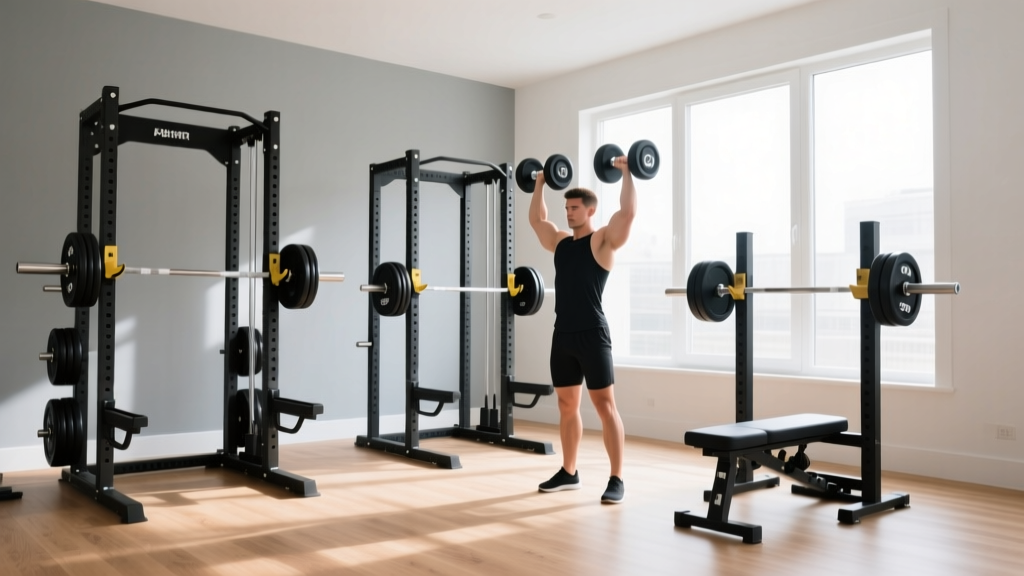
Power Rack vs Squat Rack vs Stand: Standing Dumbbell Chest Workout Setup
Compare power racks, squat racks, and stands. Our complete installation walkthrough optimizes your layout for squats and standing dumbbell chest workouts.

The Foundation: Power Rack vs. Squat Rack vs. Squat Stand
When designing a comprehensive home gym in 2026, selecting the right squatting and pressing station dictates the flow, safety, and versatility of your entire training space. While barbell movements often take center stage in equipment buying guides, a well-rounded facility must accommodate multi-directional movements. This includes the increasingly popular standing dumbbell chest workout, an exercise that demands strict core stabilization, shoulder integrity, and specific spatial clearances. The rack you choose—and more importantly, how you install it—will determine whether you can safely execute heavy standing presses, squats, and rack pulls without risking injury or property damage.
Below is a structural comparison of the three primary rack categories to help you decide which footprint aligns with your training goals and spatial constraints.
| Feature | Power Rack (e.g., Rogue R-3) | Squat Rack (e.g., REP PR-4000) | Squat Stand (e.g., Titan T-3) |
|---|---|---|---|
| Footprint | 90 x 48 inches (Enclosed) | 80 x 48 inches (Open Front) | 24 x 24 inches (Independent) |
| Base Stability | Maximum (4-point base + crossmembers) | High (Flat foot or bolt-down) | Moderate (Requires spotter arms) |
| Avg. Price (2026) | $850 - $1,100 | $650 - $850 | $350 - $450 |
| Dumbbell Clearance | Restricted internally; excellent external | Excellent lateral and frontal clearance | Unrestricted 360-degree clearance |
| Best For | Heavy barbell lifting, kipping, bands | Hybrid barbell & dumbbell workflows | Minimalist spaces, garage gyms |
Spatial Planning: Accommodating the Standing Dumbbell Chest Workout
Why does a standing dumbbell chest workout matter when choosing and installing a rack? Unlike a traditional barbell bench press where you are confined within the J-cups, standing dumbbell presses (whether performed strictly upright for core engagement or using a rack-supported incline bench) require significant lateral clearance, safe drop zones, and accessible heavy dumbbell storage.
The 36-Inch Rule and Drop Zones
According to the NSCA Facility Design Guidelines, a minimum of 36 inches of clearance is required around primary lifting stations to ensure safe ingress, egress, and emergency bail-out paths. When performing a standing dumbbell chest press with 80 lb to 120 lb dumbbells, you cannot simply drop the weights straight down if your rack is installed flush against a wall or adjacent to a fragile mirror. You must be able to step forward and drop the dumbbells into a designated rubber mat zone.
- Power Rack Placement: If using a full power rack, position your adjustable bench slightly outside the front uprights for standing work, or utilize the internal space only if your rack is 48 inches wide or deeper (like the Rogue R-6) to avoid clipping the uprights with the dumbbell heads.
- Squat Rack Advantage: Half racks like the REP PR-4000 offer the best of both worlds. You get the rear crossmembers for weight storage and band pegs, but an open front that allows you to step out and perform standing dumbbell chest workouts without spatial claustrophobia.
- Squat Stand Limitations: While stands offer infinite clearance, they lack integrated storage. You will need to purchase a separate 3-tier dumbbell rack, which eats into the very floor space you were trying to save.
Complete Step-by-Step Installation Walkthrough
Proper installation is non-negotiable. A poorly assembled rack can shift during heavy eccentrics, rack the uprights, or fail when dropping weights. Follow this precise walkthrough to ensure your equipment is grounded, squared, and safe for both barbell squats and dynamic dumbbell movements.
Step 1: Subfloor Preparation and Matting
Before unboxing a single upright, lay down your flooring. We recommend 3/4-inch vulcanized rubber horse stall mats over bare concrete. This provides essential shock absorption for dropped dumbbells during your standing chest workouts and protects your concrete slab from spalling under the concentrated point-load of rack feet.
💡 PRO TIP: If your concrete floor has a slope greater than 1/4-inch over 10 feet (common in garages for drainage), you MUST use steel shims under the base plates. Failing to shim will cause the rack to twist, preventing bolts from aligning and compromising structural integrity.Step 2: Base Assembly and Loose Fitting
Assemble the base plates and lower crossmembers first. Do not fully tighten any hardware during this phase. Leave all 5/8-inch bolts approximately 10% loose. This allows the steel frame to flex and self-align as you add the vertical uprights. If you tighten the base prematurely, the upright holes will be misaligned by up to half an inch by the time you reach the top crossmembers.
Step 3: Upright Installation and Squaring
Stand the uprights and attach the top crossmembers. To ensure the rack is perfectly square, use the diagonal measurement method: measure from the bottom-left inside corner to the top-right inside corner, and compare it to the bottom-right to top-left measurement. If the measurements are identical down to the millimeter, your rack is square. If not, gently tap the uprights with a rubber mallet until the diagonals match.
Step 4: Final Torque Specifications
Once squared, proceed to final tightening. For standard 5/8-inch Grade 8 hardware (used by Rogue, REP, and Titan), the target torque specification is 90 ft-lbs. Use a calibrated torque wrench rather than an impact driver. As noted in the Garage Gym Reviews Power Rack Guide, over-torquing with power tools can strip the nylon insert lock nuts or stretch the bolt shank, leading to catastrophic failure under heavy lateral loads.
Optimizing Attachments for Dumbbell and Barbell Work
Once the frame is secured, configuring your attachments is the final step in making the rack a versatile hub for your programming.
Weight Storage Horns as Counter-Balances
If you opted for a Squat Rack or Squat Stand that is not bolted into the concrete, you must install weight storage horns on the rear base plates. Loading 45 lb bumper plates onto these rear horns acts as a vital counter-balance, preventing the rack from tipping forward if you fail a heavy squat and dump the bar onto the front safety straps. Furthermore, these horns keep your floor clear, ensuring your standing dumbbell chest workout drop zones remain free of tripping hazards.
Safety Straps vs. Pin-Pipe Spotters
For heavy standing or incline dumbbell work, UHMW plastic-lined safety straps are vastly superior to steel pin-pipe spotters. If you fatigue during a standing dumbbell chest press and need to drop the weights or lean back, straps will catch the dumbbells (or your elbows) without damaging the knurling or bouncing the weights back at you.
Safety Protocols and Ongoing Maintenance
Installation is not a one-time event; it is the beginning of your equipment maintenance lifecycle. The vibration from dropping heavy dumbbells and racking barbells will inevitably loosen hardware over time.
'A home gym is only as safe as its last maintenance check. Hardware should be inspected and re-torqued every 90 days, or immediately following any high-impact drop or collision with the uprights.' — FitGearPulse Safety Standards, 2026
Create a maintenance log on your phone. Every three months, take a 15mm socket and torque wrench to every bolt on your rack. Pay special attention to the J-cup mounting brackets and the base plate gussets. By respecting the installation process and understanding the spatial demands of exercises like the standing dumbbell chest workout, you will build a training environment in 2026 that is as safe as it is effective.
More gear to consider
All reviews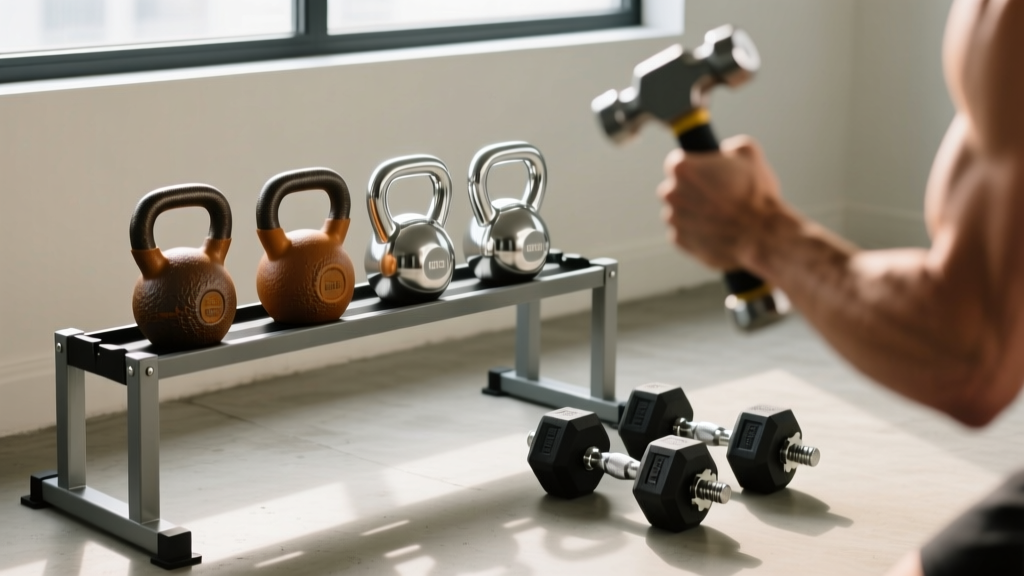
Cast Iron vs Competition Kettlebells & Hammer Curls with Dumbbells

Best Racks to Store Heavy Overhead Extension Dumbbells (2026)

Mastering the Tricep Bench Press Dumbbell Routine at Home
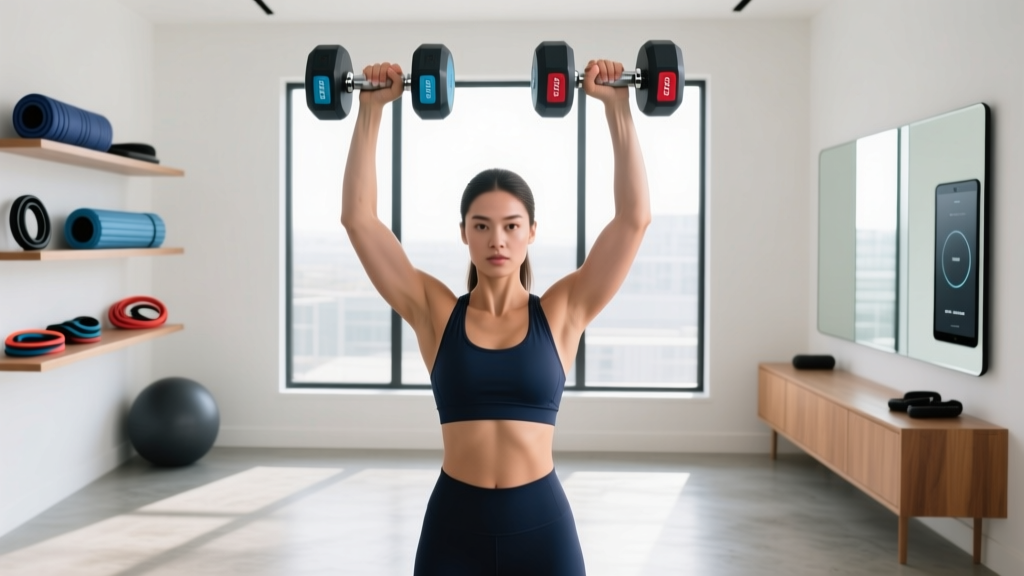
Triceps Extensions With Dumbbells: 2026 Adjustable Gear Guide
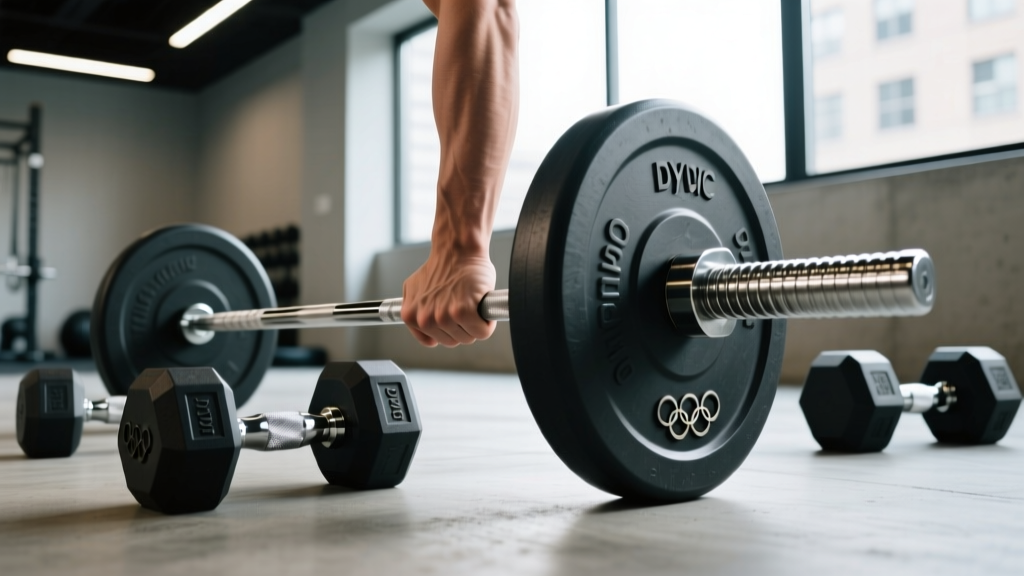
How to Grip Dumbbells vs Barbells: Olympic Barbell Knurling Guide
