
Bumper vs Iron Plates: Care for Your Dumbbell Weight Lifting Routine
Learn how to maintain bumper and iron plates for loadable dumbbells. Extend gear life and protect your dumbbell weight lifting routine with expert care tips.

The Loadable Dumbbell Dilemma: Bumper vs. Iron
When building a comprehensive home gym, loadable dumbbell handles—like the Rogue Loadable Dumbbell Handle or the Titan Fitness 2-Inch Olympic Dumbbell Handle—offer incredible versatility. However, the plates you slide onto these sleeves endure vastly different mechanical stresses than those used on a standard barbell. If you are running a high-volume dumbbell weight lifting routine, understanding the maintenance nuances between bumper plates and cast iron plates is critical for protecting your investment and ensuring safety.
Unlike a barbell, which typically drops flat and distributes force evenly across the plates, dumbbells are frequently dropped at an angle or twisted during the release phase of a heavy press. This introduces severe lateral shear force. In this guide, we break down the exact failure modes of both plate types and provide a 2026-updated maintenance protocol to maximize longevity.
⚠️ WARNING: The 10lb/15lb Bumper Plate HazardNever use thin 10lb or 15lb rubber bumper plates on loadable dumbbells for heavy drops. The narrow surface area combined with lateral torque will cause the plate to 'taco' (bend permanently) or blow out the steel center insert within weeks. Always pair thin bumpers with a 45lb iron plate behind them to absorb the shock, or switch to machined iron plates for lighter dumbbell increments.
Iron Plates: Longevity and Rust Prevention
Cast iron and machined steel plates (such as the York Legacy Cast Iron or Rogue Deep Dish Plates) remain the gold standard for durability and cost-efficiency. As of 2026, high-quality iron plates average between $1.75 and $2.50 per pound. However, their primary enemy is oxidation, especially in garage gyms with fluctuating humidity.
Common Failure Modes
- Edge Chipping: Cast iron is brittle. Repeated drops on concrete without mats will chip the outer rim, creating sharp burrs.
- Oxidation (Rust):strong> Moisture reacts with the bare iron, degrading the surface and leaving orange residue on your hands and knurling.
- Hub Wear: The machined center hole can elongate if the dumbbell sleeve collar is not tightened securely, causing the plate to 'wobble' during lateral raises.
Iron Plate Maintenance Protocol
- Deep Cleaning (Bi-Annually): Take the plates outside and scrub them with a stiff nylon brush and a mild degreaser. Avoid wire brushes on painted or powder-coated plates, as this will strip the finish.
- Rust Remediation: For bare cast iron showing surface rust, use a brass wire brush attachment on a drill, followed by wiping down with white vinegar to neutralize the oxidation.
- Protective Coating: Apply a light coat of 3-IN-ONE Multi-Purpose Oil or food-grade mineral oil. Wipe off the excess with a microfiber towel. According to equipment care experts at Garage Gym Reviews, avoiding harsh chemical cleaners like bleach is vital, as they accelerate the corrosion of raw iron.
Bumper Plates: Combating UV and Insert Blowout
Bumper plates, constructed from virgin rubber or urethane (like the Rogue Echo Bumpers or Fringe Sport Urethane Plates), are essential for Olympic lifting and protecting flooring. Urethane models command a premium—often $4.00 to $6.00 per pound—but offer superior resistance to abrasion and odor.
Common Failure Modes
- UV Degradation: Prolonged exposure to sunlight breaks down the chemical bonds in rubber, causing it to dry out, crack, and eventually crumble.
- Insert Blowout: The brass or steel center hub separates from the rubber matrix. This is heavily exacerbated by the twisting motion inherent in a demanding dumbbell weight lifting routine.
- Odor Off-Gassing: Recycled rubber bumpers can emit volatile organic compounds (VOCs) that degrade indoor air quality over time.
Bumper Plate Maintenance Protocol
- Routine Wiping (Weekly): Use a damp microfiber cloth with a few drops of mild dish soap (like Dawn). Never use ammonia-based cleaners or Lysol sprays directly on rubber, as these strip the factory protectants and accelerate drying.
- UV Protection (Quarterly): If your gym is near a window or outdoors, apply 303 Aerospace Protectant. This acts as a sunscreen for your bumpers, preventing the white, chalky oxidation that plagues older rubber plates.
- Insert Inspection: Monthly, check the perimeter of the steel hub. If you see a gap forming between the metal and the rubber, the plate is compromised. As noted in comparative analyses by BarBend, once the structural integrity of the hub bond fails, the plate is no longer safe for dynamic drops.
Head-to-Head Comparison Matrix
Choosing the right plate for your loadable dumbbells requires balancing your budget, environment, and training style. Review the data below to make an informed decision.
| Feature | Cast Iron / Machined Steel | Virgin Rubber Bumper | Urethane Bumper |
|---|---|---|---|
| Avg. Cost per lb (2026) | $1.75 - $2.50 | $2.50 - $3.50 | $4.00 - $6.50 |
| Drop Durability (Dumbbells) | High (Chips, won't shatter) | Medium (Hub blowout risk) | High (Superior hub bonding) |
| Primary Maintenance Need | Rust prevention (Oiling) | UV protection & Cleaning | Basic soap & water |
| Thickness Profile | Slim (Allows heavier loads) | Thick (Limits sleeve space) | Medium-Slim |
Protecting Your Dumbbell Weight Lifting Routine
The intersection of your equipment and your programming dictates how fast your gear degrades. A standard dumbbell weight lifting routine involving heavy floor presses, Romanian deadlifts, and walking lunges will test the limits of your plates.
"The secret to loadable dumbbell longevity isn't just the plate material; it's the collar. Using a high-quality spin-lock or a quick-release clamp like the Rogue Aluminum Collars prevents the plates from shifting. Shifting plates create micro-impacts that shatter cast iron edges and tear rubber hubs from the inside out."
The Hybrid Loading Strategy
If you own both iron and bumper plates, you can use a hybrid loading strategy to maximize the lifespan of both while protecting your flooring. Always load the iron plate closest to the dumbbell handle's inner collar, followed by the bumper plate on the outside. This ensures that if the dumbbell is dropped at an angle, the thicker, shock-absorbing bumper plate takes the initial impact against the floor, while the iron plate provides structural rigidity against the sleeve.
Frequently Asked Questions
Can I use WD-40 to clean my iron plates?
No. WD-40 is primarily a solvent and water-displacer, not a long-term lubricant or protectant. It will strip away existing protective oils and attract dust, creating a gritty paste that will ruin the knurling on your loadable dumbbell handles. Stick to 3-IN-ONE oil or mineral oil.
Why do my rubber bumper plates leave black scuff marks on my floor?
This is a common issue with lower-quality, recycled rubber bumpers that contain high levels of carbon black and lack a proper factory sealant. To stop this, scrub the edges of the plates with a melamine sponge (Magic Eraser) and apply a thin layer of carnauba wax to the outer rim to seal the porous rubber.
How tight should I secure the collars on loadable dumbbells?
Hand-tighten the collars until they are fully flush against the plate, then give them an additional quarter-turn. If you are performing dynamic movements like dumbbell snatches as part of your dumbbell weight lifting routine, consider using locking jaw clamps (like Lock-Jaws) which grip the sleeve via tension rather than threads, eliminating the risk of the collar spinning loose mid-set.
More gear to consider
All reviews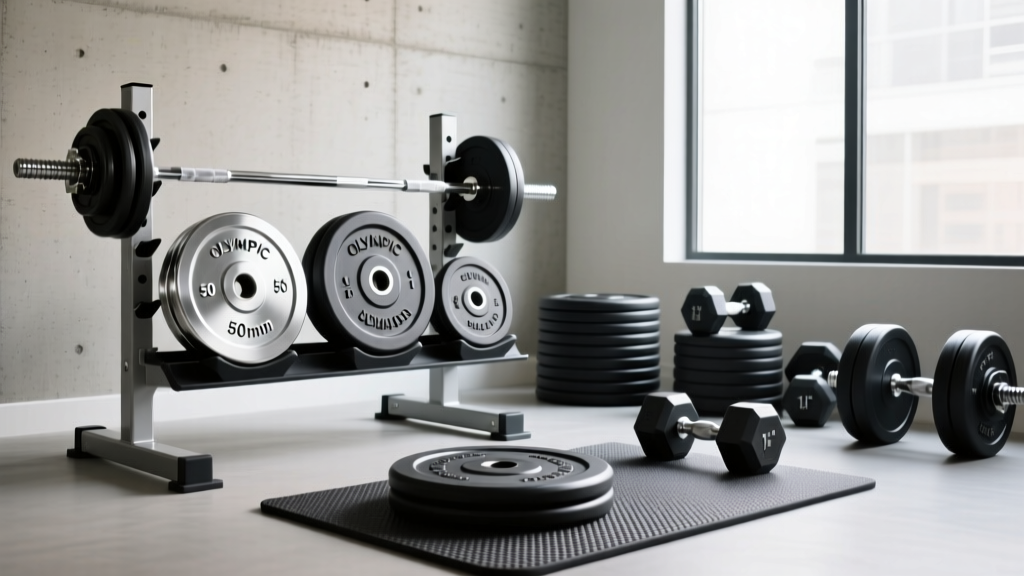
Olympic vs Standard Plates: A Guide for Dumbbell Frog Pumps
Calf Dumbbell Workouts: Troubleshooting Neoprene Weight Limits

Cast Iron vs Competition Kettlebells vs Lat Exercises Using Dumbbells
Power Rack vs Squat Rack vs Squat Stand: Dumbbell Twist Press Errors

Olympic vs Standard Plates Setup & the Dumbbell Chest Press on Floor
