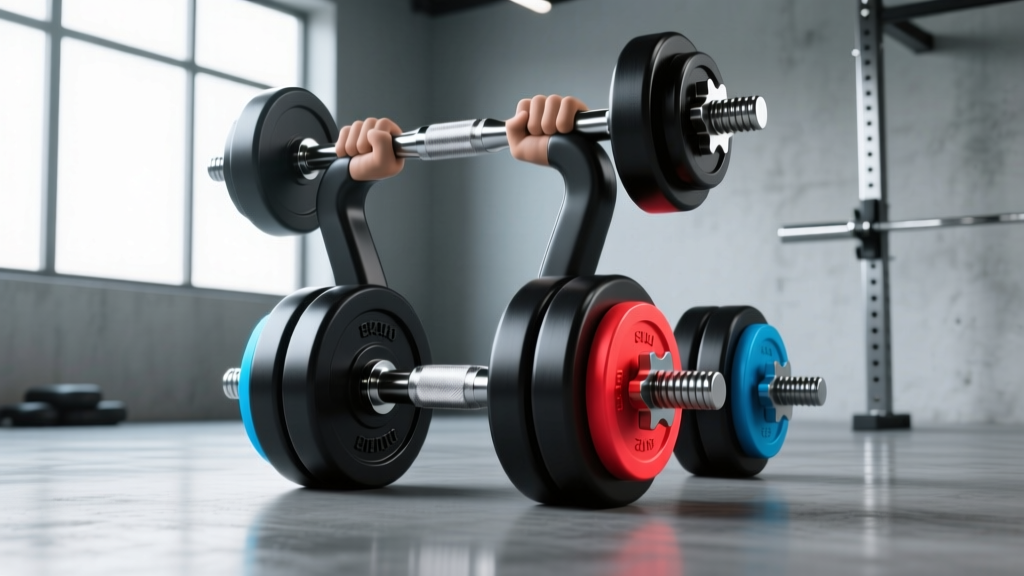
Dumbbell Squat to Overhead Press: Cast Iron vs Competition
Expert guide comparing cast iron vs competition kettlebells to upgrade your dumbbell squat to overhead press. 2026 pricing, specs, and rack-position analysis.

The Biomechanical Shift: From Dumbbells to Kettlebells
When athletes master the dumbbell squat to overhead press (often called a thruster), they inevitably look for ways to increase the complexity, flow, and cardiovascular demand of the movement. While dumbbells are excellent for isolated bilateral loading, transitioning to kettlebells introduces a unique center of gravity and a vastly different 'rack position' that challenges core stability and shoulder mobility in new ways. However, making this transition requires a critical equipment decision: do you buy traditional cast iron kettlebells, or do you invest in uniform competition steel kettlebells?
In this 2026 hands-on buying guide, we break down the exact specifications, failure modes, and biomechanical impacts of cast iron versus competition kettlebells, specifically analyzing how each bell type affects your performance during high-repetition squat-to-press complexes.
Expert Insight: The primary difference between a dumbbell and a kettlebell during a squat-to-press is the resting point. Dumbbells sit atop the anterior deltoid. Kettlebells must rest in the 'rack position'—wedged between the forearm, bicep, and ribcage. The dimensions of the kettlebell's 'horns' and handle diameter dictate whether this position is a stable launchpad or a wrist-bruising liability.Cast Iron Kettlebells: The Rugged Standard
Cast iron kettlebells are the most common sights in commercial gyms and home garages. They are typically manufactured using a gravity-cast process, resulting in a solid, dense piece of iron that is often finished with a powder coat or e-coat to prevent rust.
Hands-On Review: Rogue Fitness Cast Iron Kettlebell (2026 Edition)
Rogue's cast iron line remains a benchmark for durability. The 2026 iterations feature a refined powder-coat finish that grips chalk exceptionally well without tearing the calluses on your palms. However, the fundamental flaw of cast iron for the squat-to-press movement lies in its variable geometry.
- Handle Diameter Variance: A 16kg (35lb) Rogue cast iron bell features a ~33mm handle, but an 8kg (18lb) bell drops down to roughly 30mm. This inconsistency forces your grip and wrist stabilizers to adapt to different thicknesses, disrupting muscle memory for the overhead lockout.
- Bell Size Variance: As the weight increases, the physical size of the bell grows. A 24kg bell has a much wider base and larger horn window than a 12kg bell.
- Failure Modes: If dropped on raw concrete during a fatigued press drop, cast iron is brittle. We have documented micro-fractures and chipped bases on bells repeatedly dropped from overhead.
Pricing (2026): Expect to pay between $1.60 and $2.20 per pound. A 16kg bell retails for roughly $75.
Competition Kettlebells: Uniformity and Flow
Competition kettlebells are engineered for the sport of kettlebell lifting (Girevoy Sport), where athletes perform hundreds of repetitions of cleans, snatches, and jerks without setting the bell down. They are constructed from hollow steel shells, filled with lead or steel shot to achieve the target weight while maintaining identical external dimensions across all weight classes.
Hands-On Review: Vulcan Absolute Competition Steel Kettlebell
The Vulcan Absolute series represents the pinnacle of uniform lifting. Whether you are holding an 8kg or a 32kg bell, the handle diameter is exactly 35mm, and the bell's physical footprint remains unchanged.
- The 35mm Handle Standard: According to the ExRx kinesiology database, a 35mm grip diameter optimally aligns the radius and ulna bones during an overhead press, reducing wrist extension torque. This makes the lockout phase of the squat-to-press significantly smoother.
- Wider Horn Window: Competition bells feature a wider, flatter gap between the handle and the bell body. This allows the wrist to sit completely straight in the rack position, rather than bending backward under the load.
- Steel Shell Durability: Steel does not shatter. If you miss a rep and drop a competition bell from overhead, it will dent your rubber flooring, but the bell itself will merely scuff its paint job.
Pricing (2026): Premium steel commands a premium price, averaging $4.00 to $5.50 per pound. A 16kg Vulcan competition bell will cost around $145.
Head-to-Head Specification Matrix
| Feature | Cast Iron (e.g., Rogue / Rep) | Competition (e.g., Vulcan / Kettlebells USA) |
|---|---|---|
| Material | Solid Cast Iron | Hollow Steel Shell |
| Handle Diameter | Variable (30mm - 35mm) | Uniform (35mm standard) |
| Bell Dimensions | Scales with weight | Identical across all weights |
| Rack Position Comfort | Moderate (can bruise forearm) | High (flat horn rests on chest) |
| Drop Durability | Low (prone to chipping/cracking) | High (dents but maintains structure) |
| Avg. Cost per lb (2026) | $1.60 - $2.20 | $4.00 - $5.50 |
The Rack Position: Where the Press is Won or Lost
To understand why the dumbbell squat to overhead press translates so differently to kettlebells, we must examine the 'clean' and the 'rack'. When you use dumbbells, the weight rests securely on the shelf created by your anterior deltoid and clavicle. Your wrist remains relatively neutral, and the transition from the squat's upward drive into the overhead press is a direct, vertical transfer of kinetic energy.
With kettlebells, the weight rests on the outside of the forearm and the chest. If you use a smaller cast iron bell (like a 12kg or 16kg), the compact size of the bell forces your wrist into extension to keep the weight from pulling you forward. When you drive out of the squat, this extended wrist acts as an energy leak, absorbing the force meant for the overhead press.
'A competition kettlebell's wider horn window allows the back of the hand to rest flush against the forearm, creating a stacked skeletal structure from the knuckles to the elbow. This is the exact biomechanical alignment required for an efficient, high-rep squat-to-press.'
Furthermore, the American Council on Exercise (ACE) emphasizes that maintaining a neutral wrist during overhead pressing movements drastically reduces the risk of carpal tunnel compression and extensor tendonitis. For athletes planning to program high-volume thrusters or squat-to-press ladders, the 35mm uniform handle of a competition bell is not just a luxury; it is an injury-prevention necessity.
2026 Pricing and Value Framework: Which Should You Buy?
Your purchasing decision should be dictated by your training age, your programming, and your flooring.
Buy Cast Iron If:
- You are a general fitness enthusiast focusing on slow, heavy, low-rep strength work (e.g., sets of 3-5 reps).
- You primarily perform floor-based movements like goblet squats, renegade rows, and heavy swings where the bell is not repeatedly dropped from overhead.
- You are on a strict budget and need to outfit a full rack of weights from 8kg to 32kg.
Buy Competition Steel If:
- You are specifically training the dumbbell squat to overhead press equivalent (the kettlebell thruster) for high repetitions, CrossFit-style metcons, or Girevoy Sport.
- You suffer from wrist pain or forearm bruising during front-racked movements.
- You value muscle memory and want your 24kg bell to feel exactly like your 16kg bell in your grip, allowing you to focus purely on the pressing mechanics rather than grip adaptation.
Frequently Asked Questions
Can I use a competition kettlebell for heavy swings?
Yes, but with a caveat. The 35mm handle of a competition bell is slightly thicker than the handles on lighter cast iron bells. If you are doing heavy two-handed swings, the 35mm handle provides excellent grip engagement. However, for one-arm snatches, some athletes with smaller hands prefer the slightly thinner, tapered handles of premium cast iron bells to avoid grip fatigue.
Why do competition kettlebells have different colors?
Because all competition bells are the exact same physical size, they are color-coded by international standards to indicate weight. For example, yellow is 16kg, green is 24kg, and red is 32kg. This allows judges and athletes to instantly verify the load during competitions and high-paced gym sessions.
Will dropping a steel competition bell ruin my floor?
While the steel bell won't shatter like cast iron, it acts as a dense, unforgiving projectile. Dropping a 24kg steel competition bell from overhead onto bare concrete or cheap laminate flooring will cause severe structural damage. Always use horse-stall mats or specialized drop pads when performing overhead squat-to-press drops with steel bells.
Final Verdict
Upgrading from the traditional dumbbell squat to overhead press to a kettlebell thruster is a fantastic way to build explosive hip drive and unilateral shoulder stability. If your goal is raw, heavy, low-rep strength on a budget, cast iron remains a reliable workhorse. However, if you are chasing high-rep endurance, fluid transitions, and joint-friendly biomechanics, the uniform geometry of a competition steel kettlebell is an investment that will pay dividends in your training longevity throughout 2026 and beyond.
More gear to consider
All reviews
Squat Rack vs Power Rack: Space for Lateral Lunge with Dumbbells

2026 Trend: Loadable Dumbbells for Leg Day Dumbbells Only Routines

Beyond Dumbbells for the Pool: Barbell Collar Setup

Maintaining Dumbbell Racks for Safe Tricep Dips with Dumbbells

What Size Dumbbells Do I Need? 2026 Storage & Rack Guide