Master the Dumbbell Squat for Glutes: Beginner Guide & Adjustable Dumbbell Review
Master the dumbbell squat for glutes with our beginner step-by-step guide. Plus, compare the best adjustable dumbbells of 2026 to maximize your lower body gains.

The Biomechanics of the Dumbbell Squat for Glutes
If you are stepping into the world of home fitness, mastering the dumbbell squat for glutes is one of the highest-return investments you can make for your lower body. While barbells are fantastic for absolute strength, dumbbells offer a superior range of motion, correct unilateral imbalances, and reduce spinal compression. According to biomechanics data cataloged by ExRx.net's exercise directory, squat variations that allow for a slightly wider stance and deeper hip flexion significantly increase the recruitment of the gluteus maximus compared to narrow-stance quad-dominant movements.
However, executing the perfect squat requires the right equipment. This is where adjustable dumbbells shine. Instead of buying a full rack of fixed-weight dumbbells that takes up half your garage, a single pair of adjustable dumbbells allows for seamless progressive overload—a core tenet of muscle hypertrophy championed by the National Strength and Conditioning Association (NSCA). In this guide, we will break down the exact step-by-step form for targeting your glutes, followed by a comprehensive 2026 review of the top adjustable dumbbells best suited for this specific movement.
Step-by-Step: Executing the Perfect Glute-Focused Goblet Squat
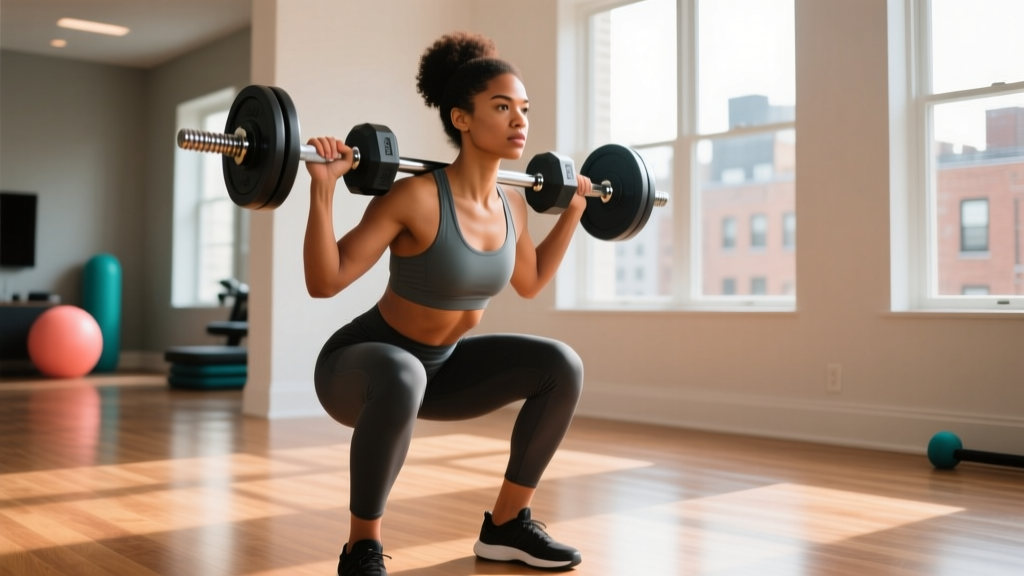
For beginners, the Goblet Squat is the ultimate variation of the dumbbell squat for glutes. Holding the weight anteriorly (in front of your chest) acts as a counterbalance, allowing you to sit deeper into the hole while maintaining an upright torso. Here is your step-by-step execution guide:
- The Stance: Place your feet roughly 1.5 times shoulder-width apart. Point your toes outward at a 15 to 30-degree angle. This wider, flared stance opens the hips and shifts the mechanical tension toward the glutes and adductors.
- The Grip: Hoist one adjustable dumbbell to your chest. Cup the top inner head of the dumbbell with both hands, keeping your elbows tucked tightly against your ribs.
- The Descent (Eccentric): Initiate the movement by simultaneously breaking at the hips and knees. Imagine sitting back into a low chair. Keep your chest proud and your core braced. Descend until your hip crease drops below your knee joint (full depth).
- The Ascent (Concentric): Drive through the mid-foot and heel. As you push up, actively squeeze your glutes together at the top of the movement to achieve full hip extension. Do not hyperextend your lower back.
Pro-Tip for Glute Activation: To maximize glute engagement, focus on 'screwing' your feet into the floor (creating external rotation torque without actually moving your feet) as you descend. This pre-tensions the gluteus medius and maximus.
2026 Adjustable Dumbbell Comparison Matrix
Not all adjustable dumbbells are created equal, especially when it comes to holding them vertically for goblet squats. Below is our 2026 comparison matrix of the top three market leaders, evaluated specifically on their suitability for lower-body training.
| Feature | Nuobell 80lb | Bowflex SelectTech 552 | PowerBlock Elite USA |
|---|---|---|---|
| Max Weight | 80 lbs | 52.5 lbs | 50 lbs (Expandable to 70/90) |
| Handle Shape | Traditional Round | Traditional Round | Rectangular Cage |
| Weight Increments | 5 lbs (2.5 lb micro-load) | 2.5 lbs (up to 25 lbs) | 2.5 lbs (with add-on kit) |
| Goblet Squat Ergonomics | Excellent | Good (Bulky at top) | Poor (Awkward vertical hold) |
| Avg. 2026 Price | $429 | $349 | $399 |
Deep-Dive Reviews: Which Dumbbell is Best for Squats?
1. Nuobell 80lb Adjustable Dumbbell: The Glute-Building Champion
When performing a dumbbell squat for glutes, the physical shape of the dumbbell matters immensely. The Nuobell 80lb utilizes a traditional round handle and a streamlined weight head. When you flip it upside down for a goblet squat, the smooth, rounded head rests comfortably in your palms without digging into your wrists. Furthermore, the 80lb ceiling is crucial for lower body training. While 50lbs might be enough for bicep curls, your glutes are massive, powerful muscles that will quickly outgrow lighter weights. The Nuobell's durable steel core and precise 5lb jump mechanism make it our top recommendation for serious home leg days.
2. Bowflex SelectTech 552: The Budget-Friendly Beginner Option
The Bowflex 552 remains a staple in home gyms for a reason. At roughly $349, it offers incredible value and a highly intuitive dial system. For beginners just learning the mechanics of the squat, the 52.5lb max weight is usually sufficient for the first 6 to 12 months of training. However, the SelectTech 552 has a major drawback for goblet squats: the bulky plastic weight dials at the ends of the dumbbell. When held vertically, these plastic casings can press uncomfortably against your forearms and chest. If you primarily plan to do dual-dumbbell sumo squats rather than goblet squats, the Bowflex is a fantastic, space-saving choice.
3. PowerBlock Elite USA: The Indestructible Workhorse
PowerBlock dumbbells are legendary for their durability. The caged, rectangular design means there are no fragile plastic dials to crack if you accidentally drop them after a grueling set of squats. However, this same cage design is a significant ergonomic hurdle for the goblet squat. Holding a rectangular steel cage vertically forces your wrists into an awkward, supinated angle, which can lead to wrist strain under heavy loads. If you choose PowerBlock, we highly recommend adapting your technique to the Dual Dumbbell Front Squat (holding one dumbbell in each hand at shoulder height) rather than the single-dumbbell goblet variation.
Common Beginner Mistakes to Avoid
Warning: Form Breakdowns That Kill Glute Tension
- The 'Good Morning' Squat: If your torso leans too far forward during the descent, you shift the load from your glutes and quads entirely onto your lower back. Keep your chest up and core braced.
- Knee Cave (Valgus): As you push out of the hole, your knees might naturally want to collapse inward. Fight this by actively pushing your knees outward, tracking them directly over your flared toes.
- Half-Reps: The American Council on Exercise (ACE) consistently highlights that partial range-of-motion squats severely limit glute activation. The glutes are most heavily recruited at the very bottom of the squat. Use a lighter weight and go deeper rather than ego-lifting half-reps.
Programming Your Glute Workout for Hypertrophy
To see real changes in muscle size and strength, you need a structured approach to progressive overload. Here is a beginner-friendly glute squat protocol you can run 2 to 3 times per week:
- Warm-up: 2 sets of 10 bodyweight squats, focusing on depth and hip mobility.
- Working Sets: 3 to 4 sets of 8 to 12 repetitions.
- Tempo: 3-1-1-0. Take 3 full seconds to lower yourself into the squat, pause for 1 second at the bottom (eliminating the stretch reflex), drive up explosively in 1 second, and do not rest at the top.
- Rest Periods: 90 to 120 seconds between sets to allow for ATP replenishment.
Once you can comfortably complete 4 sets of 12 reps with perfect form, it is time to increase the weight on your adjustable dumbbells by 5 lbs. This systematic progression is the undeniable key to transforming your lower body.
Final Thoughts
Mastering the dumbbell squat for glutes is a journey of mechanical precision and consistent effort. By combining the deep, hip-opening biomechanics of the goblet or sumo squat with the space-saving, progressive overload capabilities of a high-quality adjustable dumbbell like the Nuobell 80lb, you have everything you need to build a powerhouse lower body right in your living room. Grab your dumbbells, set your stance, and start squatting.
More gear to consider
All reviews
Overhead Dumbbell Hold Errors: Adjustable Dumbbell Fixes

2026 Storage Trends: Racks for the Dumbbell FFE Split Squat

EZ Bar vs Straight Bar Value & Dumbbell Chest Exercises at Home
Rack Maintenance for a Full Body Home Workout With Dumbbells
Barbell Setup & Knurling: Beyond Chest and Back Dumbbell Exercises