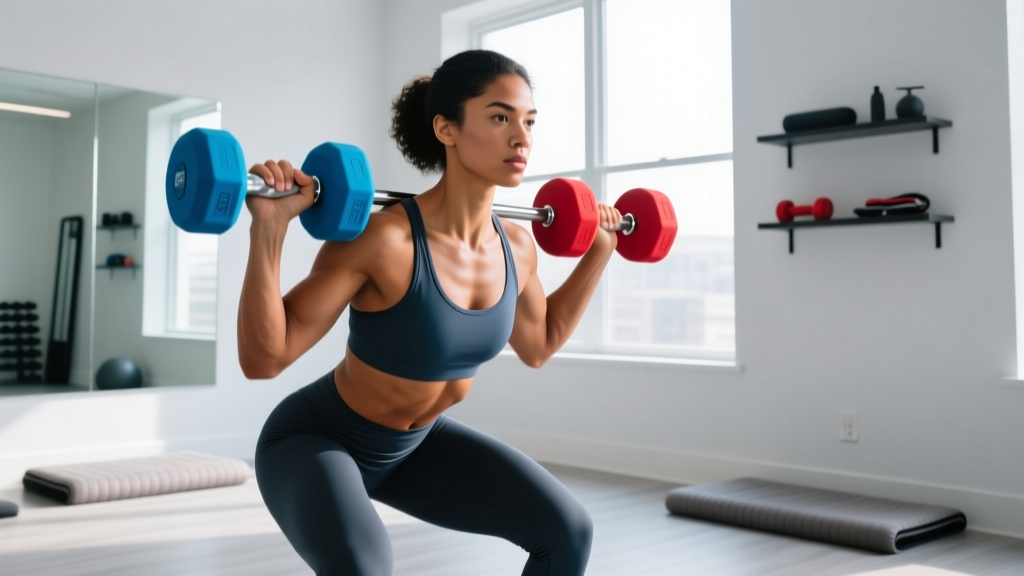
Dumbbell Snatch Muscles Worked: Beginner Guide for Neoprene Weights
Learn the exact dumbbell snatch muscles worked with our beginner step-by-step guide. Master form using neoprene coated dumbbells for safe home workouts.

The Ultimate Beginner Guide to the Dumbbell Snatch with Neoprene Weights
The dumbbell snatch is one of the most dynamic, full-body explosive movements you can perform in a home gym. It builds immense power, improves cardiovascular conditioning, and enhances athletic coordination. However, because it is a high-velocity lift, the equipment you use matters significantly. For home gym owners protecting hardwood floors or shared living spaces, neoprene-coated dumbbells are the default choice. But how does this synthetic rubber coating affect your biomechanics and grip?
In this comprehensive guide, we will break down the exact dumbbell snatch muscles worked, analyze the unique physical properties of neoprene dumbbells, and provide a step-by-step tutorial to help you master this complex lift safely and effectively.
The Dumbbell Snatch Muscles Worked: A Biomechanical Breakdown
Understanding the specific dumbbell snatch muscles worked is crucial for programming and injury prevention. Unlike isolation exercises, the snatch is a multi-joint, triple-extension movement (ankles, knees, and hips) that requires a massive transfer of force from the floor to overhead. According to kinesiology data mapped by the ExRx Kinesiology Muscle Directory, the lift can be broken down into three distinct phases, each recruiting different primary movers and stabilizers.
| Lift Phase | Prime Movers | Stabilizers & Synergists |
|---|---|---|
| 1. First Pull (Floor to Knee) | Hamstrings, Gluteus Maximus, Quadriceps | Erector Spinae, Latissimus Dorsi, Core |
| 2. Second Pull (Explosive Hip Extension) | Glutes, Quadriceps, Gastrocnemius (Calves) | Trapezius (Upper/Mid), Rhomboids |
| 3. Third Pull & Catch (Punch & Stabilize) | Anterior/Medial Deltoids, Triceps Brachii | Rotator Cuff, Obliques, Serratus Anterior |
Because the dumbbell snatch muscles worked span the entire posterior and anterior chain, fatigue can set in quickly. This is why beginners must start with lighter loads to ensure the smaller stabilizer muscles (like the rotator cuff) can handle the deceleration forces during the catch phase.
The Neoprene Factor: Material Science Meets Grip Strength
Before diving into the step-by-step form guide, we must address the equipment. Neoprene (polychloroprene) is a synthetic rubber widely used in 2026 for home fitness gear due to its noise-dampening and floor-protecting qualities. Brands like Yes4All and CAP Barbell dominate this space, with pricing generally ranging from $1.50 to $2.20 per pound.
⚠️ The Handle Diameter Warning
A standard bare cast-iron dumbbell handle measures roughly 25mm to 28mm in diameter. A neoprene coating adds 2mm to 3mm of thickness on all sides, pushing the handle diameter to 32mm–35mm. Biomechanical studies show that handle diameters exceeding 30mm can reduce maximal grip strength by 15% to 20%. During the high-velocity third pull of the snatch, this thicker grip heavily taxes your forearm flexors, increasing the risk of the dumbbell slipping.
Pros and Cons of Neoprene for Olympic Lifts
- Pros: Protects laminate and hardwood floors from accidental drops; comfortable on the hands during the initial floor setup; resists rust in humid environments.
- Cons: Thicker handle compromises grip security; neoprene does not absorb sweat, creating a 'hydroplaning' effect on the palm during intense conditioning circuits; degrades and becomes sticky if exposed to direct UV sunlight over 18+ months.
Step-by-Step Beginner Guide to the Dumbbell Snatch
Mastering the form is non-negotiable. As highlighted in BarBend's comprehensive guide to the dumbbell snatch, treating the lift as a series of distinct positions rather than one chaotic heave is the key to success. Grab a light neoprene dumbbell (10–15 lbs for women, 15–25 lbs for men) and follow these steps.
Step 1: The Setup and Hinge
Place the dumbbell on the floor between your feet. Adopt a shoulder-width stance. Hinge at the hips, pushing your glutes back while keeping your chest proud. Grab the neoprene handle with a pronated (overhand) grip. Crucial detail: Because neoprene can be slick, wrap your thumb fully around the handle (do not use a false/suicide grip) and squeeze tightly to engage the forearm flexors.
Step 2: The First Pull (Floor to Knee)
Drive through your mid-foot. Your hips and shoulders should rise at the exact same time. Keep the dumbbell close to your shins. The lats must remain engaged to prevent the thick neoprene bell from swinging forward, which would throw off your center of gravity.
Step 3: The Second Pull (The Explosive Pop)
Once the dumbbell passes the knee, violently extend your hips and knees. Think about jumping the weight up, not lifting it with your arm. Shrug your trapping muscles aggressively. This triple-extension generates the upward momentum required to make the weight 'weightless' for a split second.
Step 4: The Third Pull and Catch
As the dumbbell reaches chest height, pull your body under the weight. Punch your arm straight up toward the ceiling, locking out the elbow. Catch the dumbbell overhead with your bicep close to your ear, simultaneously dropping into a partial quarter-squat to absorb the impact. Stand up tall to complete the rep.
'The snatch is not an arm lift. The arm merely acts as a rope connecting the hip's explosive power to the dumbbell. If your shoulder is burning before your glutes, you are muscling the weight rather than using momentum.' — National Strength and Conditioning Association (NSCA) coaching principles.
Troubleshooting Edge Cases with Neoprene Dumbbells
Even with perfect form, the physical properties of neoprene can introduce unique failure modes. Here is how to troubleshoot them:
1. The Sweat Hydroplane Effect
Neoprene is non-porous. When your hands sweat during a high-heart-rate snatch complex, the moisture gets trapped between your skin and the rubber, drastically reducing friction. Solution: Keep a microfiber towel nearby and wipe the handle between every set. Alternatively, use a liquid chalk formulation, which dries quickly and bonds well to synthetic rubber surfaces without making a mess in your home gym.
2. The Sticky Degradation Phase
If you leave your neoprene dumbbells near a window with direct sunlight, the UV rays will break down the polychloroprene chains within 12 to 18 months, leaving a tacky, sticky residue that ruins your grip. Solution: Store weights away from UV exposure. If they are already sticky, wipe them down with a 50/50 mixture of white vinegar and water to strip the degrading top layer of oils.
3. Asymmetrical Overhead Stability
Because the dumbbell snatch is unilateral, core imbalances are immediately exposed. If you find yourself leaning away from the working arm during the catch, your obliques and quadratus lumborum (QL) are failing to stabilize the spine. Solution: Incorporate single-arm farmer's carries and side planks into your accessory work to build the lateral core stiffness required for overhead catches.
Beginner Programming: How to Implement the Snatch
Do not program the dumbbell snatch for high-rep muscle failure. It is a power movement, and form breakdown leads to shoulder impingement or lower back rounding. Use the following frameworks:
- Power & Technique (Beginner): 5 sets of 3 reps per arm. Rest 90 seconds between sets. Focus entirely on the speed of the hip extension.
- Conditioning (Intermediate): EMOM (Every Minute on the Minute) for 10 minutes. Perform 3 reps on the right arm at the top of the minute, 3 reps on the left arm at the 30-second mark. Use the remaining time to rest.
Final Thoughts on Equipment and Execution
The dumbbell snatch muscles worked offer an unparalleled stimulus for total-body athleticism. While neoprene-coated dumbbells are an excellent, floor-friendly investment for your home gym in 2026, you must respect the thicker handle diameter and manage sweat to maintain a secure grip. Start light, master the hip hinge, and focus on generating force from the ground up. Once the movement pattern is wired into your nervous system, the dumbbell snatch will become a cornerstone of your functional fitness arsenal.
More gear to consider
All reviews
Single Arm Dumbbell Tricep Extension: Power Rack vs Squat Rack vs Stand
Dumbbell Pullovers Out? 2026 Cast Iron vs Competition Kettlebell Guide

1 Dumbbell Workout Guide: Rubber Hex vs Urethane Dumbbells
EZ Curl Bar vs Straight Bar & Neutral-Grip Dumbbell Bench Press

Squat Stand vs Power Rack: Leg Exercises with Dumbbells for Beginners
