Bumper Plate vs Iron Plate Layouts & Pool Dumbbells Exercises Zones
Compare bumper vs iron plate footprints for home gym layouts, integrating dry lifting zones with aquatic recovery and pool dumbbells exercises spaces.

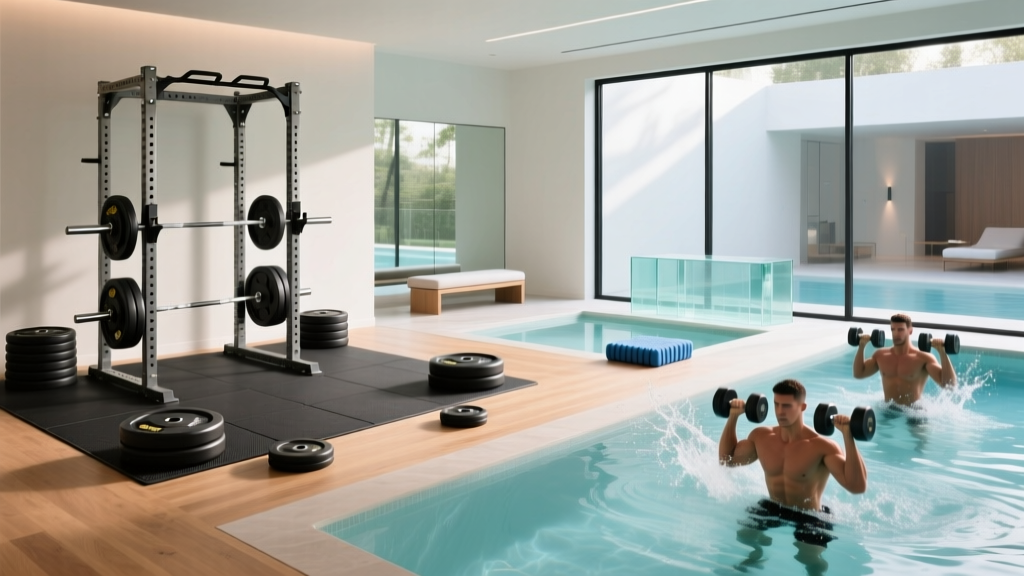
The modern home gym in 2026 is no longer a single-purpose dungeon for heavy lifting; it is a multi-modal wellness facility. As longevity and recovery-focused training take center stage, fitness enthusiasts are designing spaces that accommodate everything from heavy Olympic lifts to aquatic therapy. This shift creates a unique architectural challenge: balancing the heavy, space-demanding footprint of traditional weightlifting gear with the moisture-sensitive storage requirements of recovery equipment. If you are mapping out a new garage gym or retrofitting a basement, understanding the spatial differences between bumper plates and cast iron plates—while integrating dedicated zones for pool dumbbells exercises and aquatic recovery—is critical for optimizing your square footage.
The Dimensional Reality: Bumper Plates vs. Cast Iron
When designing your storage layout, the physical dimensions of your weight plates will dictate your rack geometry and wall clearance. Bumper plates are engineered with a standardized 450mm (17.7-inch) diameter to protect the barbell and floor during drops, but this uniform width comes at a severe spatial premium. Cast iron or machined steel plates, conversely, vary in diameter based on weight and feature a drastically thinner profile.
| Feature | Rogue HG 2.0 Bumper (45lb) | Rogue Machined Iron (45lb) | Spatial Impact |
|---|---|---|---|
| Thickness | 3.25 inches | 1.35 inches | Iron saves 58% sleeve space |
| Diameter | 450mm (17.7") | 445mm (17.5") | Negligible vertical difference |
| 500lb Set Width | ~16.25 inches | ~6.75 inches | Iron allows denser wall storage |
| Drop Rating | High (Dead-bounce) | Zero (Will crack floor) | Bumpers need 4x8 drop zone |
According to Rogue Fitness specifications, a standard 45lb bumper plate is over twice as thick as its machined iron counterpart. If you are outfitting a compact 10x10 room, storing a full set of bumpers on a horizontal wall cradle will consume nearly three times the linear wall space compared to iron plates on a vertical tree or slim wall peg system.
Layout Zoning: Drop Zones vs. Static Load Areas
Space optimization is not just about storage; it is about active floor space. Bumper plates necessitate a dedicated 'Drop Zone.' This requires a minimum 8x8 foot footprint covered in 3/4-inch vulcanized rubber matting over a sealed concrete subfloor to absorb kinetic energy and protect your barbell's bearings.
💡 The Sleeve Real Estate Advantage: If your primary training involves heavy static lifts (squats, bench presses, rack pulls) where dropping the bar is unnecessary, machined iron plates allow you to load up to 500+ lbs on a standard 16.4-inch Olympic sleeve. Bumper plates will physically run out of sleeve space around 350-400 lbs, forcing you to buy specialized competition bumper plates (which are thinner but cost upwards of $150+ per plate) just to fit the weight on the bar.For multi-use layouts, designers in 2026 are utilizing 'hybrid plate sets.' By keeping a pair of 45lb and 25lb bumpers for Olympic movements and filling the rest of the sleeve with 10lb and 5lb iron change plates, you preserve the drop-safety of bumpers while reducing your overall storage rack footprint by up to 30%.
The Wet Zone: Integrating Pool Dumbbells Exercises & Aquatic Recovery
As home wellness spaces evolve, many high-end layouts now incorporate cold plunge tubs, swim spas, or adjacent aquatic recovery annexes. This introduces a massive environmental variable: humidity. Designing a space that accommodates heavy iron lifting alongside aquatic therapy requires strict microclimate zoning.
When designing the recovery annex for pool dumbbells exercises, moisture management becomes the primary spatial constraint. Unlike cast iron or rubber bumpers, aquatic resistance gear—such as EVA foam drag dumbbells or neoprene-coated water weights—requires active airflow to prevent mold and bacterial growth. According to the Arthritis Foundation's guidelines on water exercise, aquatic therapy is highly effective for joint mobility, meaning gear like Speedo Aqua Fit or TYR Hydro Dumbbells are becoming staples in longevity-focused home gyms.
Storage Rules for the Aquatic Annex
- Vertical Mesh Columns: Never store wet EVA foam pool dumbbells in solid plastic bins. Utilize PVC-coated wire mesh bins or slotted vertical towers to allow 360-degree air circulation.
- The 15-Foot Oxidation Buffer: Bare cast iron plates begin to oxidize (rust) rapidly when ambient relative humidity exceeds 65%. Your wet zone storage for pool dumbbells exercises must be physically separated from your iron plate storage by at least 15 feet, or divided by a vapor barrier and dedicated dehumidifier.
- UV and Temperature Stability: If your aquatic zone is outdoors or in a sunroom, ensure your EVA foam dumbbells are stored in shaded, UV-resistant cabinetry to prevent the foam from degrading and flaking onto your lifting platforms.
2026 Multi-Modal Floorplan Blueprint
To maximize a standard 2-car garage (approx. 400 sq ft) for both heavy lifting and aquatic recovery, follow this tri-zone layout framework:
- Zone 1: The Drop & Dynamic Zone (120 sq ft)
Position your power rack and Olympic lifting platform here. Store your bumper plates on a low-profile horizontal wall cradle directly behind the platform to minimize carrying distance. Use 3/4" horse-stall mats. - Zone 2: The Static & Hypertrophy Zone (150 sq ft)
Place your adjustable bench, cable tower, and dumbbell rack here. Store machined iron plates on a vertical 10-post plate tree tucked into a corner. This zone requires only 3/8" interlocking foam or rubber tiles, as no dropping occurs. - Zone 3: The Wet Recovery Annex (130 sq ft)
Locate your plunge tub or swim spa entry here. Install a wall-mounted, rust-proof aluminum shelving unit with mesh pull-out bins specifically dedicated to your pool dumbbells exercises gear, kickboards, and aquatic resistance bands. Install a dedicated exhaust fan to pull humidity away from Zones 1 and 2.
Frequently Asked Questions
Can I store my pool dumbbells near my iron plates?
No. The residual water and humidity trapped in EVA foam pool dumbbells will accelerate the oxidation of bare cast iron plates. Always store aquatic gear in a separate, well-ventilated zone with a physical distance or vapor barrier between the wet gear and your iron weight storage.
Do bumper plates really take up that much more space?
Yes. A standard 500lb set of bumper plates requires over 16 inches of horizontal sleeve or rack space, whereas a 500lb set of machined iron plates requires less than 7 inches. If your home gym has shallow wall clearances or you are using a compact squat stand, iron plates or a hybrid setup will drastically optimize your layout.
What is the best flooring for a multi-modal gym?
For a gym that transitions from heavy bumper plate drops to mobility work, use 3/4" vulcanized rubber mats in the lifting zone, and transition to high-density interlocking EVA foam or cork flooring in the mobility and aquatic recovery transition zones to provide thermal insulation and comfort.
More gear to consider
All reviews
Reverse Fly Dumbbell Bench Setup: Olympic vs Standard Plates

Gear Guide: Full Body Circuit Workout With Dumbbells (2026)

Olympic vs Standard Plates: Upgrading Calves Exercises Beyond Dumbbells

Incline Dumbbell Curl Bench Angle: Loadable Dumbbell Value Analysis
Painting Dumbbells & Barbell Collar Types: Troubleshooting Guide
