Best Dumbbell Weight for Beginners: Rubber vs Urethane 2026 Trends
Discover the best dumbbell weight for beginners in 2026. We analyze market trends comparing rubber hex vs urethane dumbbells for home and commercial gyms.

The 2026 Free Weight Market: A Bifurcated Landscape
The fitness equipment market has undergone a radical transformation over the last few years. As home gym setups mature and boutique commercial spaces prioritize longevity, the debate between rubber hex dumbbells and urethane dumbbells has become the central focal point for buyers. When fitness professionals and home gym owners evaluate the best dumbbell weight for beginners, the conversation in 2026 has shifted from mere poundage and grip ergonomics to advanced material science, supply chain sustainability, and long-term cost-per-use metrics.
Historically, beginners were pushed toward cheap, vinyl-encased or low-grade rubber hex dumbbells simply due to accessibility. However, current market data reveals a massive surge in direct-to-consumer premium urethane options. According to the Health & Fitness Association, consumer spending on durable, commercial-grade home gym equipment has outpaced budget-tier purchases by a margin of 3-to-1 entering 2026. This trend report breaks down the molecular, financial, and practical differences between rubber hex and urethane dumbbells to help you make an informed, future-proof purchasing decision.
Material Science: Vulcanized Rubber vs. Polyurethane Elastomers
To understand market pricing and durability, we must look at the chemical composition of the two dominant materials.
The Reality of Rubber Hex Dumbbells
Most budget-friendly rubber hex dumbbells (such as the popular lines from CAP Barbell or entry-level REP Fitness models) are manufactured using recycled or synthetic rubber that undergoes a vulcanization process with sulfur. While this creates a shock-absorbent outer layer, it introduces several well-documented failure modes:
- UV and Ozone Degradation: Rubber is highly susceptible to ultraviolet light and ozone exposure. Over a 3-to-5-year period, rubber hex heads will begin to oxidize, resulting in a chalky, grayish residue that transfers to hands and flooring.
- VOC Off-Gassing: The vulcanization process traps volatile organic compounds (VOCs). The Environmental Protection Agency (EPA) notes that prolonged exposure to high levels of VOCs in unventilated indoor spaces can cause respiratory irritation—a critical factor for beginners setting up gyms in spare bedrooms or basements.
- Durometer Variance: Rubber hex dumbbells typically measure between 70A and 80A on the Shore A hardness scale. This softer profile means they are more prone to cosmetic gouging when dropped on concrete or hard rubber mats.
The Premium Standard: Virgin Urethane
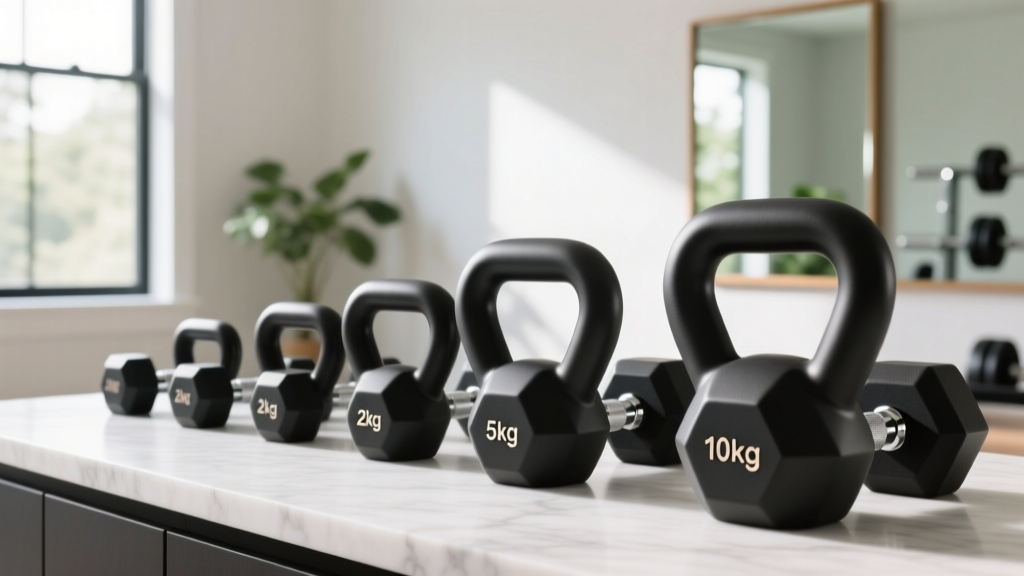
Urethane (specifically virgin polyurethane elastomer) is the undisputed king of commercial free weights, championed by brands like Rogue Fitness and Eleiko. Unlike rubber, urethane is synthesized through a chemical reaction between a polyol and a diisocyanate, creating a polymer matrix that is incredibly dense and stable.
- Shore A Hardness: Premium urethane dumbbells measure between 85A and 92A. This high durometer rating means the material is highly resistant to scratching, tearing, and abrasion, while still providing enough micro-elasticity to protect steel internal cores from shattering upon impact.
- Zero Odor and UV Stability: Urethane does not off-gas sulfur compounds. It is entirely odorless and inherently UV-resistant, meaning a set of urethane dumbbells left near a sunlit garage window in 2026 will look identical a decade later.
- Tighter Manufacturing Tolerances: The injection-molding process for urethane allows for weight tolerances of +/- 1%, compared to the +/- 3% to 5% variance often seen in budget rubber hex models.
📊 2026 Market Pricing Snapshot
As of Q1 2026, global polyurethane supply chains have stabilized, slightly lowering the entry cost for urethane. However, a distinct price gap remains:
- Virgin Rubber Hex: $1.35 – $1.85 per pound
- Premium Urethane: $2.90 – $4.20 per pound
Note: Buying full sets (e.g., 5-50 lbs in 5 lb increments) often unlocks bulk freight discounts from direct-to-consumer manufacturers, narrowing the per-pound gap by roughly 15%.
Head-to-Head Market Comparison Matrix
Below is a structured comparison of how these two materials perform across critical metrics for home and commercial gym owners.
| Metric | Rubber Hex (Standard) | Urethane (Premium) |
|---|---|---|
| Average Cost (per lb) | $1.50 | $3.50 |
| Shore A Durometer | 70A - 80A (Softer) | 85A - 92A (Denser) |
| Odor / VOCs | High (requires weeks to off-gas) | None (Zero VOCs) |
| Drop Durability | Moderate (prone to tearing) | Exceptional (highly tear-resistant) |
| Lifespan Estimate | 3 - 7 Years | 15+ Years / Lifetime |
| Weight Tolerance | +/- 3% to 5% | +/- 1% or better |
Finding the Best Dumbbell Weight for Beginners: A 2026 Buyer's Framework
If you are just starting your fitness journey, navigating the pricing and material jargon can be overwhelming. The American Council on Exercise (ACE) consistently emphasizes that beginners require equipment that promotes safety, consistency, and confidence. When determining the best dumbbell weight for beginners, material choice directly impacts the user experience, particularly regarding grip security and spatial awareness.
Scenario A: The Budget-Conscious Apartment Dweller
Recommendation: Light-to-Medium Rubber Hex Set (e.g., 10 lb to 30 lb pairs).
Why: If your budget is strictly capped under $150, rubber hex is the only viable option. Beginners focusing on high-repetition isolation movements (like lateral raises or bicep curls) rarely drop weights, mitigating the tearing risk of rubber. Crucial Tip: To combat VOC off-gassing in an apartment, unbox the dumbbells and leave them in a garage or balcony for 14 days before bringing them indoors. Wipe them down with a mild dish soap solution to remove the surface mold-release agents used in manufacturing.
Scenario B: The Long-Term Home Gym Investor
Recommendation: Entry-Level Urethane Set (e.g., 15 lb to 40 lb pairs) or a High-Quality Adjustable Urethane System.
Why: For beginners who have dedicated a spare room or garage to a permanent gym setup, urethane is a non-negotiable upgrade. The lack of odor makes indoor training pleasant, and the high durometer rating means the dumbbells won't leave black scuff marks on your luxury home gym flooring. Furthermore, as a beginner progresses to compound movements like dumbbell Romanian deadlifts (RDLs) or renegade rows, the superior structural integrity of urethane prevents the catastrophic splitting that plagues aging rubber hex bells.
"The biggest mistake beginners make in 2026 is buying a massive 5-50 lb rubber hex set for a small, unventilated bedroom. The off-gassing will ruin the space. Buy a smaller, premium urethane set, or invest in a modern adjustable dumbbell system with urethane-coated plates to maximize space and air quality."
— FitGearPulse Equipment Testing Lab, 2026 Report
Future Forecast: Sustainability and Bio-Based Polymers
Looking ahead, the free weight manufacturing sector is heavily investing in sustainability. The environmental toll of vulcanized rubber disposal has prompted major manufacturers to explore bio-based polyurethanes derived from castor oil and soybean polyols. While currently limited to high-end commercial contracts, early market indicators suggest that eco-friendly urethane blends will hit the consumer direct-to-market by late 2027, potentially lowering the price point of premium dumbbells while eliminating the petroleum-based carbon footprint.
Additionally, advancements in steel knurling for the handles are bridging the gap between rubber and urethane sets. Brands are now utilizing hardened chrome or stainless steel handles with medium-depth volcano knurling across both tiers, meaning beginners no longer have to sacrifice grip quality just because they opted for a budget rubber hex model.
Final Verdict: Where Should Your Money Go?
The market in 2026 offers unprecedented clarity. Rubber hex dumbbells remain the undisputed champion of sheer volume and budget accessibility, perfectly suited for beginners who need light weights for rehabilitation, mobility, or high-rep burnout sets and have the outdoor space to let them off-gas. However, urethane represents the true gold standard for longevity, safety, and indoor air quality.
When selecting the best dumbbell weight for beginners, do not just look at the number stamped on the side of the bell. Evaluate the environment where you will be training, your sensitivity to chemical odors, and your 5-year fitness roadmap. Investing in urethane today means you will never have to replace your foundational free weights, allowing you to focus entirely on what matters most: your training.
More gear to consider
All reviews
Loadable Dumbbell ROI: Budget Analysis & Exercises with Dumbbells PDF
Neoprene Female Dumbbells: Complete Home Gym Setup
Power Rack vs Squat Stand: Dumbbell Hammer Curl to Press Guide

Olympic vs Standard Plates & Lat Exercises with Dumbbells at Home

Standard vs Olympic Plates for Your Sitting Dumbbell Workout Setup