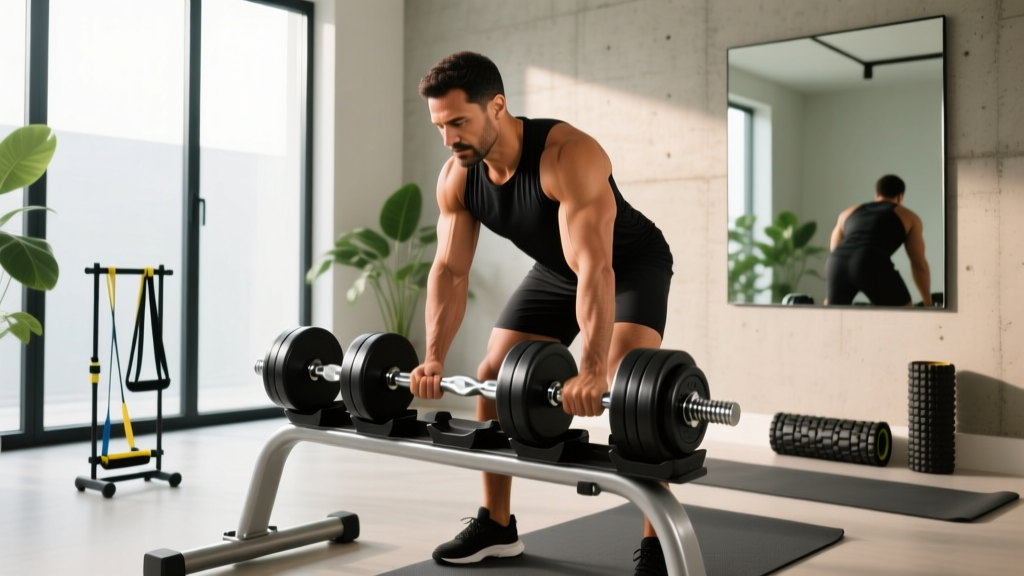
What Do Dumbbell Presses Work? 2026 Adjustable Dumbbell Setup & Review
Discover what muscles dumbbell presses work and explore our 2026 adjustable dumbbell comparison, complete with a full home gym setup walkthrough.

The Biomechanics: What Do Dumbbell Presses Work?
Before unboxing your new adjustable dumbbells and assembling your pressing station, it is critical to understand the biomechanical demands of the movement. The dumbbell chest press is a multi-joint, compound pushing exercise that primarily targets the pectoralis major. Unlike the barbell bench press, the dumbbell variation allows for a deeper eccentric stretch and independent limb movement, which recent kinesiology studies highlight as superior for stretch-mediated hypertrophy.
According to the American Council on Exercise (ACE), the primary movers and stabilizers include:
- Primary Movers: Pectoralis major (sternal head for flat presses, clavicular head for incline presses), anterior deltoid, and triceps brachii (lateral and medial heads).
- Synergists & Stabilizers: Serratus anterior, coracobrachialis, and the rotator cuff complex (supraspinatus, infraspinatus, teres minor, and subscapularis), which work isometrically to stabilize the glenohumeral joint at the bottom of the pressing arc.
Because adjustable dumbbells often feature bulkier end-caps or cage designs compared to traditional fixed hex dumbbells, understanding the exact range of motion (ROM) your equipment allows is vital for maximizing pectoral activation without impinging the shoulder capsule. For a complete anatomical breakdown of the pressing arc, refer to the ExRx.net Dumbbell Bench Press kinesiology database.
2026 Adjustable Dumbbell Comparison for Pressing
Not all adjustable dumbbells are created equal, especially when it comes to the biomechanics of the chest press. The physical footprint of the weight blocks can dictate whether you achieve full horizontal adduction at the top of the movement. Below is our 2026 comparison matrix of the top three adjustable dumbbells for pressing.
| Model | Max Weight | Handle Length | Footprint / Clunk Factor | 2026 Price (Pair) | Pressing Suitability |
|---|---|---|---|---|---|
| Nuobell 80lb | 80 lbs | Standard (5.9') | Compact; mimics fixed DBs | $329 | Excellent (Allows full ROM) |
| PowerBlock Elite EXP | 50-90 lbs | Caged (12') | Bulky cage; zero clunk | $399 | Good (Cage limits deep incline) |
| Bowflex SelectTech 552 | 52.5 lbs | Standard (5.5') | Wide end-caps; high clunk | $299 | Fair (Ends collide at peak contraction) |
Complete Setup & Installation Walkthrough
Purchasing the right adjustable dumbbells is only half the battle. A proper pressing station requires precise spatial planning to ensure safety, equipment longevity, and optimal lifting mechanics. Follow this step-by-step installation walkthrough to build a professional-grade adjustable dumbbell pressing station in your home gym.
Step 1: Flooring and Vibration Dampening
Adjustable dumbbells contain intricate internal selector mechanisms (pins, dials, or magnetic locks). Dropping them on bare concrete or thin foam tiles will instantly void your warranty and shatter the internal casing.
- Purchase 3/4' Vulcanized Rubber Mats: Standard horse stall mats (typically 4x6 feet, costing around $55 each) provide the necessary density to absorb impact.
- Layout: Place two mats side-by-side to create an 8x6 foot pressing zone. This ensures that if you need to bail on a heavy incline press and drop the dumbbells to the floor, they land on high-density rubber, not the seams of interlocking foam tiles.
Step 2: FID Bench Selection and Assembly
For adjustable dumbbell pressing, a Flat/Incline/Decline (FID) bench is mandatory. We recommend the Rep Fitness AB-3100 2.0 ($249), which features a 12-inch pad height (ideal for shorter lifters to maintain foot drive) and a 1,000 lb capacity.
- Assembly Torque Specs: When assembling the main pivot bolts connecting the back pad to the ladder frame, use a torque wrench set to 80 Nm. Under-torquing leads to lateral wobble during heavy eccentric lowering; over-torquing can strip the zinc-alloy threads.
- Pad Gap Check: Ensure the gap between the seat and back pad is less than 1.5 inches when set to 30 degrees (the optimal incline angle for targeting the clavicular pec head without over-recruiting the anterior deltoid).
Step 3: Adjustable Dumbbell Base & Rack Installation
Where you place the dumbbell trays dictates your setup efficiency and safety.
Warning: Never place Bowflex SelectTech dumbbells on an uneven surface or the sloped edge of a mat. The internal safety catch requires the base to be perfectly level. If tilted more than 2 degrees, the dial will lock, preventing you from changing weights.
For floor trays, position them exactly 18 inches from the edge of the bench pad. This distance allows you to perform the 'knee-kick' technique for heavy flat presses—where you rest the dumbbells on your thighs and use your leg drive to initiate the lift—without overextending your lumbar spine.
Troubleshooting Common Adjustable Dumbbell Failures
Even premium 2026 models experience mechanical hiccups. Here is how to troubleshoot the most common failure modes specific to pressing setups:
1. The Dial/Pin Refuses to Engage
The Issue: You place the dumbbell in the cradle, but the selector pin won't drop, or the dial won't turn.
The Fix: This is almost always caused by 'plate misalignment' from setting the dumbbell down too hard. Lift the dumbbell straight up, tap the bottom plate gently against the rubber mat to realign the internal stack, and place it back into the cradle with zero lateral force. For Nuobell models, ensure the handle is perfectly parallel to the cradle edge; a 5-degree skew will prevent the top-plate guide from seating.
2. Wrist Interference on Incline Presses
The Issue: When pressing on a 45-degree incline, the weight cage or wide end-caps dig into your forearms at the bottom of the eccentric phase.
The Fix: Adjust your grip. If using PowerBlocks, move your hand slightly off-center within the cage to increase forearm clearance. If using Nuobell or Bowflex, focus on tucking your elbows to a 45-degree angle from your torso rather than flaring them to 90 degrees. This not only clears the physical bulk of the adjustable plates but also drastically reduces the risk of acromioclavicular (AC) joint impingement.
Final Thoughts on Your Pressing Station
Understanding what muscles dumbbell presses work is the foundation of your programming, but executing the movement safely and effectively requires the right hardware and a meticulously planned setup. By selecting a compact adjustable dumbbell like the Nuobell 80lb, pairing it with a properly torqued FID bench, and installing high-density rubber flooring, you create a commercial-grade pressing environment that maximizes pectoral hypertrophy while protecting your equipment's internal mechanics.
More gear to consider
All reviews
Women's Dumbbell Workout Routine PDF Free Download: Time for a Rack?

EZ Curl vs Straight Bar Care: Longevity for Arm Days & Exercises for Pectoral Muscles with Dumbbells

EZ Bar vs Straight Bar: Curls and the Dumbbell Low Fly

How to Get Chest Muscles With Dumbbells: Loadable Plate Guide

Space-Saving Ladies Dumbbell Workout With Loadable Plates
