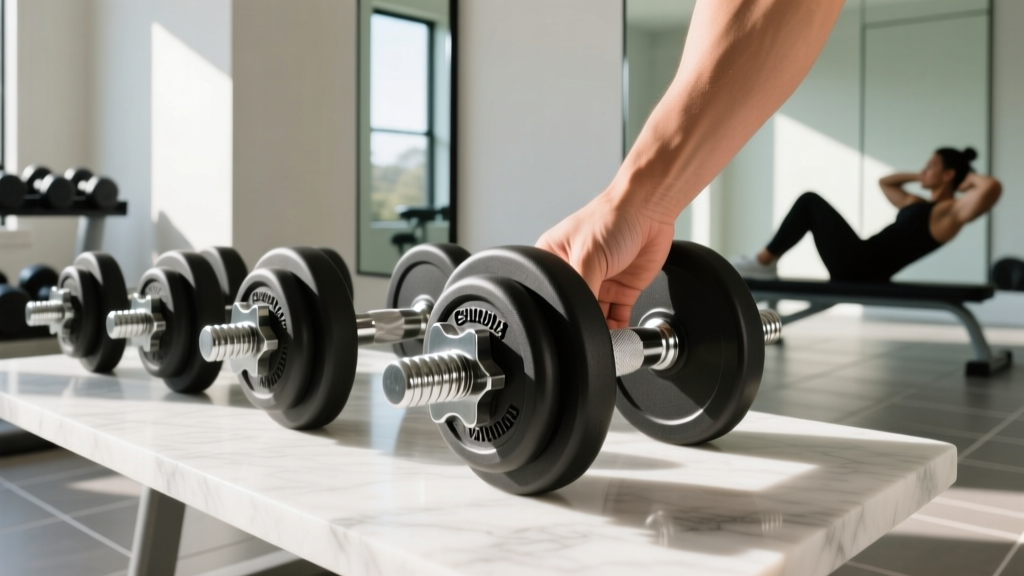
Dumbbell Lat Pulldown GIF Guide: Neoprene Home Gym Setup
Discover how to mimic a lat pulldown with neoprene dumbbells. This step-by-step guide covers form, biomechanics, and the best home gym gear for 2026.

The Home Gym Dilemma: Training Lats Without a Cable Machine
Building a home gym is one of the most rewarding investments you can make in your health, but it comes with distinct spatial and financial limitations. When beginners first realize their home setup lacks a $2,000 cable crossover tower, their immediate instinct is often to open a browser and search for a dumbbell lat pulldown gif. They want a visual guide to hitting their back muscles with the limited equipment they have.
The reality of physics, however, is unforgiving. Gravity only pulls straight down. A traditional cable lat pulldown relies on a pulley system to provide upward resistance, allowing for shoulder adduction. You cannot perfectly replicate a vertical cable pull with free weights. But do not let that discourage you. By understanding biomechanics and utilizing the right equipment—specifically neoprene-coated dumbbells—you can effectively target the exact same muscle fibers through shoulder extension.
This step-by-step guide will bridge the gap between your search intent and real-world application, showing you exactly how to train your latissimus dorsi at home while explaining why neoprene dumbbells are the superior choice for beginner home gyms in 2026.
Why Neoprene Dumbbells Are the Ultimate Beginner Investment
Before we break down the movement, we must address the tool. Neoprene (polychloroprene) is a synthetic rubber that has become the gold standard for light-to-medium home gym dumbbells. Unlike bare cast iron, vinyl, or urethane, neoprene offers a unique set of benefits tailored for beginners operating in shared living spaces.
The Tactile and Practical Advantages
- Enhanced Grip Friction: Neoprene provides a slightly tacky surface. When your hands get sweaty during high-rep back training, this micro-texture prevents the dumbbell from slipping, reducing the need for excessive grip crushing that can prematurely fatigue your forearms before your lats give out.
- Floor and Noise Protection: Dropping a 20 lb cast iron dumbbell on hardwood or laminate flooring will cause immediate structural damage. Neoprene's shock-absorbing properties protect your floors and drastically reduce acoustic impact, making them ideal for apartment dwellers.
- Color-Coded Progression: Most manufacturers use a strict color-grading system for neoprene dumbbells (e.g., 10 lbs are usually green, 15 lbs are blue, 20 lbs are orange). This allows for rapid weight changes during drop sets without having to squint at engraved numbers.
When shopping for neoprene dumbbells, ensure the handle is bare, knurled steel or chrome. Some budget brands coat the entire dumbbell, including the handle, in neoprene. This creates a frictionless, slippery hazard when you sweat, severely compromising your safety during overhead and pulling movements.
Biomechanics: The Truth Behind the 'Dumbbell Lat Pulldown'
According to kinesiology data from ExRx.net, the latissimus dorsi is a massive, fan-shaped muscle responsible for three primary shoulder movements: extension, adduction, and internal rotation. A cable lat pulldown primarily utilizes adduction (pulling the arm down toward the side of the body from an overhead position).
Since dumbbells cannot pull upward, we must pivot to shoulder extension (pulling the arm from a forward, elevated position back down to the torso). The most effective exercise to achieve this is the Straight-Arm Dumbbell Pullover. While it is not a 1:1 clone of a cable pulldown, EMG (electromyography) studies show that heavy pullovers elicit massive latissimus dorsi activation, making it the premier free-weight alternative for home gym enthusiasts.
Step-by-Step Guide: The Dumbbell Pullover (Your GIF Alternative)
Since we cannot embed an actual animated file here, consider this your ultimate, frame-by-frame textual replacement for that elusive dumbbell lat pulldown gif. Follow these instructions meticulously to isolate the lats and remove the triceps and chest from the movement.
Step 1: The Setup and Bench Placement
Lie perpendicular across a flat bench, supporting only your upper back and shoulders. Your hips should drop slightly below the level of the bench. This 'bridged' position stretches the abdominal wall and limits the range of motion at the shoulder joint, keeping the tension squarely on the lats rather than the ribcage.
Step 2: The Diamond Grip
Take a single neoprene dumbbell. Grasp the inner plate (the top head of the dumbbell) with both hands. Form a diamond or triangle shape with your thumbs and index fingers. Pressing your palms flat against the smooth neoprene coating ensures a secure hold. Keep your arms almost entirely straight, with only a 5-to-10-degree micro-bend in the elbows to protect the joint capsule.
Step 3: The Eccentric Phase (Lowering)
Slowly lower the dumbbell backward over your head. This is where the magic happens. Take a full 3 to 4 seconds to lower the weight. Stop when your upper arms are roughly parallel to the floor, or when you feel a deep stretch in your armpits and lats. Do not let your hips rise during this phase.
Step 4: The Concentric Phase (The 'Pulldown' Pull)
Initiate the pull by driving your elbows down toward your hips, imagining you are trying to squeeze a towel between your lat muscles and your spine. Pull the dumbbell back over your chest, but stop before the dumbbell is directly over your face. Stopping at a 45-degree angle maintains constant mechanical tension on the lats; bringing it all the way to your chest shifts the load to your skeletal structure and gives the muscle a rest.
2026 Neoprene Dumbbell Comparison Matrix
Not all neoprene is created equal. The market in 2026 is flooded with options, but durability and handle ergonomics separate the professional gear from the disposable imports. Below is a breakdown of the top contenders for home use.
| Brand & Model | Core Material | Handle Type | Avg. Price per Lb (2026) | Best For |
|---|---|---|---|---|
| CAP Barbell Neoprene | Solid Cast Iron | Chrome, Ergonomic Taper | $1.60 - $1.90 | Overall Durability |
| Yes4All Neoprene | Cast Iron | Chrome, Straight Hex | $1.20 - $1.50 | Budget Beginners |
| Amazon Basics Neoprene | Cast Iron | Chrome, Straight Hex | $1.40 - $1.70 | Quick Prime Shipping |
| Tone Fitness Soft Grip | Cement/Iron Mix | Fully Coated (Avoid) | $0.90 - $1.10 | Light Rehab Only |
Maintenance: Preventing Neoprene Degradation
A common failure mode for home gym equipment is chemical degradation. Human sweat is mildly acidic, and when left on synthetic rubber, it will eventually cause the neoprene to dry out, crack, and peel at the handle junction.
Cleaning Protocol: Never use bleach, Lysol, or high-alcohol gym wipes on neoprene dumbbells. The harsh solvents strip the plasticizers from the rubber. Instead, wipe them down after every session with a microfiber cloth dampened with warm water and a single drop of mild dish soap. Dry them immediately to prevent moisture from seeping into the microscopic seams between the steel handle and the rubber coating.
Frequently Asked Questions
Can I use resistance bands with my neoprene dumbbells to simulate a lat pulldown?
Yes. A highly effective advanced technique is 'accommodating resistance.' You can anchor a resistance band to the bottom of your bench, loop the other end around the handle of your neoprene dumbbell, and perform rows or pullovers. The band provides upward vertical tension, closely mimicking the resistance curve of a cable lat pulldown machine.
What weight should a beginner start with for dumbbell pullovers?
The pullover places the shoulder joint in a highly stretched, vulnerable position. According to guidelines from the American Council on Exercise (ACE), beginners should prioritize kinesthetic awareness over heavy loading. Start with a 10 lb or 15 lb neoprene dumbbell to master the eccentric lowering phase before progressing to heavier weights that risk tearing the pectoral or latissimus fascia.
Why do my triceps burn more than my back during this movement?
If your triceps are taking over, you are bending your elbows too much. The moment you bend the elbow past 15 degrees, the long head of the triceps engages to extend the arm, turning the exercise into a triceps extension rather than a lat pullover alternative. Lock your elbow angle in place and move strictly from the shoulder joint.
More gear to consider
All reviews
Olympic vs Standard Plates: Setup for the Best Dumbbell Back Workout
Mastering Glute Bridges With Dumbbells: Best Loadable Picks 2026

Beyond Dumbbells Etymology: Olympic Barbell Weight & Knurling Setup

Rack Layouts & Clearance for the Double Dumbbell Hang Snatch

Budget Racks for Amazon Basics Neoprene Dumbbell Hand Weights