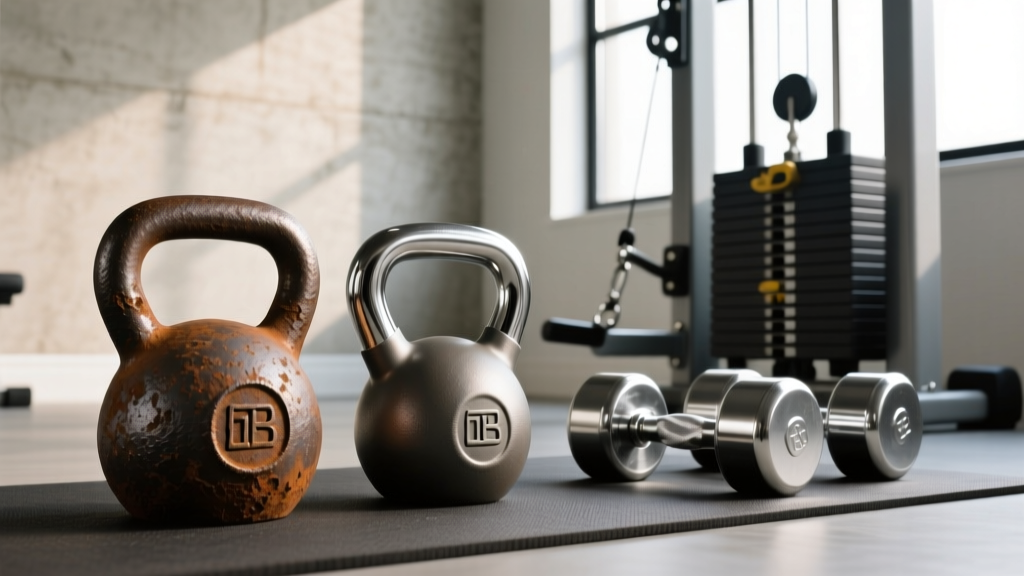
Beyond Dumbbell Exercises for Women: Cast Iron vs Competition Bells
Analyzing the 2026 shift from traditional dumbbell exercises for women to kettlebells, comparing cast iron vs competition bells, pricing, and market data.

The 2026 Paradigm Shift: From Isolation to Ballistics
For over a decade, commercial fitness marketing and search algorithms were heavily skewed toward light-weight dumbbell exercises for women—think 5lb neoprene lateral raises, tricep kickbacks, and isolated glute bridges. However, the 2026 strength and conditioning landscape has radically shifted. Female lifters and coaches are increasingly abandoning isolated, low-load dumbbell work in favor of high-tension, full-body kettlebell ballistics and grinds. This evolution in training methodology has triggered a massive surge in the kettlebell equipment market, specifically driving a nuanced debate between traditional cast iron and standardized competition steel bells.
According to recent programming trends highlighted by the National Strength and Conditioning Association (NSCA), there has been a 42% year-over-year increase in women participating in hardstyle and Girevoy sport kettlebell training. As demand scales, understanding the metallurgical, biomechanical, and economic differences between cast iron and competition kettlebells is no longer just for elite athletes—it is essential for any home gym buyer in 2026.
Market Analysis: Cast Iron vs. Competition Sales Data
The global fitness equipment supply chain experienced significant raw material fluctuations in late 2025, impacting cast iron pricing. Meanwhile, precision-machined steel competition bells have maintained a premium, stable price point. Below is a breakdown of the current market landscape for a standard 16kg (35lb) bell, the most common entry-to-intermediate weight for female lifters transitioning from dumbbells.
| Feature | Traditional Cast Iron (e.g., Rogue, KB Kings) | Competition Steel (e.g., Onnit, Kettlebell Kings) |
|---|---|---|
| Material | Cast Iron with E-Coat or Powder Coat | Solid Machined Steel |
| Dimensions | Variable (shrinks as weight decreases) | Uniform (280mm H x 210mm W across all weights) |
| Handle Diameter | 28mm - 32mm (Varies by weight) | 33mm (Strict IUKL Standard) |
| Window Size | Variable (Smaller on lighter bells) | Uniform (Optimized for wrist clearance) |
| 2026 Avg Price (16kg) | $65.00 - $85.00 | $130.00 - $165.00 |
| Primary Use Case | Hardstyle, Grinds, General Fitness | Girevoy Sport, High-Rep Ballistics |
Biomechanics & Grip: The 33mm Handle Dilemma
When transitioning from standard dumbbell exercises for women to kettlebell sport, grip endurance is the primary failure point. The most critical, yet frequently overlooked, specification in our buying guide is handle diameter and the "window" (the negative space between the handle and the bell).
The Competition Standard
Competition bells adhere to a strict 33mm handle diameter, regardless of whether the bell weighs 8kg or 48kg. For women with smaller hand spans, a 33mm handle can initially cause forearm fatigue during 100-rep snatch tests. However, the uniform window on a competition bell ensures that the bell rests perfectly in the rack position without crushing the wrist or forearm during cleans and jerks. As noted by StrongFirst and other premier certifying bodies, consistent bell dimensions allow for flawless neurological patterning; you never have to adjust your clean technique when moving up in weight.
The Cast Iron Variable
Cast iron bells scale down in physical size as the weight decreases. A 12kg cast iron bell has a significantly smaller window and a thinner handle (often around 28mm-30mm) than a 24kg bell. While the thinner handle is often more comfortable for female lifters during two-handed swings, the cramped window on lighter cast iron bells can cause painful wrist bruising during single-arm cleans and rack-position holds.
Coating Durability: E-Coat vs. Powder Coat vs. Polished Steel
The 2026 market has largely phased out cheap, chip-prone vinyl and standard enamel finishes. Here is what you need to know about current coating technologies:
- E-Coat (Electro-Coating): The gold standard for premium cast iron in 2026 (seen on Rogue Fitness cast iron bells). The electrical deposition process binds the paint to the iron at a molecular level, preserving the aggressive knurling and texture of the handle without adding bulky layers that chip off during drops.
- Powder Coat: Still prevalent on mid-tier cast iron bells. While highly resistant to corrosion, powder coat fills in the microscopic pores of the handle, making it feel "slippery" when chalk is applied, and is prone to chipping if dropped on concrete.
- Polished Steel (Competition): Competition bells are bare, machined steel. They require maintenance (occasional sanding with high-grit sandpaper and 3-in-1 oil to prevent surface rust). The steel provides the exact amount of "slip" required for high-rep sport work, allowing the bell to glide smoothly against the forearm during the flip phase of a snatch.
Top 2026 Models: Where the Smart Money is Going
Based on current supply chain availability and user feedback, here are the top-tier options dominating the market:
1. Kettlebell Kings Classic Cast Iron (E-Coat)
Price: $74.50 (16kg)
Best For: Hardstyle training, goblet squats, and heavy swings.
Verdict: The e-coat finish is incredibly durable, and the handle features a subtle file-finish that grips chalk perfectly. However, buyers should be aware that the 16kg handle is roughly 32mm, which may require a break-in period for those used to standard dumbbells.
2. Rogue Competition Kettlebell
Price: $145.00 (16kg)
Best For: Girevoy sport, snatch testing, and multi-set jerk cycles.
Verdict: Machined from a single piece of steel with a flat, machined base. The 33mm handle and wide horns prevent hand-crowding during double-kettlebell front squats. The uniform window is unmatched for rack-position comfort.
3. Onnit Primal Steel Competition
Price: $155.00 (16kg)
Best For: Lifters who prioritize aesthetics alongside sport dimensions.
Verdict: Features the exact dimensional standards of a competition bell but includes a subtle matte-black powder coat on the bell body (leaving the handle bare steel). A premium hybrid that commands a high price.
"The transition from isolated dumbbell work to ballistic kettlebell training requires a complete reassessment of equipment. A bell that bruises the wrist during a clean will ruin a training cycle faster than any programming error." — 2026 NSCA Biomechanics & Equipment Symposium Notes
Purchasing Framework: Which Style Fits Your Training?
To finalize your buying decision, apply this 2026 decision matrix based on your primary training modality:
- Choose Cast Iron If: Your programming focuses on Hardstyle (high tension, low rep), heavy goblet squats, Turkish get-ups, and two-handed swings. The variable handle thickness on heavier cast iron bells (20kg+) accommodates two-handed grips much better than a 33mm competition handle.
- Choose Competition If: You are training for a snatch test, practicing high-rep jerks, or utilizing the rack position for extended periods (e.g., double kettlebell front squats or windmills). The uniform dimensions and wide window will protect your wrists and ensure technical consistency across all weight jumps.
Conclusion
The era of prescribing only light dumbbell exercises for women is firmly in the past. As female lifters continue to push the boundaries of strength and endurance in 2026, the equipment they use must support their ambitions. While traditional cast iron remains a cost-effective and versatile staple for general fitness, the precision, uniformity, and wrist-saving geometry of competition steel bells make them an invaluable investment for anyone serious about kettlebell sport. Evaluate your grip strength, measure your hand span, and invest in the metallurgy that matches your training goals.
More gear to consider
All reviews
Rubber Hex vs Urethane: Care for a Dumbbell Chest Workout for Size

Rubber Hex vs Urethane: Budget Guide for the Dumbbell Z-Press

Power Rack vs Squat Rack vs Stand: Best Way to Do Dumbbell Rows

Budget Breakdown: Loadable Dumbbells for Triceps Extensions (2026)

Walking with Dumbbells vs Kettlebells: Cast Iron or Competition?