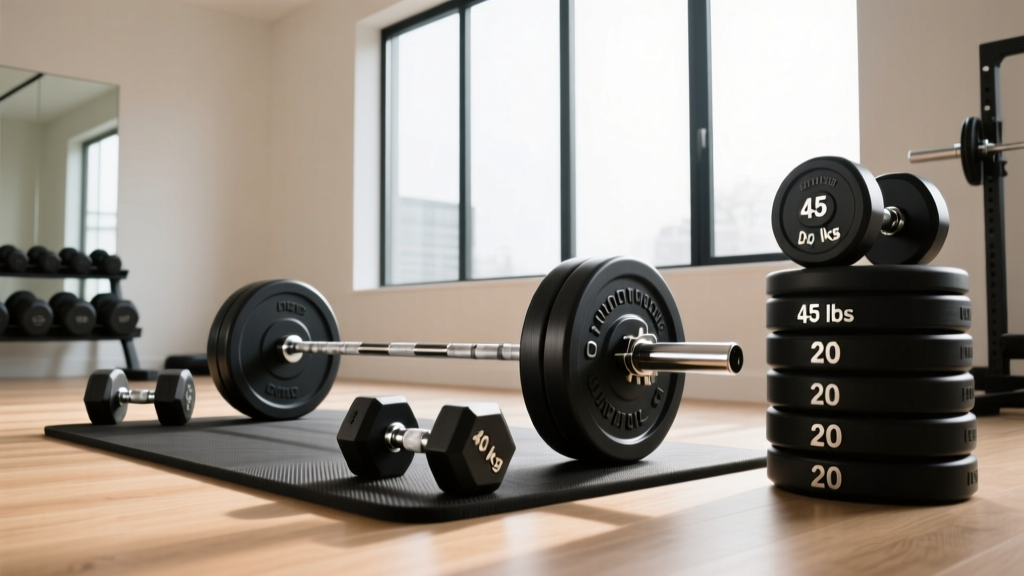
Troubleshooting Dumbbell Deadlifts: Olympic Barbell Weight & Knurling Guide
Struggling with grip during dumbbell deadlifts? Discover how upgrading to the right Olympic barbell weight and knurling fixes common lifting mistakes.

The Limits of Dumbbell Deadlifts: Why Your Grip Fails First
Dumbbell deadlifts are a staple in many hypertrophy and accessory programs, offering a great range of motion and unilateral awareness. However, as lifters progress, they frequently hit a frustrating plateau: the posterior chain is ready for more weight, but the hands simply give out. This is rarely a true muscular failure of the hamstrings or glutes; it is an equipment-induced bottleneck.
Standard commercial hex or urethane dumbbells often feature handle diameters ranging from 32mm to 35mm. This increased thickness forces the fingers open, reducing the mechanical advantage of the thumb lock and accelerating forearm flexor fatigue. When troubleshooting why your dumbbell deadlifts have stalled, the solution often isn't more grip training—it is transitioning to an Olympic barbell. But making that switch requires a deep understanding of barbell weight, tensile strength, and knurling geometry to ensure you don't trade one problem for another.
Troubleshooting Matrix: Dumbbell vs. Olympic Barbell Mechanics
Before investing in a new barbell, it is crucial to understand the biomechanical differences between the two implements. According to biomechanics analyses published by Stronger By Science, the center of mass and grip width drastically alter the moment arm on your lumbar spine and hips.
| Variable | Dumbbell Deadlifts | Olympic Barbell Deadlifts | Troubleshooting Impact |
|---|---|---|---|
| Handle Diameter | 32mm - 38mm (Thick) | 27mm - 29mm (Standard) | Barbells reduce grip fatigue, allowing true posterior chain overload. |
| Center of Mass | Lateral (Outside the feet) | Central (Midline of the body) | Barbells optimize the bar path over the mid-foot, reducing shear force on the lower back. |
| Loading Ceiling | Usually maxes at 100-120 lbs per hand | 500+ lbs easily achievable | Barbells solve the progressive overload bottleneck inherent in most commercial gyms. |
| Inertia Break | Zero whip (Dead stop) | Variable whip (Bends before plates lift) | Barbell 'whip' helps break the floor inertia, sparing the lifter's joints at the start of the pull. |
Decoding Knurling: The Hidden Variable in Pulling Power
When transitioning from the smooth, often rubber-coated handles of dumbbells to raw steel, knurling becomes your primary point of contact. Knurling is the diamond-patterned machining cut into the steel shaft to provide traction. However, not all knurling is created equal, and choosing the wrong pattern is a common mistake that leads to torn calluses and slipped grips.
The Three Knurling Geometries
- Hill Knurling: The peaks of the diamonds are flattened off. It feels smooth and is forgiving on the hands, but it lacks the aggressive bite needed for heavy deadlifts, especially when sweat is a factor.
- Mountain Knurling: The peaks are left sharp and pointy. This provides immense grip but acts like a cheese grater on the shins and tears up calluses during high-volume training.
- Volcano Knurling: The gold standard for modern powerlifting. The machine cuts a rim with a small crater in the middle. This creates more surface area (often yielding 9 peaks per square inch instead of 4) providing a 'velcro-like' grip that bites into the skin without piercing it.
Weight, Whip, and Tensile Strength: Buying the Right Bar
Another common mistake lifters make when abandoning dumbbells is buying a generic, multi-purpose Olympic barbell without considering tensile strength and whip. Tensile strength is measured in PSI (pounds per square inch) and dictates how much weight the bar can hold before permanently bending. More importantly for deadlifts, it dictates the 'whip'—the elastic deformation of the bar.
When you pull a heavy deadlift, a bar with lower tensile strength (around 165k to 190k PSI) will bend upward in the middle before the weight plates actually leave the floor. This allows you to pull the slack out of the bar and build tension in your hamstrings while the bar is already in motion. Dumbbells have zero whip; the moment you pull, the entire load resists you instantly. To replicate a smooth pull and protect your lower back, look for a dedicated deadlift bar or a power bar with specific whip characteristics.
2026 Barbell Recommendations for Former Dumbbell Lifters
Based on current market pricing and performance metrics, here are the top Olympic barbells to solve your dumbbell deadlift limitations:
- Rep Fitness Double Black Diamond Power Bar ($299.99): Features a 29mm shaft with an incredibly aggressive volcano knurl. It has a 200k PSI tensile strength, meaning it is stiff enough for heavy squats but offers just enough feedback for deadlifts. The dual knurl marks help you perfectly center your grip, eliminating the asymmetrical loading issues common with dumbbells.
- Texas Deadlift Bar ($315.00): The ultimate troubleshooting tool for grip fatigue. It features a 27mm diameter (thinner than standard power bars) and 190k PSI tensile strength. The massive whip allows you to pull heavy loads with less initial strain on the lumbar spine. It lacks a center knurl, which is preferred by deadlift specialists.
- American Barbell Elite Power Bar ($345.00): Known for having one of the best volcano knurl patterns in the industry. If your primary issue with dumbbell deadlifts was the bar slipping out of your hands during the lockout phase, the aggressive bite of this stainless steel shaft will solve the problem immediately.
Step-by-Step Transition Protocol
Do not simply swap your 80 lb dumbbells for a 160 lb barbell and expect your nervous system to adapt seamlessly. Follow this troubleshooting protocol to transition safely:
- Week 1: The Grip Adaptation Phase. Use an empty Olympic barbell (45 lbs) or light bumper plates. Focus entirely on the feeling of the 28-29mm knurling in your hands. Practice the double-overhand grip to build specific forearm endurance without the thick handle of a dumbbell.
- Week 2: Mid-Foot Alignment. Dumbbells allow you to pull from the sides of your feet. A barbell must be pulled directly over the mid-foot. Use the center knurl (if your bar has one) or the smooth rings to align your shins exactly 1 inch from the bar before initiating the pull.
- Week 3: Pulling the Slack. Unlike dumbbells, you must 'pull the slack' out of an Olympic barbell. Grip the bar, pull your chest up, and listen for the 'clink' of the bar against the inner sleeve of the weight plates before you drive your legs into the floor.
- Week 4: Load Matching. Calculate your previous dumbbell deadlift max, add 10-15% to account for the increased biomechanical efficiency of a centered barbell load, and begin your new progressive overload cycle.
'The transition from dumbbell to barbell deadlifts isn't just about adding weight; it is about optimizing the force vector. A properly knurled, correctly whipped Olympic barbell turns a grip-limited accessory movement into a premier central nervous system developer.' — BarBend Editorial Team
Frequently Asked Questions
Do I need a center knurl for deadlifts?
No. While a center knurl is vital for squatting to keep the bar from sliding on your back, it serves little to no purpose in the deadlift. In fact, many dedicated deadlift bars omit the center knurl entirely to prevent the sharp steel from scraping your shins during the pull.
Can I just use lifting straps instead of buying a new barbell?
Lifting straps are a valid troubleshooting tool for grip fatigue. However, they do not solve the asymmetrical loading path or the limited loading ceiling of commercial dumbbells. Straps should be used in conjunction with an Olympic barbell for top sets, not as a permanent crutch for inadequate dumbbell equipment.
How much should I budget for a high-quality deadlift bar in 2026?
Expect to spend between $280 and $350 for a premium, USA-made or high-tier imported Olympic barbell with proper volcano knurling and reliable tensile strength ratings. Bars priced under $150 typically feature shallow hill knurling and low-grade steel that will permanently bend under heavy deadlift loads.
More gear to consider
All reviews
Budget Loadable Gear for a Back and Tricep Workout with Dumbbells

Dumbbell Rack Care After Core Dumbbells Exercise Routines

Olympic Barbell Weight & Knurling Guide: Upgrading Past the 100 kg Dumbbell
Bumper vs Iron Plate Trends: Gear for the Dumbbell Chest Fly Exercise
Incline Dumbbell Chest Setup: Power Rack vs Squat Rack Mistakes
