
Dumbbell Curl Weight for Beginners: A Neoprene Home Guide
Discover the ideal dumbbell curl weight for beginners. Our step-by-step guide covers neoprene coated dumbbells for home use, sizing, and form tips.

Building a home gym in 2026 requires balancing budget, space, and equipment longevity. When isolating the biceps, selecting the correct dumbbell curl weight for beginners is a common stumbling block. Lift too heavy, and you compromise your form and elbow tendons; lift too light, and you fail to trigger muscular adaptation. Furthermore, the material of your dumbbells matters immensely in a residential setting. Neoprene-coated dumbbells have become the gold standard for apartment dwellers and home gym owners due to their floor-friendly and noise-dampening properties.
This comprehensive, step-by-step guide will walk you through the material science of neoprene, how to accurately test and select your starting curl weight, and the exact biomechanics required to maximize bicep hypertrophy while avoiding common beginner pitfalls.
The Material Science: Why Neoprene for Home Use?
Neoprene (polychloroprene) is a synthetic rubber that offers a distinct tactile and functional advantage over bare cast iron, rubber, and even premium urethane for casual home use. Understanding its physical properties helps explain why it dominates the beginner and light-commercial market.
- Shore A Durometer Rating: Neoprene dumbbells typically register between 60 and 70 on the Shore A hardness scale. By comparison, urethane sits at 85-90. This softer density means neoprene absorbs kinetic energy efficiently, preventing damage to hardwood, laminate, or tile floors if a weight is accidentally dropped from waist height.
- Acoustic Dampening: The porous nature of the neoprene coating drastically reduces the 'clank' of metal-on-metal or metal-on-floor, making it ideal for early morning or late-night workouts in shared living spaces.
- Chemical Resistance: High-quality neoprene resists degradation from the salts and oils found in human sweat, provided it is wiped down with a mild, non-bleach antibacterial wipe post-workout.
Step-by-Step: Finding Your Ideal Dumbbell Curl Weight
According to guidelines published by the Mayo Clinic on strength training, beginners should select a weight that allows them to complete 12 to 15 repetitions with proper form, reaching a point where the last few reps feel challenging but doable. Guessing this weight leads to frustration. Instead, use the Two-Rep Reserve (2RR) Testing Protocol.
Step 1: Establish a Baseline
Statistical averages suggest that untrained adult males typically start their bicep isolation journey with 10 lb to 15 lb dumbbells per hand, while untrained adult females often find the 5 lb to 8 lb range optimal. Grab a pair of dumbbells slightly below what you think your max is.
Step 2: Execute the Strict Form Test
Stand with your back against a wall to eliminate momentum (swinging). Perform continuous, controlled dumbbell curls. Take 1 second to lift the weight (concentric phase) and 2 seconds to lower it (eccentric phase).
Step 3: Assess the Reserve
Stop the set when you feel you could only possibly complete two more reps before total muscular failure.
- If you stopped before 10 reps: The weight is too heavy. Drop down by 2.5 to 5 lbs.
- If you easily surpassed 15 reps: The weight is too light. Increase by 2.5 to 5 lbs.
- If you failed between rep 12 and 15: You have found your perfect beginner dumbbell curl weight.
2026 Neoprene Dumbbell Market Comparison
Not all neoprene coatings are created equal. Cheaper manufacturers use thin 1.5mm layers that peel over time, while premium brands use 3mm+ vulcanized coatings. Below is a comparison of the top neoprene dumbbell lines for home gyms in 2026, analyzing price-per-pound and handle ergonomics.
| Brand & Model | Avg. Price / Lb | Handle Design | Coating Quality |
|---|---|---|---|
| Amazon Basics Neoprene Hex | $1.65 | Straight Cylindrical | Good (2mm) |
| CAP Barbell Neoprene Hex | $1.95 | Ergonomic Contour | Excellent (3mm) |
| Yes4All Neoprene Coated | $1.35 | Straight Cylindrical | Fair (1.5mm) |
| Tone Fitness Soft Neoprene | $2.10 | Ergonomic Contour | Very Good (2.5mm) |
Buying Advice: If you are buying specifically for curls, prioritize the Ergonomic Contour handles (like those from CAP Barbell or Tone Fitness). The slight bulge in the center of the handle prevents the dumbbell from rolling out of your hand as your grip fatigues during the final reps of a set.
Execution: The Biomechanics of the Supinated Curl
Once you have your correctly sized neoprene dumbbells, execution is paramount. The biceps brachii has two primary functions: elbow flexion and forearm supination (turning the palm upward). To fully stimulate the muscle, you must incorporate both. According to the biomechanical databases at ExRx.net, failing to supinate leaves the brachialis to do the majority of the work, under-stimulating the bicep peak.
- The Setup: Stand with feet shoulder-width apart. Hold the dumbbells at your sides with a neutral grip (palms facing your thighs).
- The Concentric Phase (Lifting): As you begin to curl the weight upward, simultaneously rotate your wrist so that your palm faces the ceiling by the time the dumbbell reaches shoulder height. Exhale during this exertion.
- The Peak Contraction: Squeeze the bicep hard at the top for a full 1-second pause. Do not let the dumbbell drift forward over your shoulder; keep your elbows pinned to your ribs.
- The Eccentric Phase (Lowering): Slowly reverse the motion. Pronate the wrist (turn it back to neutral) as you lower the weight, taking a full 2 to 3 seconds to reach the bottom. The Cleveland Clinic notes that controlling the eccentric phase is crucial for beginners to build tendon resilience and prevent injury.
Edge Cases and Failure Modes: The 'Neoprene Slip'
While neoprene is fantastic for floor protection, it introduces a specific failure mode that bare cast iron does not: sweat slickness. Cast iron handles feature 'knurling' (cross-hatched diamond patterns cut into the metal) that bites into the skin for grip. Neoprene is smooth. When your hands sweat, the moisture creates a hydroplaning effect between your skin and the rubber coating.
Warning: If you experience grip slipping on heavy eccentric curls, you risk dropping the weight on your feet or straining your wrist flexors as they overcompensate to hold onto the dumbbell.
How to Mitigate Neoprene Slickness
- Use Liquid Chalk: A small dab of magnesium carbonate liquid chalk dries out the palms and creates a high-friction bond with the neoprene coating. Unlike powder chalk, liquid chalk won't stain your home gym floors or furniture.
- Towel Wipes: Keep a microfiber towel draped over your rack. Wipe the neoprene handles and your palms between every single set.
- Wear Lifting Gloves: While bare hands are generally preferred for grip strength development, beginners using neoprene in high-humidity environments (like a garage gym in summer) may benefit from thin, silicone-palmed fitness gloves to maintain a secure hold during the curl.
Frequently Asked Questions
Can I build significant muscle mass with neoprene dumbbells?
Yes. Muscle tissue responds to mechanical tension, not the material of the equipment. As long as you apply progressive overload—gradually increasing the weight or reps over time—you will build muscle. However, neoprene sets usually cap out at 20 or 25 lbs per dumbbell. Once you can curl 25 lbs for 15 strict reps, you will need to invest in heavier adjustable or urethane dumbbells to continue progressing.
How do I clean and maintain my neoprene dumbbells?
Never use bleach or harsh chemical solvents on neoprene, as this breaks down the polychloroprene bonds, causing the coating to become sticky and eventually peel. Use a simple solution of warm water and a few drops of mild dish soap on a microfiber cloth to wipe them down after use. Store them out of direct UV sunlight, as prolonged UV exposure will fade the colors and dry out the rubber.
Should I buy hex-shaped or round neoprene dumbbells?
Always opt for hex-shaped (hexagonal) heads for home use. Round dumbbells will roll away when placed on the floor or on furniture, creating a tripping hazard and potentially damaging baseboards. Hex dumbbells stay exactly where you put them, which is vital for safety during drop-sets or circuit training.
More gear to consider
All reviews
Best Layouts for Cold Climates: Engineering Thermal Efficiency, Airflow, and Occupant Comfort

Top Adjustable Dumbbells for Your Dumbbell Chest Workout (2026)
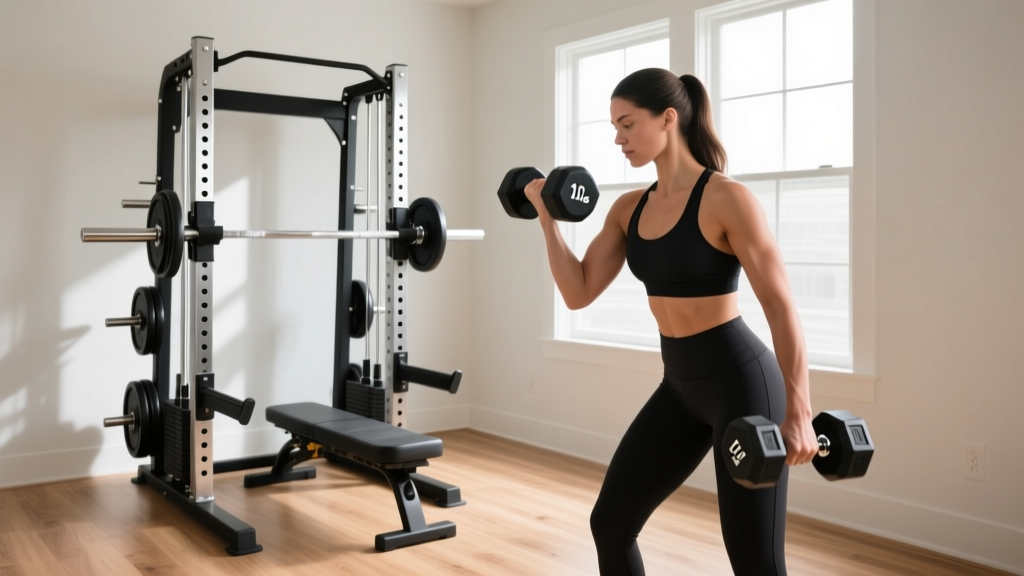
Power Rack vs Squat Stand Mistakes & Dumbbell Arm Workout for Ladies
Dumbbell to Bench Press Calculator & Olympic Bar Guide

Beyond Dumbbell Types: Barbell Collar and Clamp Types Compared
