Olympic vs Standard Plates for a Dumbbell Chest Workout Without Bench
Compare Olympic and standard weight plates to optimize your home gym setup for an effective dumbbell chest workout without bench. Expert guide inside.

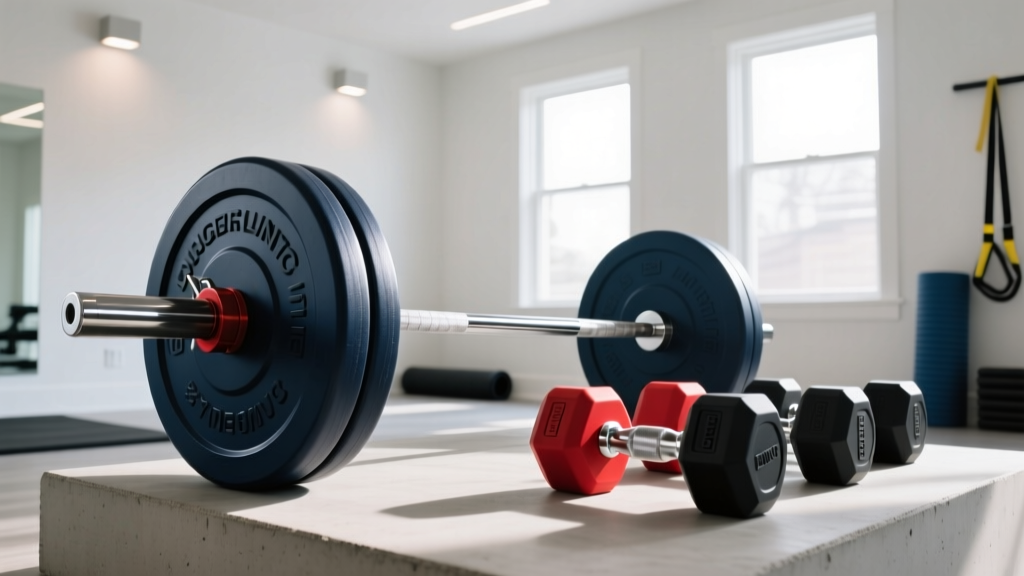
Building a functional home gym on a budget often forces beginners to make critical equipment choices early on. One of the most common crossroads is deciding between Olympic and standard weight plates. While this decision is usually framed around barbell squat racks or deadlift platforms, it profoundly impacts your auxiliary movements—especially if you are designing a dumbbell chest workout without bench routines using plate-loaded dumbbell handles.
If you are executing a benchless dumbbell chest workout (commonly known as a floor press), the physical dimensions, structural integrity, and diameter of your weight plates will dictate your range of motion, safety, and long-term progression. In this step-by-step beginner's guide, we will break down the exact metallurgical and dimensional differences between Olympic and standard plates, and show you how to choose the right gear for your specific training environment in 2026.
The Core Differences: 1-Inch vs 2-Inch Center Holes
Before diving into workout mechanics, we must establish the fundamental physical differences between the two plate standards. The terminology can be confusing for beginners, but it all comes down to the center hole diameter and the corresponding bar sleeve.
- Standard Plates: Feature a center hole of exactly 1 inch (25.4mm). They are designed to fit on inexpensive, lightweight dumbbell handles and basic solid-steel barbells. The handles themselves are typically 1 inch in diameter from grip to sleeve.
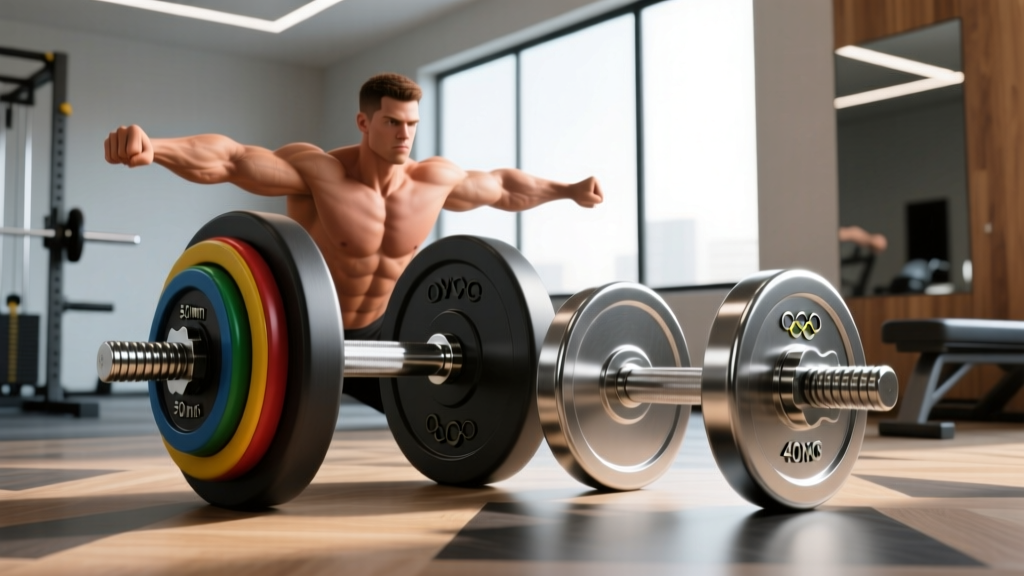
- Olympic Plates: Feature a center hole of 2 inches (50.8mm). They are engineered to slide onto the rotating sleeves of Olympic bars, which have a 28-29mm grip shaft but flare out to 50mm on the sleeves to accommodate heavy loads and rotational forces.
According to equipment standards maintained by the International Weightlifting Federation (IWF), Olympic plates are built to withstand massive dynamic drops and rotational torque, whereas standard plates are generally cast for static or low-impact lifting. This structural difference heavily influences the overall diameter and thickness of the plates, which becomes critical when you remove the bench from the equation.
Why Plate Diameter Dictates Your Dumbbell Chest Workout Without Bench
When you perform a dumbbell chest workout without bench, you are lying flat on the floor. The floor acts as a physical stop for your elbows, protecting your shoulder joints from overextension. However, if you are using adjustable, plate-loaded spin-lock dumbbell handles, the outer diameter of the loaded plates determines your range of motion (ROM).
Biomechanics Callout: The Floor Press Range of Motion
For an optimal floor press, your triceps should rest on the floor at the bottom of the movement while the dumbbell handles remain 2 to 3 inches above your chest. A standard 45lb Olympic plate has a universal diameter of 17.7 inches (450mm). When loaded on a dumbbell handle, this provides ample clearance for your forearms to touch the floor safely.
Conversely, many 45lb standard plates are manufactured with a smaller diameter (often 14 to 15 inches) to save on cast iron costs. If you use these smaller plates for a benchless chest press, the dumbbell handle or the plates themselves may strike the floor before your elbows do, artificially shortening your ROM and reducing chest muscle activation.
Step-by-Step: Choosing the Right Plates for Your Home Gym
Follow this systematic framework to select the ideal weight plates for your benchless chest routines and overall home gym setup.
Step 1: Audit Your Current Handles and Space
Check the dumbbell handles you currently own. If you have 1-inch spin-lock handles, you are locked into standard plates unless you purchase new Olympic-compatible dumbbell handles (like the Rogue Loadable Dumbbell Handles). Also, measure your storage space. Olympic plates are significantly thicker and wider than standard plates. A pair of 45lb Olympic plates takes up roughly 30% more floor space than their standard counterparts.
Step 2: Calculate the Cost-Per-Pound Matrix
Budget is the primary driver for most beginners. Below is a 2026 market analysis of average pricing across both standards. Note that while standard plates are cheaper upfront, they suffer from a severe lack of upgradeability and resale value.
| Plate Type & Standard | Average Cost Per Pound | Durability & Drop Rating | Best Use Case |
|---|---|---|---|
| Standard Cast Iron (1-inch) | $1.00 - $1.40 / lb | Low (Prone to chipping) | Light-duty floor presses, bicep curls |
| Olympic Cast Iron (2-inch) | $1.60 - $2.20 / lb | High (Solid drop rating) | Heavy floor presses, barbell work |
| Standard Rubber-Grip (1-inch) | $1.80 - $2.50 / lb | Medium (Rubber degrades) | Apartment gyms, quiet floor work |
| Olympic Urethane (2-inch) | $4.50 - $8.00+ / lb | Extreme (Commercial grade) | High-volume drops, premium home gyms |
Step 3: Factor in the 'Spin-Lock' Failure Mode
When performing a dumbbell chest workout without bench, you are likely using spin-lock collars to secure the plates on your handles. A common failure mode with standard 1-inch spin-lock handles is the stripping of the threaded sleeve. Because standard sleeves are thinner (1-inch), the threads are shallower. If you load heavy 45lb standard plates and perform explosive floor presses, the rotational torque can strip the threads, causing the collar to back off mid-set. Olympic loadable dumbbell handles utilize heavy-duty snap-ring collars or thick threaded sleeves that completely eliminate this risk.
Common Edge Cases and Troubleshooting
Even with the right plates, beginners often encounter specific issues when training without a bench. Here is how to troubleshoot them using equipment adjustments:
- The 'Clanking' Problem on Hard Floors: If you are doing floor presses on concrete or hardwood, standard cast iron plates will chip and damage your floor upon the eccentric lowering phase. Solution: Purchase Olympic rubber-grip plates or invest in a 3/4-inch thick horse-stall mat from a farm supply store to absorb the acoustic and physical impact.
- Wrist Extension Pain: When lying on the floor, the angle of your wrist at the bottom of the press can cause strain. Solution: Ensure your plates are perfectly balanced. If you are using fractional plates (e.g., 2.5lb or 5lb) to micro-load your floor press, use Olympic fractional change plates. They have a smaller diameter and sit inside the main 45lb plate, preventing them from scraping the floor and altering your wrist angle.
- Getting the Weights Into Position: Unlike a bench press where you can unrack the weights, a heavy dumbbell floor press requires you to kick the weights up from your thighs. If your plates are excessively thick (like some cheap rubber standard plates), the dumbbell becomes unwieldy to maneuver into the starting position. Stick to slim-profile cast iron or urethane Olympic plates for heavy sets.
"The floor press is an exceptional movement for tricep lockout and chest isolation, but it is entirely dependent on the geometry of your equipment. Using undersized standard plates defeats the biomechanical purpose of the floor acting as a safe ROM stopper." — National Strength and Conditioning Association (NSCA) training principles on joint mechanics.
FAQ: Plates and Benchless Chest Training
Can I use Olympic plates on standard dumbbell handles?
No. Olympic plates have a 2-inch hole and will simply slide off a 1-inch standard handle. You would need to purchase a specialized sleeve adapter, which is highly unsafe for dynamic movements like chest presses due to the added lateral play and wobble.
Are adjustable dumbbells better than plate-loaded handles for floor presses?
For a benchless dumbbell chest workout, adjustable dumbbells (like the PowerBlock Elite or Bowflex SelectTech) offer superior convenience and safer weight racking on the floor. However, they max out at 50-90 lbs. If you are strong enough to floor press over 100 lbs per hand, you must transition to Olympic loadable dumbbell handles and Olympic cast iron plates to continue progressing safely.
Do I need bumper plates for floor presses?
No. Bumper plates are designed to be dropped from overhead during Olympic lifts like the clean and jerk. For a controlled floor press, standard cast iron or urethane Olympic plates are perfectly adequate and much more cost-effective, as you are not dropping the weights from a standing height.
Final Verdict: Invest in the 2-Inch Standard
While standard 1-inch weight plates offer an attractive entry price for absolute beginners, they represent a false economy. The structural limitations, inconsistent plate diameters, and thread-stripping risks on spin-lock handles make them a poor choice for serious benchless chest training. By investing in Olympic plates and compatible loadable dumbbell handles, you guarantee a consistent 17.7-inch diameter for optimal floor press ROM, superior rotational stability, and a lifetime of upgradeability for your home gym.
More gear to consider
All reviews
Space-Saving Loadable Dumbbells for the Overhead Dumbbell Extension

Dumbbell Rack Storage & Dumbbell Bench to Barbell Bench Conversion

Power Rack vs Squat Rack vs Stand: Beyond a Dumbbell Workout PDF

Power Rack vs Squat Rack Setup for Dumbbell Squat Jumps
ReAthlete Massage Gun vs Trigger Point Balls: 2026 Value Guide