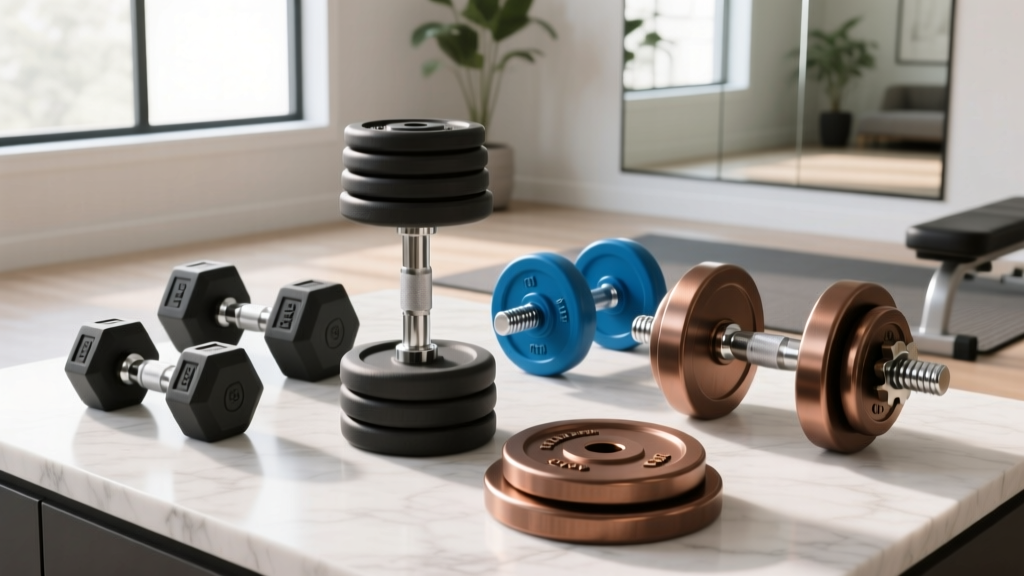
Mastering Delt Flys with Dumbbells: A Beginner's Home Guide
Learn how to perform delt flys with dumbbells safely at home. Our beginner guide covers step-by-step form and why neoprene coated weights are best.

Building well-rounded, boulder shoulders at home does not require a massive power rack or expensive cable crossover machines. For beginners, mastering delt flys with dumbbells is one of the most effective ways to isolate the lateral and rear deltoids, creating that coveted V-taper physique. However, the success of your home shoulder workouts hinges on two critical factors: impeccable biomechanical form and choosing the right equipment for your space.
In this comprehensive, beginner-friendly guide, we will break down exactly how to execute delt flys safely and effectively. Furthermore, we will explore why the neoprene coated dumbbell for home use is the undisputed champion of home gym flooring, grip comfort, and long-term durability.
Why Neoprene Coated Dumbbells Are the Ultimate Home Gym Choice
When outfitting a home gym, especially in a spare bedroom, garage, or apartment, you must consider floor protection, noise reduction, and equipment longevity. While bare cast iron and rubber-coated weights have their place in commercial gyms, neoprene offers a unique set of advantages for the home lifter performing high-rep isolation movements like delt flys.
| Coating Material | Floor Protection | Odor / Off-gassing | Grip Comfort | Avg. Cost (per lb) |
|---|---|---|---|---|
| Neoprene | Excellent (Soft, shock-absorbent) | None | High (Slightly textured, warm to touch) | $1.50 - $2.50 |
| Virgin Rubber | Good | High (Strong initial smell) | Medium (Can be slick with sweat) | $2.00 - $3.00 |
| Urethane | Excellent (Very dense) | None | Low (Hard, unforgiving on drops) | $4.00 - $6.00 |
| Bare Cast Iron | Poor (Will damage hardwood/tile) | None (but prone to rust) | High (Classic knurling feel) | $1.00 - $1.80 |
For beginners performing lateral raises and rear delt flys, you will frequently be setting the weights down on the floor between sets or dropping them safely if you reach muscular failure. Neoprene’s soft, synthetic rubber exterior absorbs impact, protecting your hardwood floors and reducing the loud ‘clanking’ noise that can disturb housemates or neighbors. Top-tier options like the Yes4All Neoprene Hex Dumbbells (typically priced around $1.60/lb) or the premium Rogue Fitness Neoprene Dumbbells ($3.50/lb) offer color-coded heads for easy weight identification, which is crucial when you are rapidly switching weights for drop sets.
Selecting the Correct Weight for Delt Flys
The most common point of failure for beginners attempting delt flys with dumbbells is ego lifting. The deltoid is a relatively small, pennate muscle group. It does not require the same heavy loads as your glutes or pectorals.
💡 The Beginner Weight Baseline:- Men: Start with 5 lb to 10 lb neoprene dumbbells per hand.
- Women: Start with 3 lb to 8 lb neoprene dumbbells per hand.
Step-by-Step Guide: Performing Delt Flys with Dumbbells
When people search for ‘delt flys’, they are generally referring to the Dumbbell Lateral Raise (targeting the medial/side delt) or the Bent-Over Rear Delt Fly (targeting the posterior/rear delt). Below is the step-by-step biomechanical breakdown for the foundational lateral raise, incorporating crucial joint-safety protocols.
⚠️ Crucial Biomechanics Alert: The Scapular PlaneNever raise your arms perfectly out to your sides (the frontal/coronal plane). According to shoulder biomechanics research, raising the arms perfectly laterally can compress the supraspinatus tendon against the acromion bone, leading to impingement. Always raise the dumbbells roughly 30 degrees forward of your torso. This is known as the scapular plane (scaption), and it aligns the movement with the natural orientation of your shoulder joint, drastically reducing injury risk.
Phase 1: The Setup
- Stance: Stand with your feet shoulder-width apart. Hold a neoprene dumbbell in each hand with a neutral grip (palms facing your thighs).
- Posture: Engage your core and squeeze your glutes to prevent your lower back from arching. Maintain a slight, natural bend in your elbows (about 10 to 15 degrees). Lock this elbow angle in place; it should not change during the rep.
- Positioning: Let the dumbbells rest just in front of your thighs, not directly at your sides.
Phase 2: The Concentric Lift
- Initiate the movement by pushing your elbows out and up, leading with the elbows rather than your hands.
- Raise the dumbbells in the scapular plane (30 degrees forward) until your upper arms are parallel to the floor. Do not shrug your traps; keep your shoulder blades depressed.
- Pause for one full second at the top. The neoprene coating’s slight texture will help you maintain a secure grip even as sweat begins to accumulate on your palms.
Phase 3: The Eccentric Lowering
- Slowly lower the weights back to the starting position over a count of 2 to 3 seconds. The eccentric phase causes the most micro-tearing in the muscle fibers, which is essential for hypertrophy.
- Stop just short of resting the dumbbells on your thighs to maintain constant tension on the medial deltoid before initiating the next rep.
Common Beginner Mistakes and How to Fix Them
“The moment you start using momentum to swing the weight up, you have transferred the load from your deltoids to your lower back and traps. You are no longer doing a delt fly; you are doing a sloppy upright row.”
- Mistake 1: Pouring the Pitcher. Many old-school bodybuilding magazines advise tilting the pinky finger up at the top of the movement (internal rotation). The Fix: Keep the dumbbells perfectly level or tilt the thumb slightly up (external rotation). Internal rotation under load severely narrows the subacromial space, increasing the risk of shoulder impingement syndrome.
- Mistake 2: Shrugging the Traps. If your neck muscles are burning more than your shoulders, your upper traps are taking over. The Fix: Consciously pull your shoulder blades down and into your ‘back pockets’ before initiating the lift.
- Mistake 3: Bending the Elbows Mid-Rep. Changing the elbow angle turns the lift into a tricep-dominant pressing motion. The Fix: Imagine your arms are cast in plaster from the elbow to the wrist.
Sample 4-Week Beginner Shoulder Progression
To see measurable hypertrophy, you need progressive overload. Use this 4-week framework with your neoprene dumbbells to safely build shoulder mass and endurance.
- Week 1 (Form & Endurance): 3 sets of 12 reps. Use a very light weight (e.g., 5 lbs). Focus entirely on the 30-degree scapular plane and the 2-second eccentric lowering phase. Rest 60 seconds between sets.
- Week 2 (Volume Increase): 3 sets of 15 reps. Keep the same weight. The increased time-under-tension will induce metabolic stress, a key driver of muscle growth. Rest 60 seconds.
- Week 3 (Load Increase): 3 sets of 10 reps. Move up to the next neoprene dumbbell increment (e.g., 8 lbs or 10 lbs). Focus on a hard, 1-second isometric squeeze at the top of the movement.
- Week 4 (Intensity Techniques): 3 sets of 12 reps, plus 1 ‘Drop Set’ on the final set. Perform your 12 reps, immediately grab a pair of dumbbells that are 30% lighter, and rep out to absolute failure.
Caring for Your Neoprene Equipment
While neoprene is highly durable, it is not invincible. To ensure your home gym equipment lasts for decades and avoids the dreaded ‘sticky degradation’ that plagues poorly maintained rubber and neoprene, follow these maintenance protocols:
- Wipe Down Post-Workout: Human sweat is highly acidic and contains salts that can slowly break down the chemical bonds in neoprene. Wipe the handles and heads with a damp microfiber cloth after every session.
- Avoid Direct UV Exposure: Do not store your dumbbells in direct sunlight or next to a hot garage window. Prolonged UV exposure will cause the neoprene to fade, dry out, and eventually crack or peel.
- Use a Proper Rack: While neoprene protects your floors, storing them on a dedicated A-frame or tiered dumbbell rack prevents the hex heads from deforming under their own weight over long periods.
Frequently Asked Questions
Can I do rear delt flys with the same neoprene dumbbells?
Absolutely. The rear delt fly (or reverse fly) is performed by hinging at the hips until your torso is nearly parallel to the floor, then raising the dumbbells out to the sides. Because the rear delts are even smaller and weaker than the lateral delts, you will likely need to drop down 2 to 5 lbs per hand compared to your standing lateral raise weight. The hex shape of most neoprene dumbbells is highly beneficial here, as it prevents the weights from rolling away on the floor when you set them down between sets of bent-over work.
Will neoprene dumbbells slip out of my hands when I sweat?
Neoprene generally offers a better grip than bare, unchalked iron or smooth plastic. However, during high-rep sets of 15 or more, palmar sweat can compromise your grip. If you experience slipping, keep a small towel nearby to dry your hands, or consider using a pair of lightweight cotton lifting gloves. Avoid using liquid chalk directly on the neoprene handles, as it can dry out the coating and leave a difficult-to-clean residue.
How do I know if my shoulder pain is from bad form or an actual injury?
A mild burning sensation in the muscle belly during the final reps is normal muscular fatigue. However, if you experience a sharp, pinching pain deep inside the shoulder joint, or pain that radiates down your bicep or up into your neck, stop immediately. This is a hallmark sign of impingement or tendon irritation. Review your form to ensure you are utilizing the scapular plane, and consult a medical professional or physical therapist if the joint pain persists beyond a few days of rest.
By pairing the floor-friendly, ergonomic benefits of neoprene coated dumbbells with strict, biomechanically sound form, you can safely and effectively build impressive shoulders from the comfort of your home gym. Start light, respect the scapular plane, and let the muscle do the work.
More gear to consider
All reviews
2026 Kettlebell Market: Beyond Walking Lunges With Dumbbells

Setup for the Best Dumbbell Workout Routine: Clamps vs Collars

Adjustable Dumbbells vs. Neoprene Dumbbells 10 lbs: 2026 Guide

EZ Bar vs Straight Bar: Space Layouts & Pallof Press Dumbbell Tips
Cast Iron vs Competition: Beyond Dumbbell Exercises for Biceps and Chest