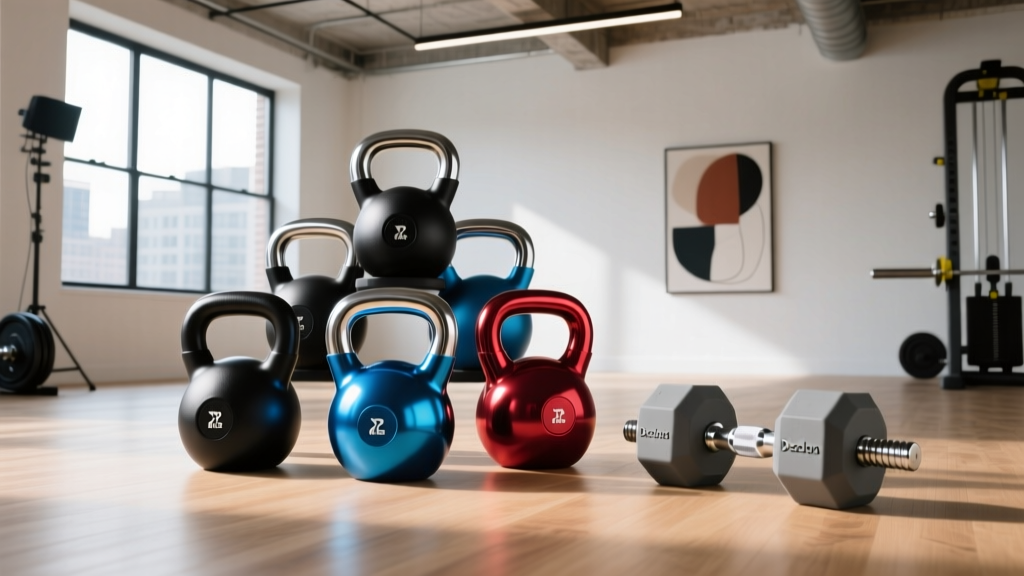
2026 Trends: Beyond the Decathlon Dumbbell to Competition Kettlebells
Analyze 2026 free weight market trends. Discover why buyers upgrade from a Decathlon dumbbell to kettlebells, comparing cast iron vs competition specs.

The 2026 Home Gym Evolution: Gateway Weights vs. Specialized Tools
The free weight market in 2026 is defined by a distinct bifurcation between high-volume entry-level equipment and specialized, biomechanically optimized tools. For millions of home gym owners, the foundational purchase remains the ubiquitous decathlon dumbbell—whether in adjustable dial formats or neoprene-coated hex sets. These big-box retail staples offer an aggressive entry point, often priced between $1.20 and $1.80 per pound, making them the undisputed gateway drug for isolation movements and basic hypertrophy training.
However, as functional fitness and athletic conditioning trends have matured over the last three years, a massive consumer pivot has occurred. Athletes who max out the dynamic potential of their dumbbell sets are migrating toward kettlebell training. This shift has triggered a highly technical buying dilemma: should consumers invest in traditional cast iron kettlebells, or bypass them entirely for competition-grade steel? This market analysis breaks down the metallurgy, pricing, and biomechanical realities of the cast iron versus competition kettlebell debate for the upgrading home gym owner.
Market Snapshot: The Kettlebell Surge
According to recent fitness equipment retail data, while standard dumbbell sales have plateaued post-pandemic, kettlebell acquisitions have grown by 22% year-over-year in the home-gym sector. The primary driver is the integration of Girevoy Sport (kettlebell sport) and Hardstyle ballistic protocols into mainstream programming, requiring equipment that dumbbells simply cannot replicate safely.
Cast Iron Kettlebells: The Hardstyle Standard
Cast iron kettlebells are the direct evolutionary cousins of the traditional plate-loaded barbell and the standard decathlon dumbbell. They are manufactured by pouring molten iron into molds, resulting in a dense, single-material bell. In 2026, premium cast iron bells (such as those from Rogue Fitness or REP Fitness) utilize single-piece casting followed by CNC machining on the handle to eliminate the dreaded mold seam that plagues cheaper imports.
Metallurgy and Dimensions
Unlike competition bells, cast iron kettlebells scale in physical size as the weight increases. A 12kg cast iron bell is noticeably smaller than a 32kg bell. This creates a shifting center of mass and varying handle geometries that the athlete must adapt to as they progress in weight. Handle diameters typically range from 35mm to 40mm, which is optimal for the crushing grip required in Hardstyle training (e.g., heavy swings, goblet squats, and strict presses).
Pricing and Market Position
Cast iron remains the most cost-effective route for building a comprehensive weight range. In the current 2026 market, high-quality powder-coated cast iron kettlebells average $2.80 to $3.50 per kilogram. They are ideal for 'grind' movements where the bell rests against the forearm or chest, as the thicker, rounded bell body provides a more forgiving resting position than angular steel alternatives.
Competition Kettlebells: Precision Engineering for Ballistics
Competition kettlebells are engineered for Girevoy Sport and high-repetition ballistic endurance. The defining characteristic of a competition bell is uniformity: regardless of whether the bell weighs 8kg or 48kg, the physical dimensions remain exactly the same. This ensures that the athlete's technique, rack position, and overhead lockout do not need to be recalibrated when moving up in weight.
Steel Construction and The 33mm Handle
Competition bells are forged from steel, not brittle cast iron. The handle diameter is strictly standardized at 33mm. As highlighted by the StrongFirst certification standards, this specific 33mm thickness is critical for allowing the athlete to slip their hand in and out of the handle rapidly during snatches and cleans, while also accommodating a 'hook grip' to spare the forearms during high-volume sets.
The weight differential in competition bells is achieved internally. Lower weights (8kg to 20kg) are typically 'windowed'—meaning they are hollow steel shells with internal steel plates or ballast welded inside to reach the target weight. Heavier weights (24kg and above) are often solid steel or feature a much smaller internal cavity.
Premium Pricing Tiers
The precision manufacturing required for competition steel drives the price up significantly. Expect to pay between $8.00 and $14.00 per kilogram for reputable brands like Volna, Paramax, or Kettlebell Kings. While expensive, the longevity and technical consistency make them a mandatory investment for competitive lifters.
Technical Specification & Failure Mode Matrix
Understanding how these tools fail under stress is crucial for long-term purchasing decisions. Below is a comparative analysis of the physical specs and real-world edge cases.
| Feature | Premium Cast Iron | Competition Steel |
|---|---|---|
| Material | Cast Iron (Powder-coated) | Tubular or Solid Steel |
| Handle Diameter | 35mm - 40mm (Varies by weight) | Strictly 33mm (Uniform) |
| Dimensions (H x W) | Scales with weight | 280mm x 210mm (Uniform) |
| Avg. Cost (per kg) | $2.80 - $3.50 | $8.00 - $14.00 |
| Primary Failure Mode | Paint chipping on the horn; base flattening causing 'rocking' on hard floors. | Internal weld failure on windowed bells if dropped repeatedly from overhead. |
| Best Application | Hardstyle, Grinds, Heavy Swings, Goblet Squats. | Girevoy Sport, Snatches, Jerks, High-Rep Endurance. |
Biomechanical Implications and Expert Consensus
The transition from a symmetrical tool like a decathlon dumbbell to an offset, asymmetrical tool like a kettlebell fundamentally alters load distribution. The National Strength and Conditioning Association (NSCA) notes that the offset center of mass in a kettlebell requires significantly higher stabilization from the rotator cuff and core musculature during overhead pressing compared to a dumbbell.
"When performing the kettlebell snatch, the uniform 33mm handle of a competition bell reduces the rotational torque on the wrist during the flip-over phase at the top of the movement. Using a thicker, 38mm cast iron handle for high-rep snatches frequently leads to premature forearm fatigue and callus tearing." — Biomechanical analysis guidelines from the American Council on Exercise (ACE).
The 2026 Buyer’s Decision Framework
How should you allocate your free weight budget this year? Use this framework to determine your next purchase based on your training evolution.
Scenario A: The Hypertrophy & General Fitness Upgrader
- Current Setup: Adjustable decathlon dumbbell set (up to 50 lbs).
- Goal: Add heavy posterior chain work (swings, deadlifts) and unilateral pressing.
- Verdict: Buy Cast Iron. The thicker handle will build grip strength, and the lower price-per-kilo allows you to purchase a 24kg and 32kg bell without breaking the bank. The varying sizes won't negatively impact heavy, low-rep grind movements.
Scenario B: The Endurance & Sport Transitioner
- Current Setup: Light dumbbells and a single, cheap 16kg vinyl-coated cast iron bell.
- Goal: 10-minute snatch tests, clean and jerks, and complex flow routines.
- Verdict: Buy Competition Steel. The 33mm handle and uniform window size are non-negotiable for saving your wrists and maintaining a consistent rack position. Invest in a 16kg and 20kg solid-steel or high-weld-quality windowed bell.
Final Market Verdict
The free weight landscape in 2026 rewards specialization. While the budget-friendly decathlon dumbbell will forever hold its place as the ultimate entry-level tool for the home gym, it cannot replicate the ballistic mechanics required for advanced functional training. Cast iron remains the undisputed king of heavy, low-rep strength building, offering exceptional value. However, for athletes chasing endurance, technical mastery, and wrist longevity, the premium investment in uniform competition steel is not just a luxury—it is a biomechanical necessity.
More gear to consider
All reviews
Olympic vs Standard Plates: Dumbbell Step Over Space Mistakes

Beyond Holding a Dumbbell: 2026 Loadable Plate Market Trends

How to Grow Forearms with Dumbbells vs Kettlebells: Cast Iron or Competition?
Dumbbell Deadlift Stiff Leg: Neoprene Home Gym Setup
Best Neoprene Dumbbells for an Underarm Workout with Dumbbells
