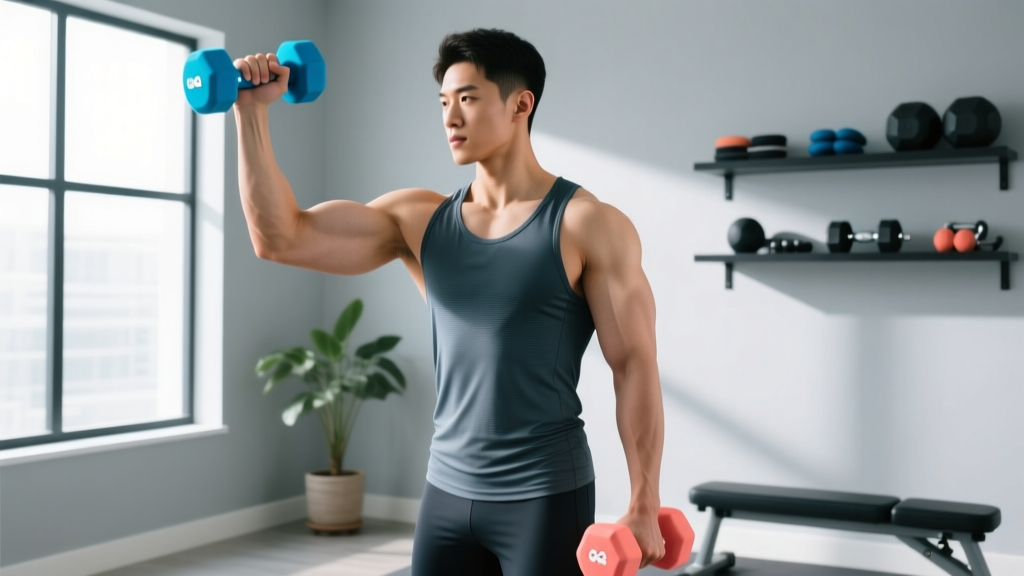
Dumbbell Cross Body Hammer Curl: Step-by-Step Guide for Beginners
Learn the dumbbell cross body hammer curl step-by-step. Discover why neoprene coated dumbbells are the best choice for home gyms and joint-friendly gains.

Building a complete, injury-resistant physique in a home gym doesn't require a massive footprint or thousands of dollars in equipment. For beginners, mastering foundational movement patterns with the right tools is the key to long-term progress. One of the most effective, yet frequently misunderstood, arm exercises is the dumbbell cross body hammer curl. When paired with the ideal home gym equipment—specifically neoprene coated dumbbells—this movement becomes a staple for joint-friendly, highly effective muscle building.
This comprehensive guide will break down the biomechanics of the cross-body hammer curl, explain why neoprene is the superior coating for home use, and provide a step-by-step execution framework to maximize your gains while protecting your wrists and elbows.
The Anatomy of the Cross-Body Hammer Curl
Before picking up the weights, it is crucial to understand what you are targeting. The standard hammer curl (curling straight up with a neutral grip) primarily targets the brachioradialis and the brachialis. However, by altering the path of the dumbbell to cross your torso, you shift the biomechanical emphasis.
Muscle Activation Breakdown
- Brachialis: The primary workhorse. Located beneath the biceps, growing this muscle pushes the biceps up, creating a thicker arm profile.
- Brachioradialis: The largest muscle in the forearm, heavily engaged due to the neutral (palms facing each other) grip.
- Biceps Brachii (Long Head): According to biomechanical data cataloged by ExRx, bringing the arm across the body (shoulder adduction and slight flexion) places a greater stretch and subsequent load on the long head of the biceps compared to a standard hammer curl.
Why Neoprene Dumbbells for Home Use?
When outfitting a home gym, the material of your free weights matters just as much as the exercises you perform. Neoprene (polychloroprene) is a synthetic rubber that offers distinct advantages for beginners performing high-rep isolation movements like the cross-body hammer curl.
The Grip and Sweat Factor
Beginners often perform bicep curls in the 10 to 15 rep range to build connective tissue tolerance. As the set progresses, palmar sweating increases. Bare cast iron becomes slippery, and cheap recycled rubber can develop a slick film over time. Neoprene features a micro-textured, porous surface that wicks away moisture, ensuring your grip remains secure. A slipped grip during a cross-body curl can cause acute wrist valgus strain, making the secure hold of neoprene a vital safety feature.
Material Comparison Matrix
| Feature | Neoprene Coated | Virgin Rubber | Bare Cast Iron |
|---|---|---|---|
| VOC Off-Gassing (Odor) | None / Very Low | Moderate to High | None |
| Sweat Resistance | Excellent (Micro-texture) | Poor (Gets slick) | Poor (Rusts/Slips) |
| Floor Protection | High (Soft drop) | High (Bouncy) | None (Damages floors) |
| Handle Diameter | 32mm - 35mm (Contoured) | 28mm - 30mm | 28mm (Standard) |
| Avg. Cost per Pound | $1.30 - $1.80 | $1.50 - $2.20 | $0.90 - $1.20 |
Note: The slightly thicker handle diameter common in neoprene dumbbells (often 32mm+) increases forearm activation during hammer curls, acting as a built-in grip trainer.
Step-by-Step Execution Guide
Proper form is non-negotiable. The American Council on Exercise (ACE) emphasizes that controlled tempo and joint alignment are the primary drivers of hypertrophy in isolation movements.
- The Setup: Stand with your feet shoulder-width apart. Hold a neoprene dumbbell in each hand using a neutral grip (palms facing your thighs). Keep a slight bend in your knees and brace your core.
- The Anchor: Pin your elbows to your ribcage. Your elbows should act as a fixed hinge; they must not drift forward or backward during the movement.
- The Concentric Phase (The Curl): Exhale and curl the right dumbbell upward and across your torso, aiming for your left shoulder. The dumbbell should travel diagonally across your chest.
- The Peak Contraction: Stop when the dumbbell reaches chest/collarbone height. Squeeze the bicep and forearm for a full one-second pause. Do not let the dumbbell touch your chest; keep the tension on the muscle.
- The Eccentric Phase (The Lowering): Inhale and slowly lower the weight back to the starting position along the exact same diagonal path. Take 2 to 3 full seconds to lower the weight. This eccentric damage is crucial for muscle growth.
- Alternate: Repeat the movement with the left arm, curling toward the right shoulder. Continue alternating until the target rep count is met.
Troubleshooting Form: Edge Cases & Failure Modes
Even with the secure grip of neoprene, beginners frequently fall into biomechanical traps that lead to joint pain rather than muscle growth.
- Mistake 1: Shoulder Rotation (The 'Wing' Effect). As the weight gets heavy, beginners tend to rotate their shoulder forward to heave the weight up. This shifts the load from the biceps to the anterior deltoid. Fix: Drop the weight by 15% and focus on keeping the shoulder blade retracted and depressed.
- Mistake 2: Wrist Flexion at the Top. Curling the wrist inward at the top of the movement places immense stress on the medial epicondyle of the elbow. According to the Mayo Clinic's strength training guidelines, maintaining a neutral wrist alignment is critical to preventing tendinitis. Fix: Imagine your knuckles are trying to touch the ceiling throughout the entire range of motion.
- Mistake 3: Rushing the Eccentric. Letting gravity pull the dumbbell down eliminates 50% of the muscle-building stimulus. Fix: Use the 2-1-2 tempo (2 seconds up, 1 second pause, 2 seconds down).
Top Neoprene Dumbbell Picks for Home Gyms
If you are investing in neoprene dumbbells for your home gym, you want durability, accurate weighting, and ergonomic handles. Here are the top-tier options currently dominating the market:
1. Yes4All Neoprene Coated Hex Dumbbells
Price Range: $1.30 - $1.50 per lb.
Best For: Budget-conscious beginners building a foundational set.
Expert Insight: Yes4All uses a solid cast iron core encased in high-density neoprene. The hexagonal shape prevents rolling on home gym floors (especially important if you are working out in a garage or living room). The handle features a subtle contour that locks the neoprene grip perfectly into the palm.
2. CAP Barbell Neoprene Hex Dumbbells
Price Range: $1.50 - $1.75 per lb.
Best For: Intermediate lifters who need heavier increments (up to 50 lbs per hand).
Expert Insight: CAP Barbell's neoprene formula is slightly denser, resulting in a more compact head size. This is crucial for cross-body curls, as bulky dumbbell heads can clash with your chest or opposite shoulder at the top of the movement if the profile is too wide.
3. Tone Fitness Neoprene Dumbbell Sets with Rack
Price Range: $1.80 - $2.10 per lb (includes A-frame rack).
Best For: Complete home gym setups where space organization is a priority.
Expert Insight: Buying a paired set with a rack ensures you maintain proper form by encouraging you to pick the right weight for the exercise, rather than forcing a heavy weight meant for squats into a bicep curl.
Maintenance Warning: While neoprene is highly resistant to sweat and moisture, it is susceptible to UV degradation. Do not store your neoprene dumbbells in direct sunlight or in a garage that exceeds 95°F (35°C) for prolonged periods, as the coating can become brittle and flake over time.
Beginner Programming Framework
To integrate the dumbbell cross body hammer curl into your routine, follow this beginner-friendly protocol designed for hypertrophy and connective tissue conditioning:
- Frequency: 2 times per week (e.g., Full Body A and Full Body B, or Push/Pull/Legs on Pull days).
- Sets: 3 working sets per session.
- Reps: 10 to 12 reps per arm.
- Rest: 60 to 90 seconds between sets.
- Progression: Once you can comfortably complete 3 sets of 12 reps with strict form and a 2-second eccentric, move up to the next dumbbell increment (usually a 5 lb jump).
Final Thoughts
The dumbbell cross body hammer curl is a phenomenal exercise for building thick, resilient arms and a rock-solid grip. By choosing neoprene coated dumbbells, you are investing in a cleaner, safer, and more comfortable home gym experience. Focus on the mind-muscle connection, respect the eccentric portion of the lift, and let the unique biomechanics of the cross-body path do the work.
More gear to consider
All reviews
Barbell Collar Types Compared & Dumbbell Rows Muscles Worked

Dumbbell Exercises for Chest and Shoulders: Neoprene Mistakes

Collar Comparison: Beyond Back Workouts with Dumbbells Women's

Bumper vs Iron Plates: Budgeting for Lean Away Dumbbell Lateral Raise

Power Rack vs Squat Rack vs Squat Stand: Setup & Standing Marches with Dumbbells
