Beyond the 30 lb Dumbbell: Cast Iron vs Competition Kettlebells
Transitioning from a 30 lb dumbbell? Compare cast iron vs competition kettlebells with our 2026 expert buying guide, featuring top picks and sizing data.

The Limitation of the Standard 30 lb Dumbbell
For many home gym enthusiasts, the journey into free weights begins with a versatile pair of adjustable dumbbells. However, as your strength and technical proficiency evolve, you inevitably hit a biomechanical wall. If you have been relying on a standard 30 dumbbell setup for dynamic, ballistic movements like swings, snatches, and cleans, you have likely noticed the limitations. Dumbbells are engineered for linear, isolated movements. Their symmetrical weight distribution and straight handles make them suboptimal for the offset center of mass required for traditional kettlebell ballistics.
According to biomechanics data cataloged by ExRx, the offset center of mass in a kettlebell creates a unique leverage disadvantage that forces the stabilizer muscles in the shoulder girdle and core to work significantly harder than they would with a dumbbell. Furthermore, the thick, straight handle of a 30 lb dumbbell restricts the natural wrist rotation required for a clean or snatch, often leading to forearm bruising and wrist strain. To unlock the full spectrum of functional strength and conditioning, upgrading to a dedicated kettlebell is mandatory. But this brings up the ultimate dilemma for buyers: do you choose traditional cast iron or precision-machined competition steel?
Cast Iron vs. Competition: The Core Differences
The kettlebell market is broadly divided into two distinct categories. Understanding the architectural differences between them is critical before dropping $100+ on a single piece of iron.
| Feature | Cast Iron Kettlebells | Competition Kettlebells |
|---|---|---|
| Material | Single-piece cast iron | Steel shell filled with steel shot/lead |
| Handle Diameter | Varies by weight (32mm - 35mm+) | Uniform (33mm standard, 35mm for 32kg+) |
| Bell Dimensions | Scales up with weight | Identical across all weights |
| Window Size | Shrinks on lighter weights | Uniform across all weights |
| Average Cost (2026) | $1.80 - $2.40 per pound | $3.20 - $4.50 per pound |
| Best Use Case | Grinds, general fitness, two-hand swings | High-rep ballistics, sport, technical mastery |
Hands-On Review: Top Cast Iron Picks
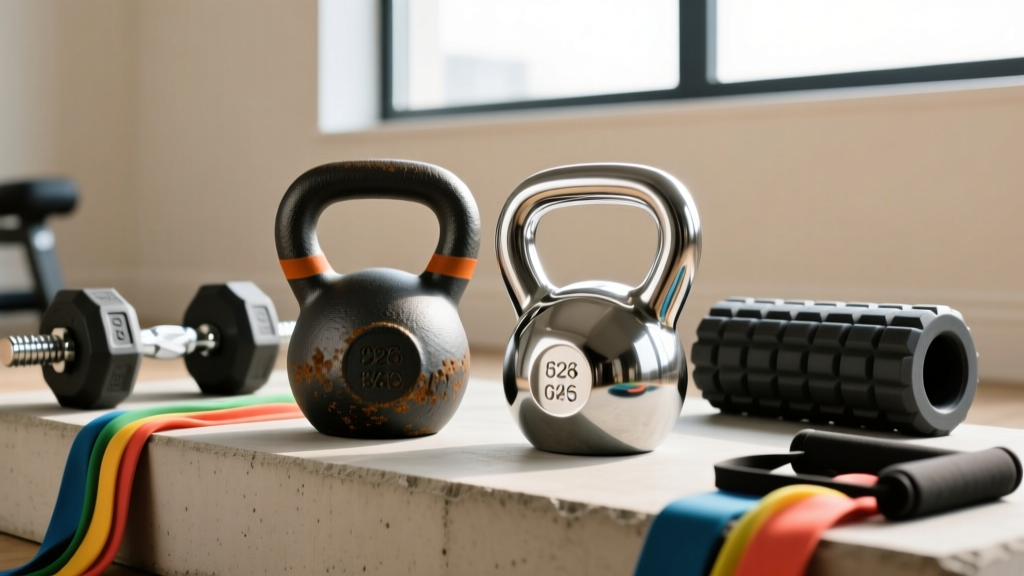
Cast iron kettlebells are the traditionalists' choice. They are poured into molds as a single, solid piece of iron. Because they are solid, the overall size of the bell and the thickness of the handle scale up as the weight increases.
Rogue Fitness Cast Iron Kettlebells
Rogue remains the gold standard for American-made cast iron. Their current iteration features a seamless single-cast mold and a highly durable powder-coat finish. In our hands-on testing, the 16kg (35 lbs) model features a 35mm handle diameter, which provides an exceptional grip challenge for grip-strength development. However, users with smaller hands may find the 35mm horn difficult to lock out comfortably during overhead presses.
- Pros: Unmatched durability, aggressive knurl-like texture on the handle base, supports heavy two-handed swings due to wider windows on larger bells.
- Cons: Handle diameter and window size change with every weight increment, forcing you to relearn the micro-mechanics of cleans when you size up.
- Pricing: ~$2.10/lb (e.g., 16kg is roughly $75).
Kettlebell USA Dragon Mark
For those seeking a slightly more refined cast iron option, the Dragon Mark series offers a narrower handle profile (closer to 33mm on mid-range weights) while retaining the solid iron build. The e-coat finish is thinner than powder coat, preserving the tactile feedback of the raw iron while preventing rust.
Hands-On Review: Top Competition Steel Picks
Competition kettlebells were born in the Soviet Union for the sport of Girevoy. Their defining feature is absolute uniformity. Whether you are holding an 8kg or a 32kg bell, the physical dimensions of the handle, the bell, and the window remain exactly the same. The weight difference is achieved by altering the density of the filling inside the hollow steel shell.
'The uniformity of a competition kettlebell means your muscle memory for the rack position and the overhead lockout never has to change, regardless of the weight you are lifting. This is paramount for high-volume sport training.' — Certified instructors at StrongFirst.
Kettlebell Kings Competition Steel
Kettlebell Kings has dominated the competition space by offering a 33mm handle that strikes the perfect balance between grip security and wrist comfort. The 16kg model (the universal starting point for adult males) features a meticulously welded steel shell. During high-rep snatch tests, the 33mm horn allowed for a seamless insertion of the hand without the wrist bruising commonly associated with thicker cast iron handles.
- Pros: Exact dimensions across all weights, 33mm handle accommodates most hand sizes, color-coded shells for easy identification in a crowded gym.
- Cons: The window (gap between handle and bell) can feel slightly restrictive for users with very large hands during two-handed swings.
- Pricing: ~$3.60/lb (e.g., 16kg is roughly $125).
First Place Fitness Competition Bells
A staple in European competitions, First Place bells feature a slightly squarer handle shape compared to the perfectly round horns of Kettlebell Kings. This provides a distinct tactile reference point for the fingers during the flip phase of a clean, reducing the grip fatigue that often plagues competitors in 10-minute sets.
The Hidden Variable: Coating and Maintenance
When evaluating your purchase, the finish of the kettlebell is just as critical as the material. In 2026, manufacturers have largely moved away from cheap enamel paints that chip and flake into your eyes during overhead movements.
- Powder Coat (Rogue, Rep Fitness): Excellent for chalk retention. The porous surface grips chalk, making it ideal for high-rep ballistics where sweat is a factor. Requires occasional wire-brushing to clear chalk buildup from the pores.
- E-Coat / Urethane (Dragon Mark, Onnit): Smoother and more resistant to moisture. Better for humid garages or outdoor use, but requires more chalk to prevent slipping.
- Bare Steel / Polished (Competition): Competition bells usually feature a polished steel handle. They require minimal chalk but demand regular wiping with a microfiber cloth to prevent oxidation from hand sweat.
Sizing Framework: Translating Dumbbell PRs to Kettlebells
One of the most common errors when transitioning from a 30 dumbbell routine to kettlebells is buying the wrong starting weight. Because the kettlebell's center of mass extends beyond the handle, it feels significantly heavier during presses and squats.
The Weight Translation Matrix
If your 30 lb Dumbbell Strict Press is:
- Easy (8+ reps): Start with a 20kg (44 lbs) Cast Iron or Competition Kettlebell.
- Moderate (4-7 reps): Start with a 16kg (35 lbs) Kettlebell.
- Difficult (1-3 reps): Start with a 12kg (26 lbs) Kettlebell to master the rack position and clean mechanics before overloading the shoulder.
Note: For lower-body movements like goblet squats, you can safely jump to a 24kg or 28kg bell immediately, as the legs can handle the offset load far better than the pressing muscles.
Expert Verdict: Which Should You Buy?
The decision between cast iron and competition ultimately hinges on your training goals and hand size. If your primary focus is general strength, heavy grinds, and you prefer a thicker handle to build crushing grip strength, Cast Iron (specifically Rogue) is the most cost-effective and durable route. The varying dimensions will not hinder general fitness routines.
However, if you are moving past the 30 dumbbell plateau to pursue high-rep ballistic conditioning, kettlebell sport, or complex flow routines, Competition Kettlebells (specifically Kettlebell Kings) are a mandatory investment. The uniform 33mm handle and consistent window size eliminate the variables, allowing you to focus entirely on power output and cardiovascular endurance without your grip failing prematurely. As noted by conditioning specialists at ACE Fitness, mastering the unique leverage of the kettlebell requires consistent proprioceptive feedback—something only a competition bell can provide across varying loads.
More gear to consider
All reviews
Arm Exercises Using Dumbbells: Adjustable Gear Review & Fixes
EZ Curl Bar vs Straight Bar: Curls, Triceps, and Seated Dumbbell Extension Tactics
Kettlebell Care: Cast Iron vs Competition & Lat Pull Down Dumbbell Alternative

Power Rack vs Squat Rack Setup: Optimizing for the Dumbbell Side Row

Bumper vs Iron Plate Care: Beyond the Dumbbell Women Beginner Phase