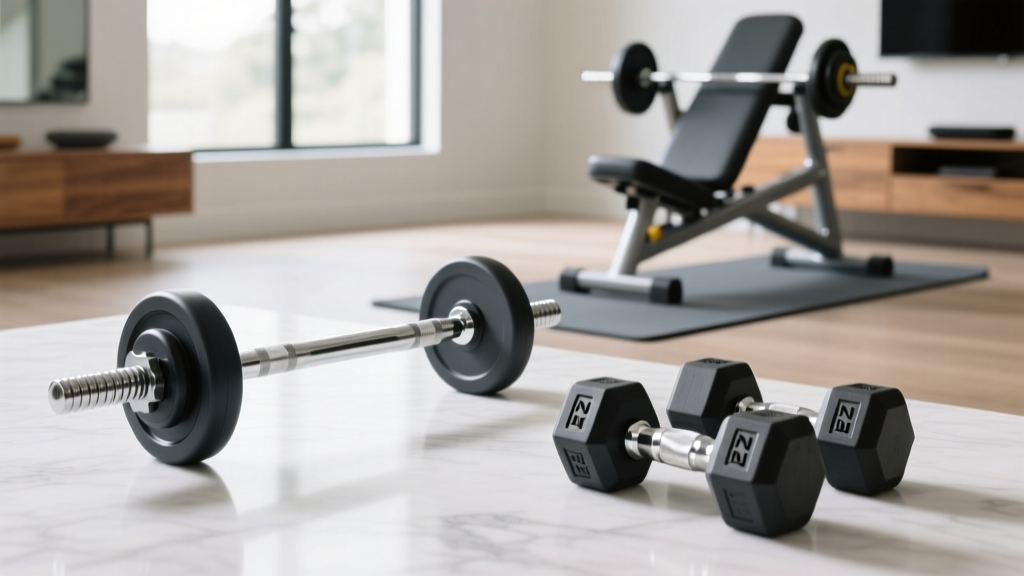
Barbell Collar Types Comparison: Securing Squats & Dumbbell Step Ups
Compare barbell collar and clamp types to prevent plate slippage. Troubleshoot common mistakes for heavy squats, drops, and weighted dumbbell step ups.

The Hidden Danger of Shifting Iron: Why Collars Matter
In the hierarchy of gym safety, barbell collars and clamps are frequently treated as an afterthought. Yet, failing to properly secure weight plates is a leading cause of asymmetric loading, barbell tipping, and catastrophic equipment failure. Whether you are bracing for a heavy back squat or performing high-rep dumbbell step ups with loadable handles, the lateral forces exerted on the sleeve can easily overcome the friction of a bare barbell.
According to biomechanical analyses of unilateral movements like the dumbbell step up, the asymmetrical impact and wrist supination required to stabilize the weight create unique shear forces. If you are using loadable dumbbell handles, these vibrations will quickly rattle standard collars loose. This comprehensive troubleshooting guide and comparison matrix will help you match the right clamping mechanism to your specific training style, eliminating plate slippage and ensuring your safety in 2026 and beyond.
The Physics of Plate Slippage and Common Mistakes
Before diving into specific collar types, we must address the mechanical reasons plates slide off sleeves. Understanding these failure modes is the first step in troubleshooting your setup.
⚠️ Common Mistake: The 'Sleeve Tolerance' BlindspotStandard Olympic barbell sleeves are nominally 50mm in diameter. However, budget-friendly barbells and older loadable dumbbell handles often measure between 48.5mm and 49.5mm due to manufacturing tolerances or wear. Using rigid plastic lever clamps designed strictly for 50mm sleeves on a 49mm sleeve will result in a catastrophic lack of clamping force, allowing plates to slide off mid-lift.
The Three Forces That Defeat Collars
- Vibrational Loosening: High-impact movements (like dropping a deadlift or the eccentric phase of heavy dumbbell step ups) send shockwaves through the steel sleeve, causing spinlock nuts to unthread and spring collars to lose tension.
- Lateral Shear: Asymmetric exercises create uneven torque. If one side of the barbell or dumbbell contacts the floor or rack first, the inertia pushes the plates outward.
- Chalk and Debris Buildup: Accumulated magnesium carbonate (chalk) and rust on the sleeve act as a dry lubricant, reducing the coefficient of friction between the plate and the collar.
Comprehensive Barbell Collar and Clamp Types Comparison
Not all collars are created equal. The market has evolved from simple wire springs to precision-engineered aluminum levers. Below is a detailed comparison of the primary collar types available on the market today.
| Collar Type | Mechanism | Clamping Force | Best Application | Price Range |
|---|---|---|---|---|
| Spring Collars | Tensioned steel wire | Low (15-30 lbs) | Light accessory work, isolation | $10 - $18 |
| Spinlock Nuts | Threaded screw-on | Medium-High (Depends on torque) | Standard loadable dumbbells | $15 - $25 (pair) |
| Plastic Lever Clamps | Nylon cam-lock lever | Medium (60-90 lbs) | General powerlifting, benching | $20 - $35 |
| Aluminum Lever Clamps | CNC aluminum with rubber pad | Very High (150+ lbs) | Olympic lifting, heavy squats | $50 - $85 |
| Competition Friction Collars | Precision machined steel/rubber | Extreme (IWF Certified) | Sanctioned weightlifting meets | $90 - $140 |
Troubleshooting Loadable Dumbbells for Dumbbell Step Ups
While barbell squats get most of the safety attention, dumbbell step ups present a unique troubleshooting nightmare for home gym owners using loadable dumbbell handles. When you step onto a box with heavy dumbbells, the natural biomechanics of the movement dictate that your wrists will deviate slightly to maintain balance. Furthermore, stepping down generates a sharp, vertical deceleration force.
Why Standard Collars Fail During Step Ups
If you are using 10-inch loadable dumbbell handles with standard spring collars, the short sleeve length (often only 2.5 inches of usable space) means the spring collar is barely gripping the steel. The vertical shockwave from stepping down compresses the spring just enough to allow the bumper plate to slide a fraction of an inch. Over a set of 12 reps, the plate will slide completely off the sleeve, potentially crushing your foot or causing a severe wrist sprain as you attempt to catch the shifting weight.
Expert Insight: "For unilateral, high-impact movements like dumbbell step ups or walking lunges, never rely on wire spring collars on short-sleeve handles. The lateral shear force easily exceeds the spring's tension rating. Opt for micro-friction clamps or specialized short-sleeve locking collars that utilize a cam-lock mechanism rather than pure spring tension."
The Solution: Upgrading Your Dumbbell Clamps
To safely perform heavy dumbbell step ups, transition to Lock-Jaw Pro style clamps or Rogue Work Horse Collars. These models utilize a dual-durometer rubber lining that grips the sleeve via friction and compression, rather than just outward spring tension. Even if your loadable dumbbell sleeve is slightly undersized at 49mm, the compressible rubber lining will deform to fill the gap, maintaining a secure lock throughout the eccentric and concentric phases of the step up.
Real-World Failure Modes & Edge Cases
Even premium collars can fail if subjected to specific edge cases. Here are the most common real-world failure modes reported by strength coaches and equipment reviewers at BarBend:
- The 'Drop Test' Deformation: Dropping a barbell from overhead (as in a missed snatch) generates massive axial force. Cheap plastic lever clamps will shatter or permanently deform at the hinge pin. Always use aluminum-bodied collars for Olympic lifting.
- Bumper Plate Degradation: As crumb rubber bumper plates age, the steel insert ring can warp or widen. A collar that is perfectly tight against a new 45lb plate may leave a 2mm gap against a degraded plate, allowing the entire stack to rattle and shift.
- The Chalk-Wedge Effect: If chalk builds up on the inner lip of the collar's rubber pad, it creates a hard, slippery wedge. The collar will feel tight to the touch, but the plates will slide freely. Troubleshooting fix: Wipe collar pads and barbell sleeves with a damp microfiber cloth weekly.
Step-by-Step Troubleshooting Matrix
Use this quick-reference guide to diagnose and fix your collar issues based on the equipment you are using.
Diagnostic Flowchart
Problem: Plates are sliding outward during the lift.
- Check 1: Are you using spring collars on a loadable dumbbell? → Switch to cam-lock short-sleeve clamps.
- Check 2: Is the collar lever closing, but the plates still move? → Measure your barbell sleeve. If it is under 49.8mm, your rigid plastic collars are too large. Switch to collars with compressible rubber pads (e.g., Rogue Aluminum Collars).
- Check 3: Are the plates rattling against each other despite tight collars? → You are using cast iron plates with wide tolerances. Add a rubber shock pad or O-ring between the plates to absorb vibration.
Final Thoughts on Gym Safety
Securing your weights is not just about protecting your equipment; it is about protecting your central nervous system from the micro-stutters and balance corrections required to manage shifting iron. Whether you are maxing out on the squat rack or isolating the quads with heavy dumbbell step ups, investing $50 to $80 in a high-quality pair of aluminum lever clamps or dual-durometer friction collars is one of the highest-ROI safety upgrades you can make to your home or commercial gym. Stop compromising your lifts with inadequate tension, and lock your sleeves with the precision your training demands.
More gear to consider
All reviews
Is Dumbbell Bench Press Harder Than Barbell? (Plate Guide)
Power Rack vs Squat Rack vs Squat Stand: Incline Dumbbell Curl Alternative Setups

The Ultimate Home Setup for Seated Bicep Curls with Dumbbells

Power Rack vs Squat Rack vs Stand for Pec Flys with Dumbbells

All Over Body Workout With Dumbbells: Cast Iron vs Competition Kettlebells