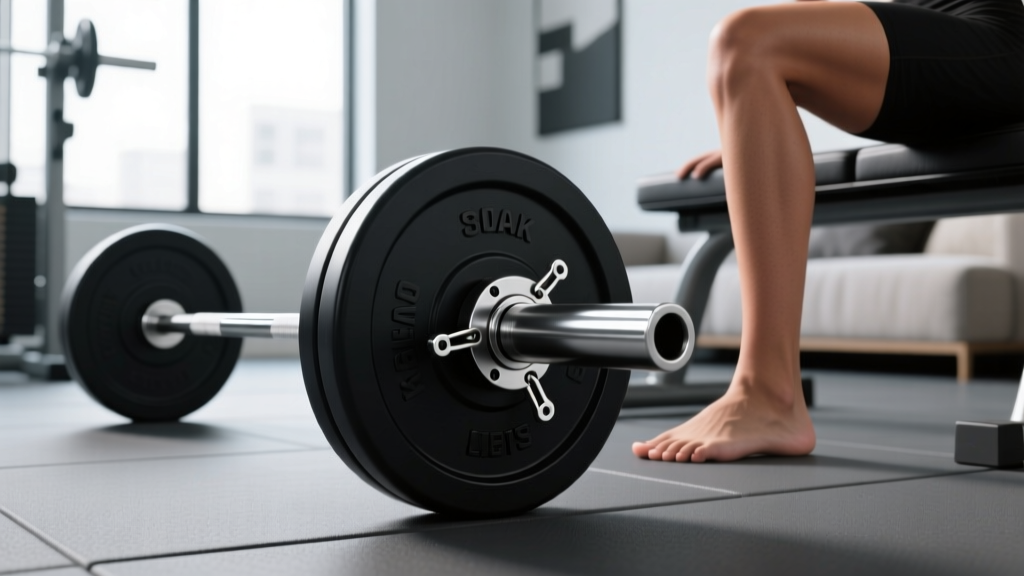
Barbell Collar Types: Safety for Seated Leg Lift Over Dumbbell
Compare barbell collar and clamp types. Troubleshoot common mistakes to ensure safety during heavy lifts and the seated leg lift over dumbbell.

The Critical Role of Barbell Collars in Unconventional Lifts
When lifters think of barbell collar failures, they usually envision a heavy squat or deadlift where plates shift outward, causing a dangerous imbalance. However, equipment security is equally vital during floor-based core and mobility work. A prime example is the seated leg lift over dumbbell, a demanding hip-flexor and core drill where a lifter suspends a dumbbell or short plate-loaded barbell between their feet. In 2026, as functional training continues to blend with traditional strength sports, understanding the mechanics of barbell collars and clamps is non-negotiable for safety.
The shear force generated during a seated leg lift over dumbbell is extreme. The weight is suspended at the end of a long lever arm (the legs), creating rotational torque and lateral vibration that easily shakes loose inferior spring clips. If a plate slides off during this movement, it drops directly onto the feet, ankles, or floor. This troubleshooting guide compares collar types and identifies the common mistakes lifters make when securing free weights.
Barbell Collar and Clamp Types Comparison Matrix
Not all collars are created equal. The market has evolved significantly, moving beyond basic metal springs to engineered polymer and aluminum lever systems. Below is a comprehensive comparison of the primary collar types available today.
| Collar Type | Mechanism | Est. Grip Force | Best Application | Common Failure Mode | Avg. Price (2026) |
|---|---|---|---|---|---|
| Spring Clip | Steel tension wire | 20 - 40 lbs | Light dumbbells, static machines | Vibration loosening; metal fatigue | $10 - $15 / pair |
| Lock-Jaw (Polymer) | Glass-reinforced nylon clamp | 120 - 150 lbs | General powerlifting, CrossFit | Plastic cracking in cold gyms; hinge wear | $25 - $35 / pair |
| Aluminum Quick-Release | CNC aluminum lever & TPU pad | 250+ lbs | Heavy Olympic lifts, dynamic drops | Lever bending if dropped on concrete | $60 - $85 / pair |
| Spin-Lock (Threaded) | Threaded steel/iron nut | 300+ lbs | Standard 1-inch bars, home gyms | Thread stripping; slow to adjust | $15 - $25 / pair |
For a deeper dive into specific brand performance, refer to BarBend's comprehensive collar guide, which tests grip force under laboratory conditions.
⚠️ Warning: The Seated Leg Lift Over Dumbbell Edge Case
When performing the seated leg lift over dumbbell using a short plate-loaded bar or adjustable dumbbell handles, never use spring clips. The pendulum motion of the legs creates a rhythmic lateral vibration that will walk a spring clip off the sleeve in fewer than five repetitions. Always use aluminum quick-release clamps or specialized dumbbell collars (like the Lock-Jaw Dumbbell version) to ensure the plates remain flush against the sleeve.
Common Mistakes When Securing Free Weights
Even with high-end equipment like the Rogue HG 2.0 or Eleiko Olympic Weightlifting Collars, user error can lead to catastrophic slippage. Here are the most frequent troubleshooting scenarios we see in commercial and home gyms.
1. Ignoring Sleeve Diameter Tolerances
The standard Olympic sleeve diameter is 50mm. However, manufacturing tolerances and wear patterns mean not all sleeves are identical. Eleiko precision sleeves, for instance, often measure closer to 49.8mm. If you are using a rigid, cheaply manufactured polymer collar designed for exactly 50.5mm, it will fail to grip an Eleiko or a worn-down Rogue barbell. Troubleshooting fix: Invest in collars with thermoplastic polyurethane (TPU) inner linings, which compress and adapt to micro-variations in sleeve diameter.
2. The 'Gap' Mistake
A collar is only effective if it eliminates lateral movement. Many lifters place the collar on the sleeve but leave a 2-to-3-millimeter gap between the outermost bumper plate and the collar. During dynamic movements—like kettlebell swings or the aforementioned seated leg lift over dumbbell—this gap allows the plates to build kinetic momentum before slamming into the collar, eventually breaking the locking mechanism. Troubleshooting fix: Push the collar flush against the plate before engaging the locking lever.
3. Using the Wrong Collar for Dumbbell Sleeves
Standard barbell collars are too wide for most loadable dumbbell handles (like the Rogue Loadable Dumbbell Straps or Ivanko handles). The collar will bottom out against the handle grip before applying adequate pressure to the plates. Troubleshooting fix: Use specialized dumbbell clamps or lock-jaws specifically dimensioned for shorter dumbbell sleeves.
'Equipment security isn't just about the weight of the load; it is about the vector of force. A 45-pound plate shifting on a 400-pound deadlift is a nuisance. A 10-pound plate shifting during a floor-based core drill is a crushed toe.' — Biomechanics and Equipment Safety Review, 2025
Step-by-Step Troubleshooting for Slipping Clamps
If your quick-release clamps are slipping during heavy pulls or unconventional floor work, follow this diagnostic protocol before replacing them:
- Inspect the TPU Pad: Over time, the rubberized pad inside the aluminum clamp accumulates chalk, zinc dust, and sweat. This creates a slick surface. Wipe the pad with isopropyl alcohol to restore friction.
- Check the Barbell Sleeve: Black oxide and bare steel sleeves oxidize and rust, creating a rough surface that prevents the collar from seating properly. Conversely, heavily oiled or chrome-plated sleeves can be too slippery. Wipe the sleeve down with a dry microfiber cloth before clamping.
- Adjust the Tension Screw: Most premium aluminum collars (such as those found in the Rogue Fitness collar lineup) feature a hex screw on the lever hinge. If the clamp closes but feels loose, use a 4mm Allen key to tighten the hinge screw by a quarter-turn.
- Test for Polymer Warping: If you use Lock-Jaw style clamps and leave them clamped onto the barbell overnight in a cold garage gym, the nylon can temporarily warp to the shape of the sleeve. When removed and reapplied, the tension is compromised. Always store polymer collars unclamped at room temperature.
Maintenance and Longevity in 2026
To maximize the lifespan of your collars and ensure safety during every exercise, from heavy back squats to the seated leg lift over dumbbell, implement the following maintenance routines:
- Monthly Deep Clean: Soak spring clips in white vinegar for 30 minutes to remove rust, then lubricate the hinge with 3-in-One oil. Wipe down aluminum clamps with a mild degreaser.
- Drop Testing: Aluminum quick-release collars are incredibly strong, but the lever arm can bend if dropped directly onto concrete from chest height. If the lever no longer sits perfectly flush when locked, the internal cam mechanism is compromised and the collar must be replaced.
- Replace Worn O-Rings: Some competition-grade collars use rubber O-rings to provide secondary friction. If these snap or flatten out, contact the manufacturer for replacement kits rather than buying a whole new set.
Final Thoughts on Equipment Security
Whether you are loading up a barbell for a 1-rep max or setting up a specialized load for a seated leg lift over dumbbell, the collar is the unsung hero of gym safety. By understanding the mechanical differences between spring, polymer, and aluminum clamps, and by actively troubleshooting sleeve tolerances and friction degradation, you can eliminate lateral plate shift entirely. Invest in high-quality aluminum quick-release collars for your primary barbell work, keep a set of polymer clamps for quick accessory changes, and never compromise on the security of your floor-based movements.
More gear to consider
All reviews
12 Practical DIY Plunge Pool Ideas You Can Build in Under 8 Weeks
Power Rack Setup for a Leg Workout: Dumbbells Only Guide

2026 Market Trends: Rubber Hex vs Urethane & The Olympic Dumbbell Bar

Space Layouts for Alternate Incline Dumbbell Curls: Hex vs Urethane

2026 Dumbbell Rack Market: The Iso Lateral Skull Crusher Effect
