Olympic vs Standard Weight Plates: 2026 Buying Guide & What Do Dumbbell Pullovers Work?
Compare Olympic vs standard weight plates for your 2026 home gym. Plus, discover what do dumbbell pullovers work for upper body muscle development.

The Foundation of Your Home Gym: Olympic vs. Standard Weight Plates
When building a home gym in 2026, the most critical decision you will make isn't about which mirror to hang or what color flooring to lay down—it is choosing between Olympic and standard weight plates. This choice dictates the barbells you can use, the maximum weight you can safely lift, and the long-term resale value of your equipment. While standard plates offer an accessible entry point for beginners, Olympic plates remain the undisputed gold standard for serious lifters. In this comprehensive guide, we break down the exact specifications, pricing, and failure modes of both plate types. Additionally, because a complete free-weight setup requires accessory movements, we will answer a highly searched biomechanics question: what do dumbbell pullovers work, and how do they fit into your upper-body programming?
Head-to-Head Comparison Matrix
| Feature | Standard Weight Plates | Olympic Weight Plates |
|---|---|---|
| Center Hole Diameter | 1 inch (25.4 mm) | 2 inches (50.6 mm) |
| Compatible Barbell Sleeves | 1-inch solid steel bars | 2-inch rotating Olympic sleeves |
| Typical Max Load Capacity | 200 - 300 lbs (bar dependent) | 1,000 - 1,500+ lbs |
| Average Cost (Cast Iron) | $0.80 - $1.20 per lb | $1.50 - $2.50 per lb |
| Weight Accuracy | +/- 5% to 10% | +/- 1% (Calibrated) to 3% |
| Resale Value | Low (often given away) | High (holds ~70% of retail value) |
Standard Weight Plates: The Budget-Friendly Starter
Standard weight plates feature a 1-inch center hole and are designed to slide onto basic, solid-steel barbells and dumbbell handles. You will frequently find these in commercial department stores or bundled with entry-level home gym kits from brands like Marcy or Weider.
Warning: The 1-Inch Bar Failure ModeThe primary danger of standard plates isn't the plates themselves, but the bars they mount to. Standard 1-inch bars lack rotating sleeves and are typically made from lower-grade steel. If you load a standard bar past 250 lbs, the bar will likely experience permanent plastic deformation (bending). Furthermore, the lack of sleeve rotation places immense torque on your wrists during dynamic movements like barbell curls or bench presses.
When to Buy Standard Plates
- Strict Budget Constraints: If your total equipment budget is under $300.
- Lightweight Rehab or Isolation Work: Using 1-inch dumbbell handles for lateral raises or tricep extensions where total load rarely exceeds 50 lbs.
- Temporary Setups: College dorms or short-term apartment living where heavy compound lifting isn't feasible.
Olympic Weight Plates: The Lifetime Investment
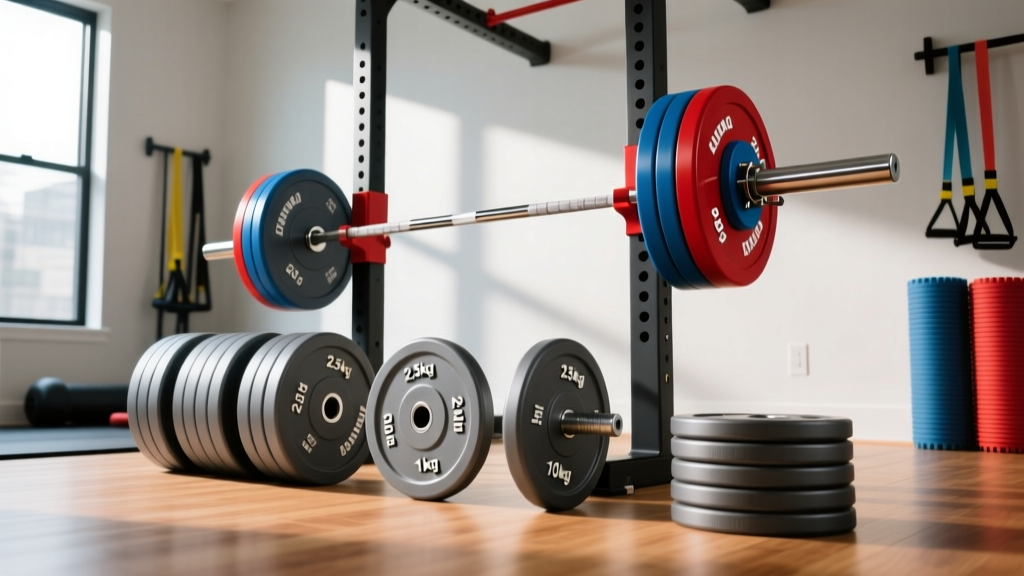
Olympic plates feature a 2-inch (50.6mm) center hole, designed to fit onto Olympic barbells which feature rotating sleeves with bushings or bearings. According to equipment testing by Garage Gym Labs, Olympic plates are universally recommended for anyone planning to perform compound lifts like squats, deadlifts, and Olympic weightlifting variations.
Cast Iron vs. Bumper Plates
Within the Olympic ecosystem, you must choose between traditional cast iron and rubber bumper plates. Cast Iron Plates (like the REP Fitness Deep Dish plates) are dense, allowing you to fit more weight on the bar, and are ideal for powerlifting. Bumper Plates (like the Rogue Echo Bumpers) feature a stainless steel center insert surrounded by virgin rubber. They are designed to be dropped from overhead during cleans and snatches without destroying your flooring or the plates themselves.
Pricing and Value Retention
Expect to pay between $1.50 and $2.50 per pound for high-quality Olympic cast iron, and $2.50 to $5.00 per pound for premium urethane or competition bumper plates. While the upfront cost is higher, Olympic gear retains massive resale value. A used set of Rogue LB Training Plates will often sell on the secondary market for 70-80% of its original retail price, whereas standard plates are notoriously difficult to sell once you upgrade.
Exercise Spotlight: What Do Dumbbell Pullovers Work?
Once your rack, barbell, and plates are secured, you will likely invest in an adjustable bench and a set of dumbbells to round out your free-weight arsenal. This brings us to a classic, yet frequently misunderstood, upper-body movement. Many lifters setting up a new home gym ask: what do dumbbell pullovers work? Is it a back exercise or a chest exercise?
Expert Insight: The dumbbell pullover is a unique multi-joint exercise that places the shoulder joint in extreme flexion, creating a massive stretch across the anterior torso and the posterior axillary wall.
According to kinesiology data from ExRx.net, the dumbbell pullover primarily targets the following muscle groups:
- Latissimus Dorsi: The primary mover during the concentric phase (pulling the weight from behind your head back over your chest).
- Pectoralis Major (Sternal Head): Heavily recruited to assist in shoulder extension and adduction, particularly when the arms are brought together at the top of the movement.
- Serratus Anterior: Engaged to stabilize the scapula against the rib cage during the deep stretch phase.
- Triceps Brachii (Long Head): Acts as a dynamic stabilizer, as the long head crosses the shoulder joint and is placed under a deep stretch when the arms are overhead.
For a detailed breakdown of proper form and joint mechanics, the American Council on Exercise (ACE) emphasizes keeping a slight bend in the elbows to mitigate stress on the biceps tendon and shoulder capsule.
Step-by-Step Execution for Maximum Hypertrophy
- Setup: Lie perpendicular across a flat bench, supporting only your upper back and shoulders. Keep your hips low to maximize the stretch on the lats.
- The Descent: Grasp a single heavy dumbbell by the inner plate. Slowly lower it in an arc behind your head until you feel a deep stretch in your lats and ribcage.
- The Ascent: Pull the dumbbell back over your face using your lats, stopping when the dumbbell is directly over your chest to maintain constant tension.
2026 Purchasing Framework: Which Path Should You Take?
To finalize your buying decision, use this practical framework based on your current lifting status:
Scenario A: The Apartment Lifter (Choose Standard or Adjustable)
If you live in a multi-story building with strict weight limits and noise complaints, skip standard plates entirely and look into adjustable dumbbells (like Nuobell or PowerBlock) and kettlebells. If you must buy a barbell setup, buy a lightweight standard bar and cement-filled standard plates to minimize floor impact, but plan to upgrade within 12 months.
Scenario B: The Garage Gym Powerlifter (Choose Olympic Iron)
If you have a dedicated garage space and plan to squat, bench, and deadlift, purchase a 7-foot Olympic power bar and a set of cast iron Olympic plates. Start with a pair of 45s, a pair of 25s, and two pairs of 10s to allow for precise micro-loading.
Scenario C: The CrossFit / Functional Athlete (Choose Olympic Bumpers)
If your programming involves high-repetition Olympic lifts, thrusters, or drop-sets from the shoulder, you must invest in Olympic bumper plates. Look for plates with a high durometer rating (90+ SHA) for the smaller fractional plates (10lb and 15lb) so they don't fold or taco when dropped alone.
Frequently Asked Questions
Can I use Olympic plates on a standard 1-inch bar?
No. The 2-inch hole of an Olympic plate will not grip a 1-inch standard bar, creating a severe safety hazard. While plastic sleeve adapters exist to convert Olympic plates to standard bars, they are highly discouraged for heavy lifting due to the risk of the adapter cracking under load.
Are standard weight plates completely obsolete?
Not entirely. Standard plates still hold a niche market for very small home setups, specialized grip-training equipment, and budget-friendly plate-loaded machines (like lever-based chest presses found in older commercial gyms). However, for free-weight barbell training, they have been entirely superseded by Olympic gear.
Do dumbbell pullovers expand the ribcage?
Historically, bodybuilders in the 1970s claimed pullovers expanded the ribcage. Modern sports science shows that once you pass puberty and your costal cartilages ossify, you cannot physically expand your skeletal ribcage. The 'expansion' feeling is actually extreme stretching and hypertrophy of the serratus anterior and intercostal muscles.
More gear to consider
All reviews
Barbell Knurling & Front Lateral Raises with Dumbbells Fixes

Top Neoprene Dumbbells for a Flabby Arms Workout Compared

Barbell Collar Types Compared & Dumbbell Block Guide

Bumper vs Iron Plates: Market Data for Clean and Jerk with Dumbbells
Cast Iron vs Competition Kettlebells & Dumbbell Bent Rows Value