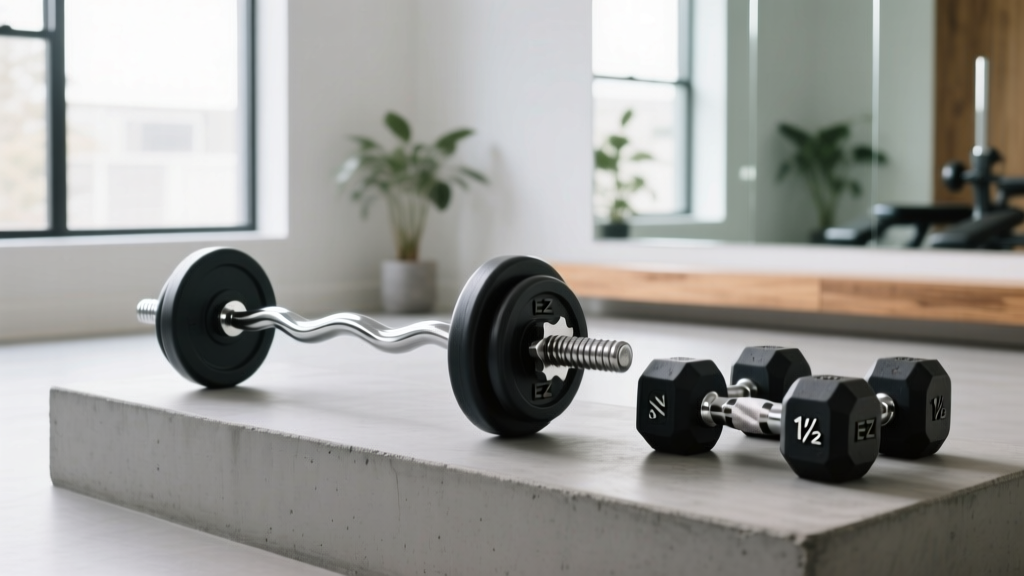
Chest and Bicep Dumbbell Workout Upgrade: Barbell Knurling Mistakes
Upgrading from a chest and bicep dumbbell workout? Avoid common Olympic barbell buying mistakes with our deep dive into weight tolerances and knurling types.

Transitioning from a dedicated chest and bicep dumbbell workout to incorporating an Olympic barbell is a milestone in any lifter's journey. While dumbbells offer unparalleled unilateral isolation and ergonomic wrist rotation, barbells allow for absolute maximal loading on compound presses and heavy strict curls. However, this upgrade is fraught with purchasing errors. Many lifters blindly buy the cheapest 45-pound barbell available, only to find the grip slips during heavy incline benches or the aggressive knurl tears their hands during high-volume bicep curls.
In this troubleshooting guide, we break down the most common mistakes lifters make regarding barbell weight tolerances, tensile strength, and knurling patterns when upgrading their home gym in 2026.
The Biomechanical Shift: Why Your Grip Needs Change
When executing a chest and bicep dumbbell workout, your hands wrap around contoured, often knurled handles that typically measure between 32mm and 35mm in diameter. An Olympic barbell shaft, by contrast, strictly adheres to a 28mm to 29mm diameter. This smaller circumference requires a different neuromuscular grip engagement. Furthermore, the fixed pronation or supination of a barbell places unique shearing forces on your calluses. If you select a barbell with the wrong knurl geometry, you will experience micro-tears in your epidermis or dangerous grip slippage mid-rep.
Mistake #1: Misunderstanding Knurl Geometry (Hill vs. Mountain vs. Volcano)
The most frequent troubleshooting complaint we see on fitness forums is hand tearing during bench presses or painful slippage during barbell curls. This is almost always a failure to match the knurl pattern to the movement profile. According to BarBend's comprehensive guide to barbell knurling, the machining process creates three distinct geometries.
| Knurl Type | Geometry Profile | Best Use Case | Popular 2026 Model | Price Range |
|---|---|---|---|---|
| Volcano | Pointed rim with a flat, machined top. Provides surface area and bite without sharp peaks. | Bench Press, Bicep Curls, Olympic Lifts | Rogue Ohio Bar (190k PSI) | $295 - $315 |
| Mountain | Sharp, continuous pointed peaks. Highly aggressive. | Deadlifts, Low-Rep Powerlifting | Texas Power Bar | $315 - $340 |
| Hill | Rounded, smooth peaks. Low aggressiveness. | High-Rep WODs, Beginner Lifters | Generic Import Bars | $150 - $200 |
Mistake #2: Ignoring Tensile Strength and the "Bend" Failure Mode
Lifters moving from a chest and bicep dumbbell workout to barbell training often underestimate the sheer load they will eventually press. A pair of 100-pound adjustable dumbbells is a massive feat, but barbell bench pressing allows you to quickly surpass 225, 315, or even 400 pounds. This is where tensile strength—measured in Pounds per Square Inch (PSI)—becomes critical.
- Below 165,000 PSI: Avoid these. Bars in this range (often $120-$160 budget imports) will permanently bend if dropped on J-cups or loaded heavily over time.
- 190,000 PSI (The Sweet Spot): Offers the perfect balance of stiffness for benching and slight "whip" for dynamic movements. Ideal for upper body hypertrophy and strength.
- 215,000+ PSI: Extremely stiff. Great for competitive powerlifting squats and deadlifts, but the lack of flex can feel harsh on the joints during high-volume bicep curls or incline presses.
Mistake #3: Choosing Bearings Over Bushings for Upper Body Stability
The sleeve rotation mechanism of a barbell dictates how the weight plates spin independently of the shaft. There are two primary systems: bushings and bearings.
Why Bushings Win for Chest and Biceps
Needle or ball bearings are designed for the rapid, explosive sleeve rotation required in the clean and jerk. However, for a controlled chest and bicep dumbbell workout transition—where you are performing strict, slow-eccentric bench presses and heavy barbell curls—bearings can actually be a detriment. The hyper-spin of bearing sleeves creates an oscillating "wobble" effect when you unrack the bar, destabilizing your wrist and elbow joints.
The Fix: Look for bars equipped with bronze or composite bushings. Bushings provide a dampened, controlled spin that stabilizes the bar path during strict isolation movements and heavy presses, reducing the torque placed on your wrists during the lockout phase of a curl.
Mistake #4: Overlooking Shaft Coating and Corrosion Resistance
When you are grinding through a high-volume chest and bicep dumbbell workout, your hands produce a significant amount of sweat and sebum. When you transition to a barbell, those same oils, combined with chalk and ambient humidity, will rapidly degrade inferior shaft coatings. Many budget-conscious lifters buy black zinc or bare steel bars, only to find them rusting and losing their knurl bite within 18 months.
The 2026 Coating Hierarchy
- Stainless Steel (Premium): The absolute best for grip and corrosion resistance. It feels like bare steel but won't rust. Models like the Rep Fitness Excalibur ($349) use stainless shafts to ensure the volcano knurl remains sharp for years.
- Cerakote (Mid-Tier): A ceramic-polymer coating that offers excellent rust resistance and comes in various colors. However, thick Cerakote applications can slightly fill in the knurl valleys, reducing aggressiveness.
- Black Zinc (Budget): Provides a matte look but wears off quickly in high-friction areas (where you grip for curls and bench). Once the zinc wears, the underlying steel will oxidize rapidly.
- Hard Chrome (Classic): Very durable and rust-resistant, but often feels "slippery" compared to stainless steel, making it a poor choice for heavy, chalk-free bicep curls.
The Center Knurl Debate: Bench Press vs. Squat
Another critical specification often misunderstood by lifters transitioning from dumbbells is the center knurl. Dumbbells have uniform handles, but an Olympic barbell features a distinct center section. If your primary goal is to upgrade your chest and bicep routines, you might wonder if you need a center knurl at all.
For strict bench pressing and bicep curls, the center knurl is largely irrelevant—your hands will never grip the middle of the bar. However, if you plan to incorporate back squats or front squats into your regimen, a center knurl provides vital friction against your shirt or skin to prevent the bar from sliding down your back during heavy sets. Most "multi-purpose" bars feature a passive, lightly machined center knurl that won't scrape your chest during bench presses but will grip your back during squats. Avoid bars with an aggressive, sharp center knurl unless you are exclusively powerlifting, as it will aggressively scratch your clavicles and sternum during bench press setups.
Troubleshooting Checklist: Diagnosing Your Current Barbell
Already bought a barbell and experiencing issues? Use this diagnostic matrix to identify your gear failure:
- Symptom: Bar slips out of hands during incline bench despite using chalk.
Diagnosis: Hill knurl pattern worn down, or black zinc coating is too smooth. Solution: Upgrade to a stainless steel shaft with a volcano knurl. - Symptom: Calluses ripping on the eccentric portion of barbell curls.
Diagnosis: Mountain knurl is too sharp for supinated grips. Solution: Reserve this bar for deadlifts; purchase a dedicated multi-purpose bar for upper body. - Symptom: Bar rattles or feels "loose" at the sleeves when racking.
Diagnosis: End-pin sleeve assembly failure (common in sub-$150 bars). Solution: Replace with a snap-ring or bolt-together sleeve assembly bar.
Final Verdict: Building the Ultimate 2026 Upper Body Arsenal
Leaving the chest and bicep dumbbell workout behind doesn't mean abandoning comfort; it means upgrading to precision-engineered steel. For the vast majority of lifters focusing on upper body hypertrophy and pressing strength, a 20kg (44lb) Olympic barbell with a 190k PSI tensile rating, bronze bushings, and a volcano knurl pattern is the undisputed gold standard. Expect to invest between $280 and $350 for a lifetime-grade barbell that will support your bench press from your first empty-bar warmup to your eventual 315-pound max.
More gear to consider
All reviews
How to Maintain Loadable Dumbbells for the Single Arm Dumbbell Snatch

Space Layouts: Bumper vs Iron & How Often to Increase Dumbbell Weight

Loadable Dumbbells: Space-Saving Setups for Incline Dumbbell Rows

Bumper Plate vs Iron Plate: Gear for Pulls & Dumbbell Side Crunch

EZ Curl vs Straight Bar Upkeep & One Handed Dumbbell Longevity