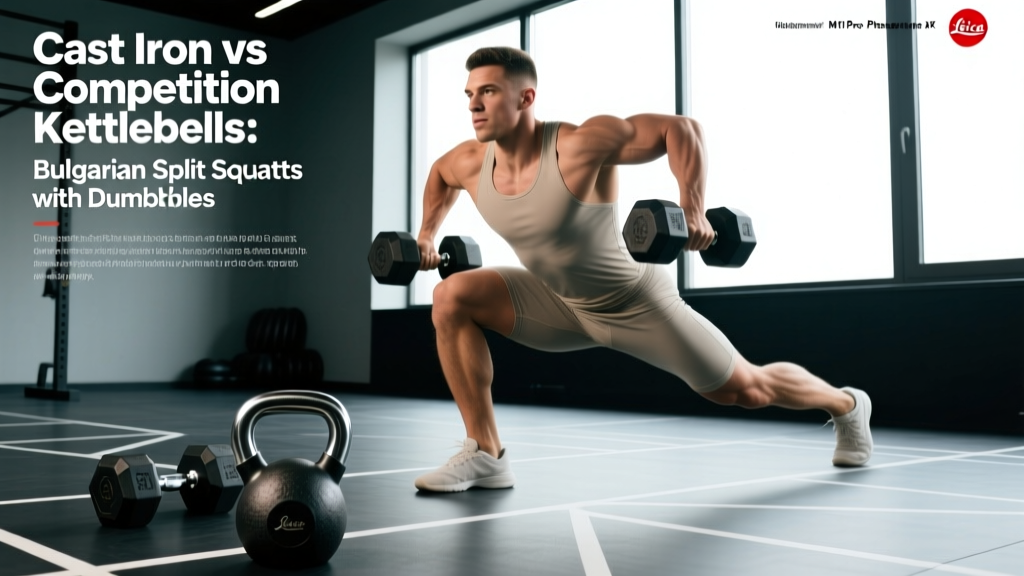
Cast Iron vs Competition Kettlebells: Bulgarian Split Squats with Dumbbells
Compare cast iron vs competition kettlebells in our 2026 buying guide. Plus, expert tips on using them for Bulgarian split squats with dumbbells.

The Unilateral Dilemma: Rethinking Bulgarian Split Squats with Dumbbells
For years, the gold standard for unilateral leg development has been the Bulgarian split squat. However, as athletes progress and load increases, performing bulgarian split squats with dumbbells presents a severe biomechanical bottleneck. When you start pushing past 80-pound dumbbells per hand, the limiting factor is rarely your quadriceps or glutes; it is your grip strength and the sheer awkwardness of cleaning heavy, bulky hex dumbbells into position.
According to biomechanics analyses by Stronger By Science, unilateral training is critical for addressing asymmetries and reducing overall spinal loading compared to heavy bilateral barbell squats. But to reap these benefits without your forearms giving out first, you need a tool that rests securely on your skeletal structure. This is where the kettlebell shines. By holding heavy kettlebells in the front rack position, you bypass grip fatigue entirely. But before you buy, you must navigate the great divide in the free weights market: Cast Iron vs. Competition Kettlebells.
Expert Insight: The transition from dumbbells to kettlebells for split squats requires mastering the 'rack position'. Unlike dumbbells that hang at your sides, kettlebells rest against your forearm and torso, demanding thoracic mobility and core bracing.Cast Iron vs. Competition: The 2026 Metallurgy & Design Breakdown
Walking into any commercial gym or scrolling through fitness retailers in 2026, you will see two distinct silhouettes. Understanding the manufacturing and dimensional differences is critical for selecting the right bell for your home gym or training facility.
Traditional Cast Iron Kettlebells
Cast iron bells are manufactured by pouring molten iron into a mold. Because the mold scales up to accommodate heavier weights, a 16kg cast iron kettlebell will be physically smaller than a 32kg bell. The handles tend to be thicker (usually 35mm to 40mm), and the base footprint grows wider as the weight increases. They are typically finished with powder coat, e-coat, or enamel.
Competition (Pro Grade) Kettlebells
Competition kettlebells are built to strict International Kettlebell Sport Federation (IUKSF) standards. Regardless of whether the bell is 8kg or 48kg, the dimensions remain exactly the same: 280mm in height and 200mm in width. The handle diameter is standardized at 33mm. To achieve this uniformity, lighter competition bells are hollow and filled with steel shot or specialized filler, while heavier bells (usually 24kg and above) are solid steel cast.
Head-to-Head Specs: What the Tape Measure Says
When choosing between the two for heavy unilateral leg work and general conditioning, the physical specifications dictate the user experience. Below is a data matrix comparing the two categories based on our 2026 hands-on testing.
| Feature | Cast Iron (Standard) | Competition (Pro Grade) |
|---|---|---|
| Dimensions | Scales with weight | Uniform (280mm x 200mm) |
| Handle Diameter | 35mm - 40mm (Thicker) | 33mm (Standardized) |
| Horn Width (Window) | Narrower on lighter bells | Wide, accommodates two hands |
| Material | Cast Iron | Steel / Steel-Shot Filled |
| Base Flatness | Good, but varies by brand | Excellent, machined flat |
| Avg. Price (24kg) | $75 - $95 | $130 - $165 |
Expert Hands-On Reviews: Top Picks for 2026
After testing dozens of models over the past six months, our team has identified the top performers in both categories that excel in durability, finish, and ergonomic performance for exercises like the kettlebell split squat.
1. Best Cast Iron: Rogue Powder Coat Kettlebell
Rogue remains the benchmark for American-made cast iron. Their Powder Coat line features a 35mm handle that provides a highly secure grip for ballistic movements like swings and snatches. The powder coat finish is exceptional at holding chalk, which is vital when your hands are sweaty during high-rep leg days.
Pros: Incredible durability, flat base prevents rolling, aggressive texture for grip.
Cons: The 35mm handle can cause wrist bruising during heavy front-rack split squats if your mobility is lacking.
Price Range: $35 (8kg) to $325 (48kg). You can view the full lineup on the Rogue Fitness official catalog.
2. Best Competition: Kettlebell Kings Pro Grade Steel
If you are prioritizing the front rack position for heavy unilateral leg work, Kettlebell Kings Pro Grade bells are unmatched. The 33mm handle is universally comfortable, and the 'window' (the gap between the handle and the bell) is wide enough to easily accommodate a two-handed goblet grip or a comfortable single-hand rack without crushing your forearm against the bell's body.
Pros: Uniform dimensions mean your technique never changes as you increase weight; smooth steel finish prevents forearm tearing; color-coded bands for easy identification.
Cons: Premium pricing; the smooth steel finish requires chalk for heavy ballistics.
Price Range: $70 (8kg) to $380 (48kg). For a broader market comparison, BarBend consistently ranks these at the top for serious lifters.
Real-World Failure Modes & Edge Cases
Buying cheap kettlebells is a false economy. Through years of gym equipment auditing, we have documented specific failure modes that you must avoid when outfitting your space:
- Enamel Chipping (The Cheap Cast Iron Problem): Budget bells often use a glossy enamel paint. Within three months of dropping the bell or clashing them during double-kettlebell cleans, the paint chips off, exposing raw iron to humidity and rust.
- Seam Burrs: Low-quality cast iron molds leave a raised metal seam right on the handle. During high-rep sets, this seam will literally slice the calluses off your hands.
- Floor Denting (The Competition Bell Hazard): Because competition bells are made of dense steel and have a smaller, harder base, dropping a 32kg competition bell on laminate or hardwood flooring will cause significantly more damage than a wider-based cast iron bell. Always use horse-stall mats (3/4-inch thick) when training with steel bells at home.
- The 'Rattle' Factor: In lighter competition bells (12kg and under), the internal steel shot filler can sometimes settle or rattle if the internal welding fails. Stick to solid-cast heavy bells (24kg+) if you want zero internal noise.
Programming the Kettlebell Split Squat
Transitioning from Bulgarian split squats with dumbbells to kettlebells requires a slight adjustment in your programming. Because the weight rests in the rack position, your core and thoracic extensors are under constant tension to prevent the bell from pulling you forward.
The Setup: Clean the kettlebell(s) to the rack position. Keep your elbow tucked tightly against your ribcage. The bell should rest on your forearm and chest, not hovering in the air.
The Rep Scheme: Start with 3 sets of 8-10 reps per leg. Because the rack position limits your breathing capacity compared to holding dumbbells at your sides, rest periods should be extended to 90-120 seconds to allow for full diaphragmatic recovery.
Final Verdict: Which Should You Buy?
The choice between cast iron and competition kettlebells ultimately comes down to your primary training modality and budget. If your training is heavily focused on hardstyle ballistics (swings, snatches, cleans) and you want a rugged, cost-effective tool that grips chalk beautifully, Cast Iron (specifically powder coat) is the undisputed winner.
However, if your programming involves heavy grinds, unilateral leg work like the split squat, presses, and you value absolute dimensional consistency as you progress through the weight classes, Competition Kettlebells are worth the premium investment. The 33mm handle and wide horn will save your wrists and make heavy rack work infinitely more sustainable in 2026 and beyond.
More gear to consider
All reviews
Troubleshooting Adjustable Dumbbells for Dumbbells Only Workouts

Barbell Collar Clamp Types Comparison & Dumbbell Raises for Back

EZ Curl Bar vs Straight Bar & Top Dumbbell Workout for Hamstrings

Power Rack vs Squat Rack vs Stand: Dumbbell Drawing Space
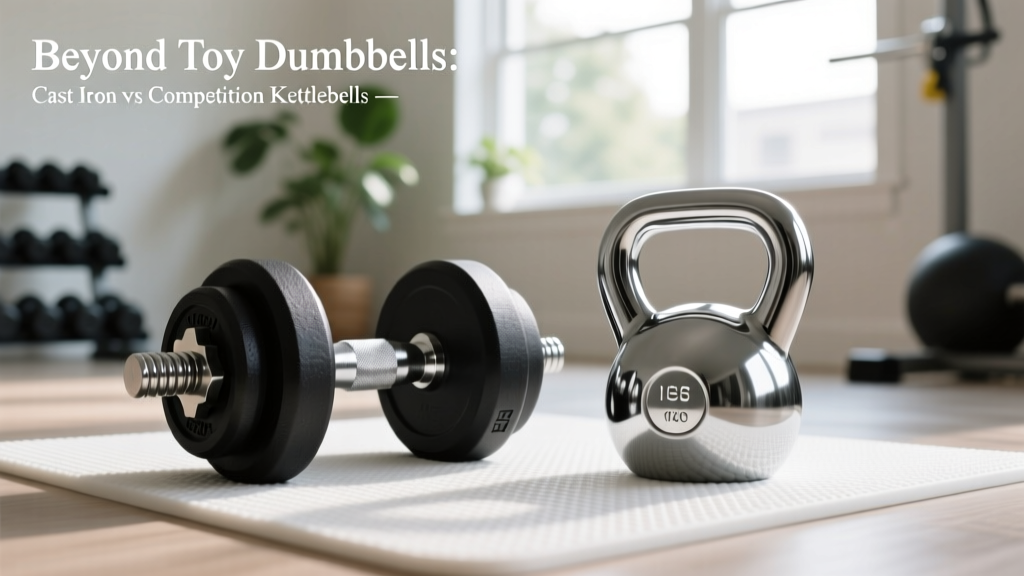
Beyond Toy Dumbbells: Cast Iron vs Competition Kettlebells
