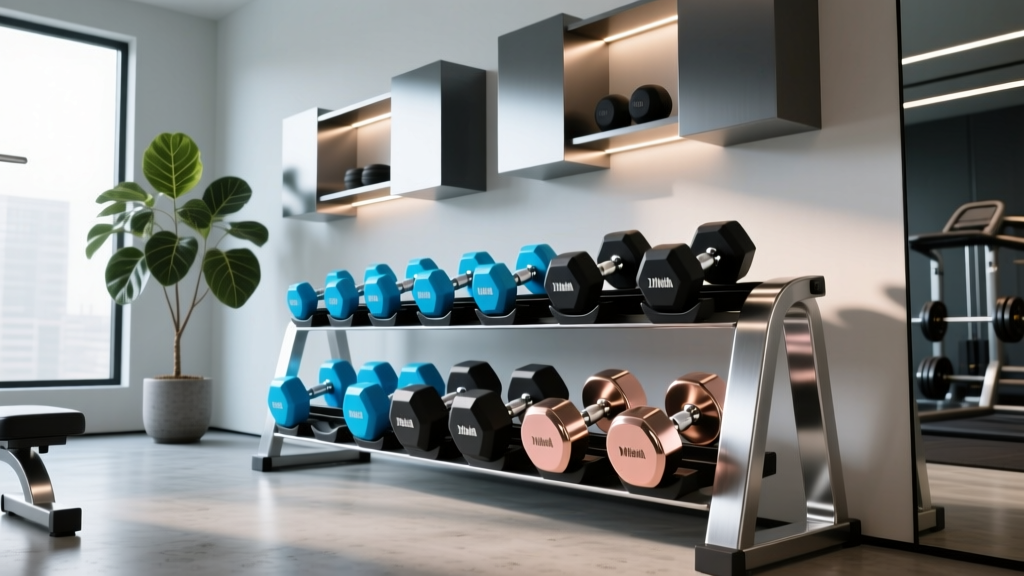
Dumbbell Around the World Muscles Worked: 2026 Adjustable Dumbbell Guide
Discover the dumbbell around the world muscles worked, master step-by-step form, and compare the best 2026 adjustable dumbbells for dynamic lifts.

The Intersection of Mobility and Equipment: A Beginner's Guide
If you have spent any time researching shoulder mobility routines, you have likely encountered the halo exercise and wondered about the specific dumbbell around the world muscles worked. This dynamic, multi-planar movement is a staple for building bulletproof shoulders, improving thoracic extension, and warming up the rotator cuff. However, as home gyms continue to evolve in 2026, most beginners are no longer buying massive racks of fixed hex dumbbells. Instead, they are investing in adjustable dumbbells.
This creates a unique biomechanical challenge. The 'around the world' exercise requires the weight to travel in a tight circular path around your head and torso. If your adjustable dumbbells are too long, too bulky, or prone to rattling, the movement goes from a therapeutic mobility drill to a frustrating, potentially dangerous chore. In this comprehensive guide, we will break down the exact anatomy of the movement, provide a step-by-step execution guide, and critically review the top adjustable dumbbells on the market based specifically on their suitability for dynamic, circular lifts.
Decoding the Dumbbell Around the World: Muscles Worked
Understanding the anatomy behind the movement is crucial for establishing a strong mind-muscle connection. When performing the around the world (or halo), you are not just isolating one muscle group; you are forcing the entire shoulder girdle to stabilize a moving load through space.
Primary Movers and Stabilizers
- Anterior and Lateral Deltoids: These muscles initiate the lift from the bottom position and control the descent. According to the ExRx Exercise Directory, the anterior deltoid is heavily taxed during any overhead or frontal raising motion.
- Serratus Anterior: Often called the 'boxer's muscle,' the serratus anterior works overtime to keep your shoulder blades glued to your ribcage as the weight moves behind your head.
- Lower and Middle Trapezius: These muscles prevent your shoulders from shrugging upward toward your ears as the dumbbell passes through the overhead portion of the halo.
- Core and Obliques: Because the weight is moving laterally and rotationally, your anti-rotation core muscles must fire continuously to keep your torso perfectly upright.
'The shoulder joint is the most mobile joint in the human body, which also makes it the most unstable. Dynamic movements like the halo train the neuromuscular system to stabilize this joint across multiple planes of motion simultaneously.' — Biomechanics principles outlined by the Cleveland Clinic's orthopedic resources.
The Adjustable Dumbbell Dilemma: Dimensions and Mechanisms
Why does the type of adjustable dumbbell matter for this specific exercise? It comes down to three factors: overall length, weight distribution, and locking mechanism security.
Fixed rubber hex dumbbells are typically compact. A standard 20lb fixed dumbbell is about 11 to 12 inches long. In contrast, early generations of adjustable dumbbells were notoriously long—sometimes exceeding 16 inches. When you attempt an around the world with a 16-inch dumbbell, the ends will physically collide with your head at the top of the arc, or smack into your thighs at the bottom arc. Furthermore, if the locking mechanism relies on friction or loose dials, the plates can rattle or shift when the dumbbell is inverted overhead, causing a sudden shift in the center of gravity.
2026 Adjustable Dumbbell Comparison Matrix
Below is a data-driven comparison of the most popular adjustable dumbbells in 2026, evaluated specifically on their dimensions and suitability for the around the world exercise.
| Model | 2026 MSRP (Pair) | Overall Length | Halo Suitability | Mechanism |
|---|---|---|---|---|
| Ironmaster Quick-Lock V2 | $419 | 11.0 inches | Excellent | Screw-in Pin |
| Nuobell 80lb | $349 | 14.5 inches | Good | Twist Handle |
| PowerBlock Elite USA | $359 | 12.0 inches | Fair | Selector Pin |
| Bowflex SelectTech 552 | $399 | 15.75 inches | Poor | Rotary Dial |
Deep Dive: Why the Ironmaster and Nuobell Win for Dynamic Lifts
The Ironmaster Quick-Lock V2 is the undisputed king of dynamic movements. Because it uses a screw-in pin mechanism, there is zero rattle, and the weight plates are housed in a solid steel block. At just 11 inches long, it mimics the exact footprint of a traditional fixed dumbbell, allowing for a tight, unobstructed halo path. The downside? Adjusting the weight takes about 15-20 seconds per hand.
The Nuobell 80lb offers a brilliant middle ground. Its twist-handle mechanism is lightning-fast, and the handle feels exactly like a standard knurled barbell. While it is slightly longer at 14.5 inches, the weight is distributed evenly, and the plates lock tightly together, preventing the dreaded 'clank' when inverted overhead.
Conversely, the Bowflex SelectTech 552, despite being a massive commercial success, is poorly suited for the around the world. Its 15.75-inch length forces beginners to widen their grip or alter their natural movement path to avoid hitting their own skull during the overhead transition.
Step-by-Step Guide: Executing the Around the World Safely
Now that you understand the equipment requirements, let us break down the execution. Grab a light pair of adjustable dumbbells (10 to 15 lbs is ideal for beginners) and follow this sequence.
- The Stance and Setup: Stand with your feet shoulder-width apart. Hold a single dumbbell horizontally with both hands, gripping the outer edges of the handles. Keep the dumbbell resting against your upper thighs. Engage your core and squeeze your glutes to lock your pelvis in place.
- The Bottom Arc: Slowly lift the dumbbell and begin to circle it around your right hip, moving out to your right side. Keep your arms relatively straight but maintain a soft bend in the elbows to protect the joint capsule.
- The Overhead Halo: Continue the circle upward and behind your head. Crucial Form Tip: Do not jut your chin forward. Keep your neck neutral and allow the dumbbell to trace a circle around your crown. If your adjustable dumbbell is too long, you will be forced to flare your elbows out awkwardly here.
- The Descent and Return: Bring the weight down the left side of your head, circle it around your left hip, and return to the starting position at the thighs. This completes one repetition.
Common Failure Modes and Edge Cases
When coaching beginners through this movement, I consistently see three specific failure modes. Recognizing these will help you troubleshoot your form and your equipment.
1. The 'Shrug' Compensation
As the dumbbell passes behind the head, the upper trapezius often takes over, causing the lifter to shrug their shoulders toward their ears. This defeats the purpose of the exercise, which is to promote scapular upward rotation and lower-trap activation. The Fix: Actively depress your shoulder blades (think about putting your shoulder blades into your back pockets) before initiating the circle.
2. Equipment Rattle and Grip Shifts
If you are using a dial-based adjustable dumbbell that has accumulated wear and tear, the internal plates may shift slightly when the dumbbell is inverted overhead. This micro-movement forces your forearms to suddenly grip harder to stabilize the shifting center of mass, leading to premature grip fatigue. The Fix: If your equipment rattles, switch to a screw-lock or solid-cage adjustable dumbbell, or perform the movement with a single kettlebell instead, which naturally suits circular paths.
3. Lumbar Hyperextension
Beginners often lack the thoracic mobility to get the weight behind their head. To compensate, they arch their lower back, thrusting their ribs forward. This places compressive loads on the lumbar spine. The Fix: Perform the exercise in a half-kneeling position. Squeezing the glute of the kneeling leg will posteriorly tilt the pelvis and lock the lumbar spine, forcing the movement to occur strictly in the thoracic spine and shoulder joints.
Programming the Around the World into Your 2026 Routine
How should you integrate this into your weekly schedule? The around the world is incredibly versatile and can be programmed in two distinct ways:
- As a Pre-Workout Primer: Perform 2 sets of 8-10 reps (4-5 per direction) with a very light weight (5-10 lbs) immediately before overhead pressing or bench pressing. This floods the shoulder joint with synovial fluid and activates the serratus anterior.
- As an Active Recovery Drill: On rest days or mobility-focused sessions, perform 3 sets of 12-15 reps with a moderate weight (15-20 lbs), focusing on a slow, 3-second tempo per circle to build endurance in the stabilizing muscles.
Final Verdict: Equipping for Success
Mastering the dumbbell around the world muscles worked is a journey of neuromuscular control and joint health. However, your progress can be severely bottlenecked by poorly designed equipment. If your primary goal involves dynamic, multi-planar movements like halos, Turkish get-ups, or windmills, you must prioritize compact dimensions and rattle-free locking mechanisms over quick-adjust convenience.
For the ultimate traditional feel that allows for flawless circular movement paths, the Ironmaster Quick-Lock V2 remains the gold standard in 2026. For those who need faster weight changes but still want a secure, traditional handle, the Nuobell is an exceptional alternative. Avoid overly long, dial-adjusted models for this specific exercise, and focus instead on controlled, deliberate repetitions that prioritize joint longevity over sheer load.
More gear to consider
All reviews
Incline Dumbbell Bench Press Form: Urethane vs Rubber Care
One-Arm Dumbbell Row vs Kettlebell: Cast Iron vs Competition

Power Rack vs Squat Rack vs Stand & Back Workout With One Dumbbell

Best Neoprene Dumbbells for Push Exercises With Dumbbells (2026)

Bumper vs Iron Plate Care & Dumbbell Rear Lateral Maintenance